

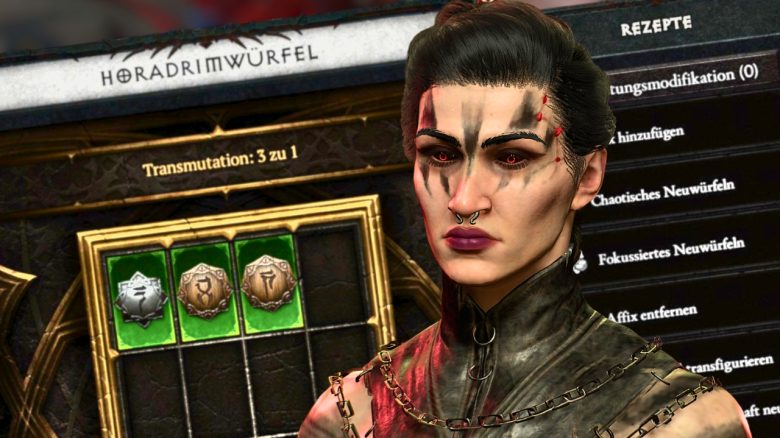
Mit Lord of Hatred erhält Diablo 4 etliche neue Features. Dazu gehört auch der Horadrimwürfel, mit dem ihr eure Items gezielt modifizieren könnt. Welche Rezepte der Würfel bereithält und wie ihr sie nutzt, erfahrt ihr hier.
Was ist der Horadrimwürfel? In der Kampagne von Lord of Hatred entdeckt ihr den Horadrimwürfel. Das Feature existierte bereits in Diablo 2 und Diablo 3 (dort unter dem Namen „Kanais Würfel“). Im Grunde legt ihr Items und Materialien in den Würfel und aus verschiedenen Rezepten ergeben sich dann unterschiedliche Effekte. Diese Modifikationen können eure Builds massiv aufwerten und völlig neue Strategien ermöglichen.
Für die meisten Rezepte benötigt ihr spezielle Handwerksmaterialien aus unterschiedlichen Quellen. Die uns bisher bekannten Funktionen haben wir für euch nachfolgend zusammengefasst.
Update, 27. Mai 2026: Der Artikel wurde geprüft und befindet sich auf dem aktuellsten Stand.
Horadrimwürfel: Freischalten und Rezepte nutzen
Wie schalte ich den Horadrimwürfel frei? Der Horadrimwürfel ist Teil der neuen Kampagne von Lord of Hatred. Das bedeutet: Der DLC ist Pflicht, um dieses Feature nutzen zu können. Was ihr „kostenlos“ zocken könnt und wofür ihr den DLC benötigt, erfahrt ihr hier. Sobald ihr den Horadrimwürfel freigeschaltet habt, steht er euch in Temis zur Verfügung. Dabei handelt es sich um die erste Region in Skovos, die ihr besucht.
Wie funktioniert der Horadrimwürfel? Vereinfacht gesagt, könnt ihr Ausrüstung, Verbrauchsgegenstände, Sockel-Items und Talismanzauber anpassen, modifizieren und herstellen. Dafür benutzt ihr sogenannte „Rezepte“, die der Horadrimwürfel gespeichert hat.
Folgende Rezepte gibt es:
Ausrüstungsmodifikationen
- Affix hinzufügen: Fügt einem Gegenstand ein zufälliges Affix hinzu.
- Chaotisches Neuwürfeln: Ersetzt ein Affix durch ein anderes Affix derselben Kategorie.
- Fokussiertes Neuwürfeln: Ersetzt ein Affix durch ein anderes Affix derselben Kategorie.
- Affix entfernen: Entfernt ein zufälliges Affix von einem Gegenstand.
- Gegenstand transfigurieren: Gewährt eine zufällige Modifikation. Der Gegenstand könnte dadurch nicht modifizierbar werden, ähnlich wie beim „Heiligen“ aus Season 11.
- Einzigartige Eigenschaft neu auswürfeln: Legt den Wert der einzigartigen Eigenschaft eines vermachten Gegenstands zufällig neu fest.

Diablo 4: Lord of Hatred
- Epaper direkt nach der Bestellung lesen
- 148 Seiten zu Blizzards Action-Rollenspiel-Hit
- coole Builds für alle neuen und alten Klassen
- legendäre Ausrüstung dank Horadrim-Würfel
- Codes für zwei exklusive Waffen im Heft
- kämpfen müsst ihr immer noch selbst
Gegenstandsmutation
- Transmutation 3 zu 1: Transmutiert drei gleiche Ausrüstungs-, Talisman- oder Runen-Gegenstände in einen zufälligen neuen Gegenstand desselben Typs.
- Einzigartige Gegenstände zurückführen: Transmutiert drei der gleichen einzigartigen Ausrüstungsgegenstände oder Talismanzauber zu einer neuen Version dieses einzigartigen Gegenstands.
- Auf einzigartig aufwerten: Transmutiert einen gewöhnlichen Ausrüstungsgegenstand in einen zufälligen einzigartigen Gegenstand desselben Typs.
- Auf legendär aufwerten: Transmutiert einen seltenen Ausrüstungsgegenstand in einen legendären mit einer zufälligen legendären Eigenschaft.
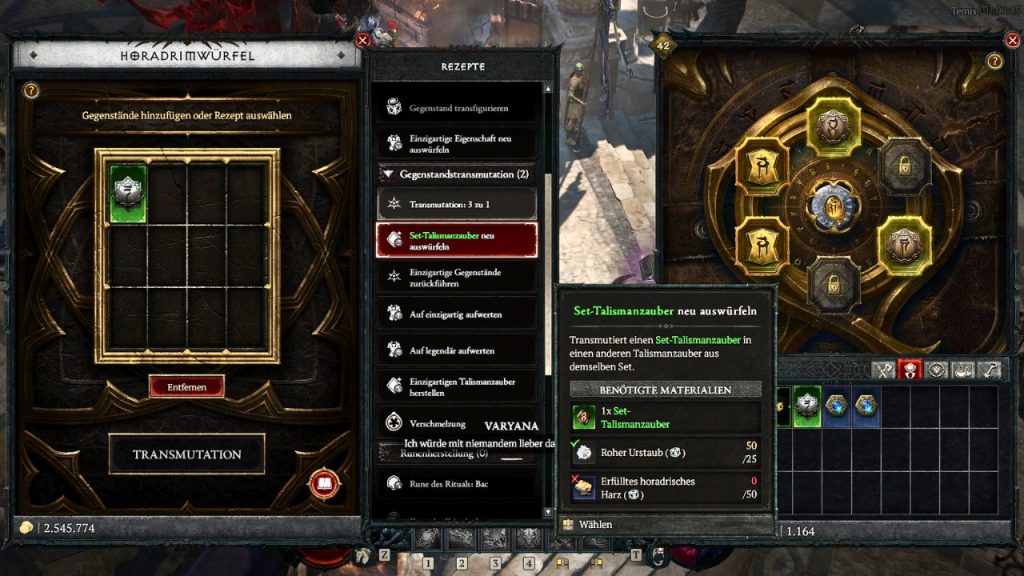
- Set-Talismanzauber neu auswürfeln: Transmutiert einen Set-Talismanzauber in einen anderen Talismanzauber aus demselben Set.
- Einzigartigen Talismanzauber herstellen: Transmutiert einen einzigartigen Ausrüstungsgegenstand in einen einzigartigen Talismanzauber.
- Verschmelzung: Transmutiert mehrere Exemplare des gleichen Gegenstands, um ihn aufzuwerten.
Außerdem könnt ihr legendäre Runen aus jeweils einer bestimmten magischen, 5 beliebigen seltenen und 5 beliebigen legendären Runen der gleichen Kategorie (Anrufung oder Ritual) herstellen. Aus Alptraum-Siegeln könnt ihr Eskalationssiegel erhalten und Tribute könnt ihr zu selteneren Tributen verschmelzen.
Zusätzlich zu den Standard-Rezepten gibt es laut Blizzard versteckte „Geheimrezepte“, deren Zutaten ihr an ungewöhnlichen Orten in der Welt findet.
Horadrimwürfel: Crafting-Materialien und Fundorte
Welche Materialien brauche ich für den Horadrimwürfel? Wie jedes Crafting-System benötigt auch der Würfel bestimmte Mats. Es gibt insgesamt acht verschiedene Materialien, von magisch bis einzigartig, die ihr an verschiedenen Orten bekommt:
- Erfülltes horadrisches Harz (magisch)
- Nutzen: Herstellung von Talismanzaubern und Siegeln.
- Fundort: Wiederverwertung von Talismanzaubern und Siegeln.
- Roher Urstaub
- Nutzen: Für die meisten Transmutationen.
- Fundort: Elitemonster, Würfelbeute aus Kriegsplänen, Truhenbelohnungen vom Flüsternden Baum.
- Grober Urstaub (magisch)
- Nutzen: Für Transmutationen, die Affixe hinzufügen.
- Fundort: Würfelbeute aus Kriegsplänen, Truhenbelohnungen vom Flüsternden Baum, Elitemonster.
- Veredelter Urstaub (selten)
- Nutzen: Für Transmutationen, die Affixe verändern oder entfernen.
- Fundort: Würfelbeute aus Kriegsplänen, Truhenbelohnungen vom Flüsternden Baum, Elitemonster.
- Unberechenbarer Urstaub (legendär)
- Nutzen: Transfigurieren von Items.
- Fundort: Würfelbeute aus Kriegsplänen, Truhenbelohnungen vom Flüsternden Baum, Elitemonster.
- Reiner Urstaub (legendär)
- Nutzen: Für Transmutationen, die legendäre Items erschaffen.
- Fundort: Würfelbeute aus Kriegsplänen, Truhenbelohnungen vom Flüsternden Baum, Elitemonster.
- Verbesserter Urstaub (einzigartig)
- Nutzen: Für Transmutationen, die einzigartige Items erschaffen.
- Fundort: Würfelbeute aus Kriegsplänen, Truhenbelohnungen vom Flüsternden Baum, Elitemonster.
- Eingestimmter Urstaub (einzigartig)
- Nutzen: Für das Neuauswürfeln des Werts der Eigenschaft eines Uniques.
- Fundort: Würfelbeute aus Kriegsplänen, Truhenbelohnungen vom Flüsternden Baum, Elitemonster.
Zusätzlich gibt es optionale Materialien wie Abstimmungsprismen, mit denen ihr das Ergebnis beim Crafting beeinflussen könnt – sogenannte Abstimmungsprismen. Sie entfernen die riskantesten, aber auch die stärksten Ergebnisse. Ihr findet sie in ganz Sanktuario. Anders als Crafting-Mats werden sie in eurem Inventar als Verbrauchsgegenstände gelagert.
Auch gewöhnliche, magische und seltene Items droppen übrigens nun wieder auf Qual-Stufen. Ihr könnt sie im Würfel als Material zum Herstellen verwenden, ihre Affixe erweitern oder einfach ihre Seltenheit erhöhen.



Neben dem Würfel bringt Lord of Hatred auch andere neue Features zu Diablo 4, etwa das Angeln und das Talisman-System. Gleichzeitig gibt es frische Inhalte und Anpassungen am Basisspiel, die euren Alltag als Monsterschlächter in Sanktuario erleichtern. Welche Inhalte ihr „kostenlos“ in Diablo 4 zocken könnt und für welche ihr den DLC kaufen müsst, erfahrt ihr in unserer Übersicht.

Deine Meinung ist uns wichtig!
Gefällt dir der Artikel? Hast du irgendwelche Kommentare? Sag uns, was du denkst!





























Kommentare