

The German YouTuber and MMORPG expert Entenburg analyzes in his guest article the future of online role-playing games and responds directly to an article by MeinMMO editor Karsten Scholz.
“Classic MMORPGs are dying out” – thus opens the grim prognosis with which my esteemed colleague Karsten Scholz sketched the future of our favorite genre a few days ago. In this guest article, I would like to offer a less fatalistic outlook on the future of MMOs, a reasoned counter-statement, and a glimmer of hope for all those to whom the attribute “Massively” still means something. So this is also for you, dear Karsten.
Basically, it cannot be denied that the genre is currently in transition. While one might question whether this has ever not been the case, it cannot be denied that some of the major multiplayer successes in recent times had one thing in common: they exhibited aspects of MMORPGs without really being MMORPGs.
Karsten rightly brings up the concrete example of Where Winds Meet in the discourse. The free-to-play action RPG offers classic single-player content as well as instanced group content or PvP activities, should one desire to switch to the optional MMO mode.
A mixture of content that seems to be very well received, considering the over 250,000 initial players shortly after the Steam launch and the still approximately 40,000 concurrent players alone on the Valve platform.
Successful thanks to MMO elements?
However, there is one essential detail that is not disclosed in the wake of these impressive numbers, and that is the actual number of those who actually participate in the multiplayer offerings. As far as I could see, there is no information on this from official sources, and the Steam achievements, which could generally be an indicator, are not applicable here. Simply put, there are no multiplayer achievements.
Whether the success of the game can therefore be attributed to its “MMO Lite” character or rather to the fact that a strong campaign with a high-quality combat system and beautiful visuals is offered for free remains questionable.
Other examples mentioned by Karsten of major games with MMO elements seem to confirm the thesis that the drivers of success are often identifiable in the single-player content and less in the multiplayer aspects.
This particularly applies to Genshin Impact, a title whose co-op mode has been rightly highlighted as a major weakness since its release due to its deficient implementation.
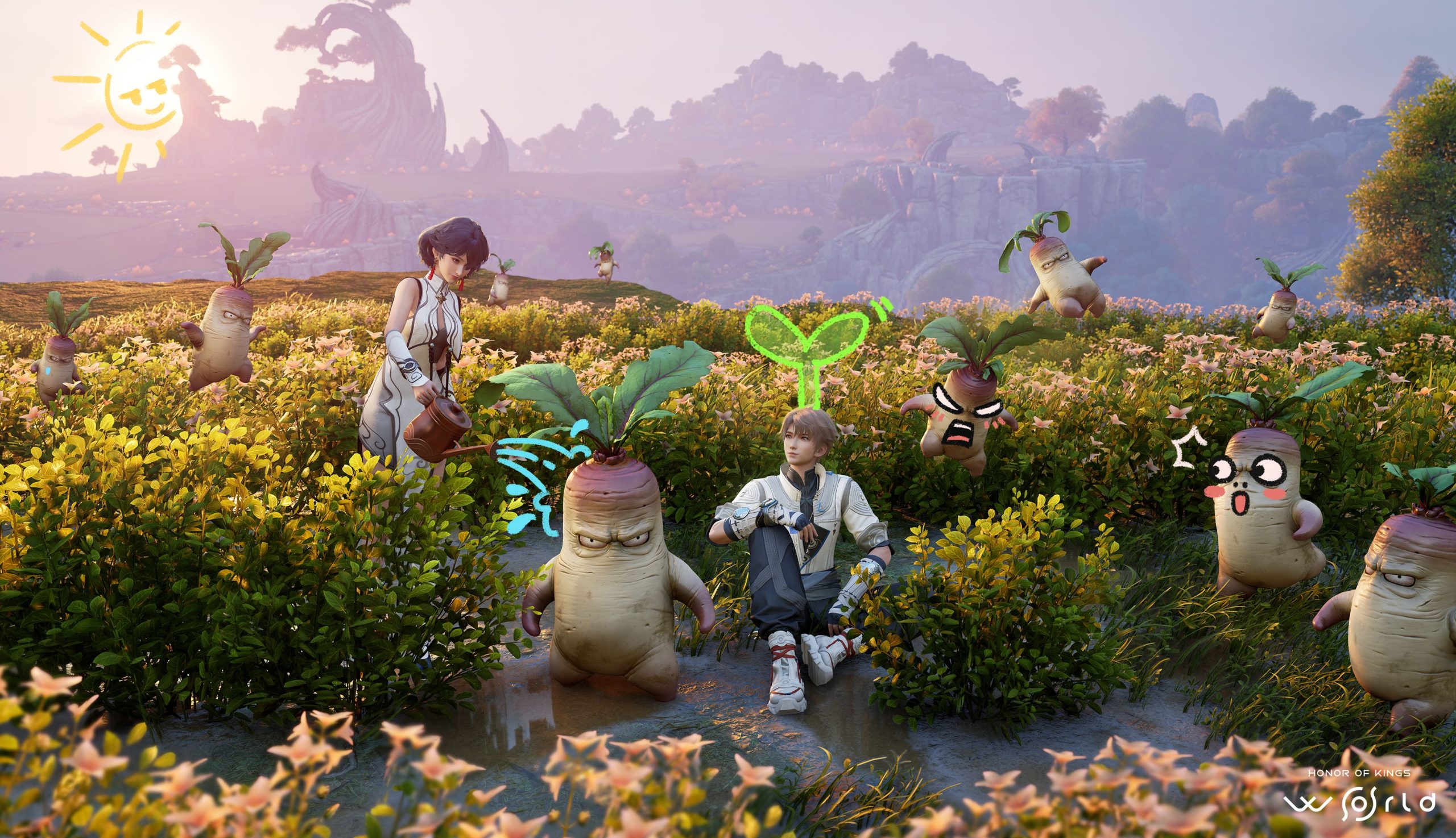
With regard to the recently launched Honor of Kings: World, a few glances at the gameplay and the half-baked MMO options suffices to recognize that there is a player experience that is much more reminiscent of the Genshin games (and their single-player virtues) than of MMORPGs.
Overall, the new generation of “MMO Lites” often seems to bring success despite the MMO elements and not because of them. Whether these player experiences are truly capable of shaping the future of the MMORPG genre, as discussed in the article, is highly doubtful from my perspective.
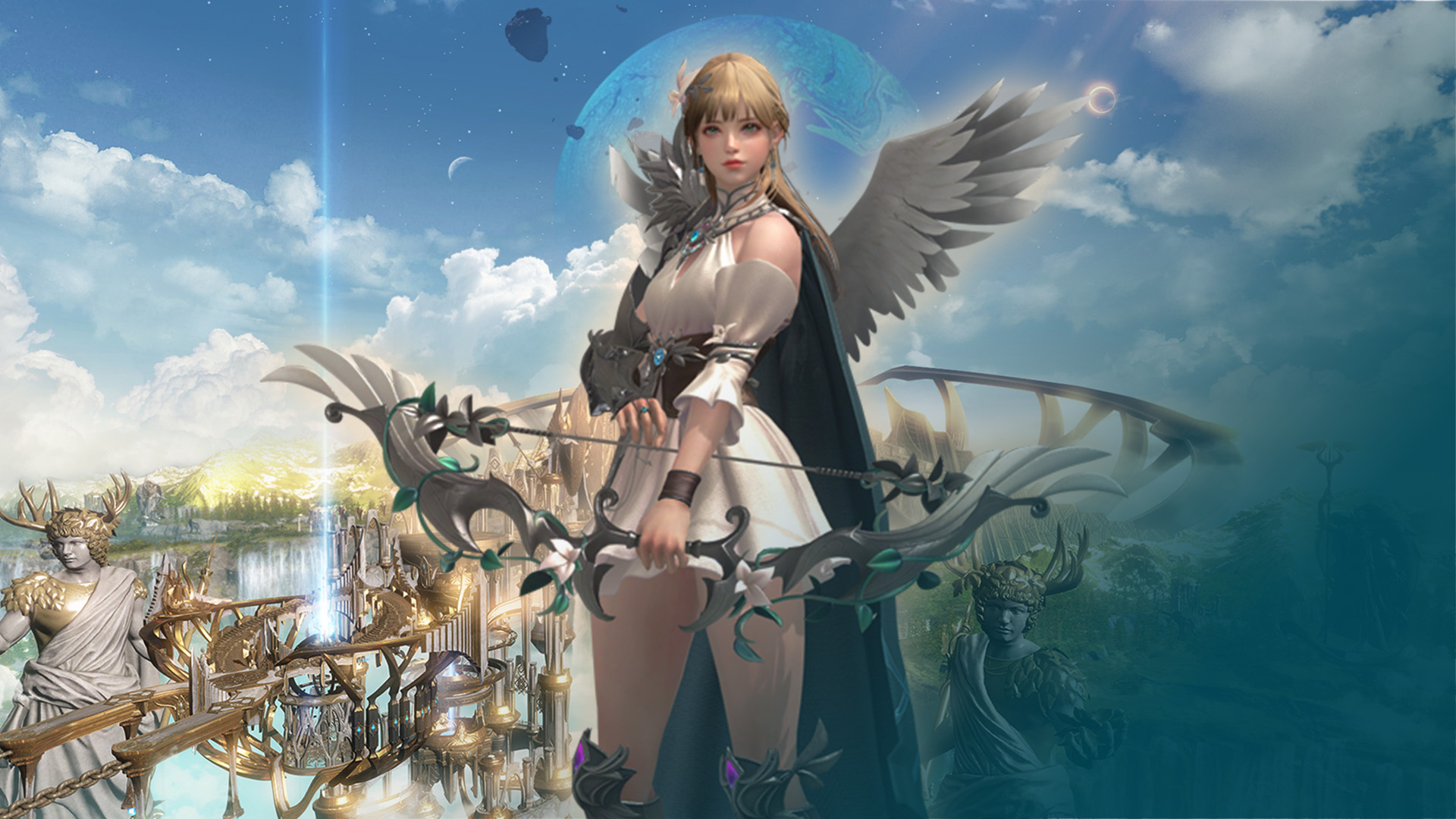
Diverse upcoming Asia-MMORPGs like Chrono Odyssey focus heavily on content for solo players and small groups.
What makes an MMORPG?
Now Karsten rightly points out that some of the upcoming, more classical MMORPGs like Chrono Odyssey or ArcheAge Chronicles pursue a stronger single-player or small-scale orientation. This is of course not a new development, as many of the major established MMORPGs like Final Fantasy 14 or The Elder Scrolls Online have increasingly focused on casual and solo players for quite some time.
This group makes up the largest mass within the multifaceted player base. Nevertheless, there are undoubtedly huge differences between the aforementioned MMORPGs and the new “MMO Lites”; an orientation towards the single-player experience alone cannot therefore be the deciding factor.
But is there still a need for classic MMORPGs? Titles in which I can truly experience the “Massively”? And what defines a classic MMORPG at all? Endless, sweeping, and extremely nerdy debates can be held on the latter, and of course, the answer is always an individual one.
For me personally, the decisive point is that an MMORPG must not only become an MMORPG when I activate a specific mode separate from the actual game.
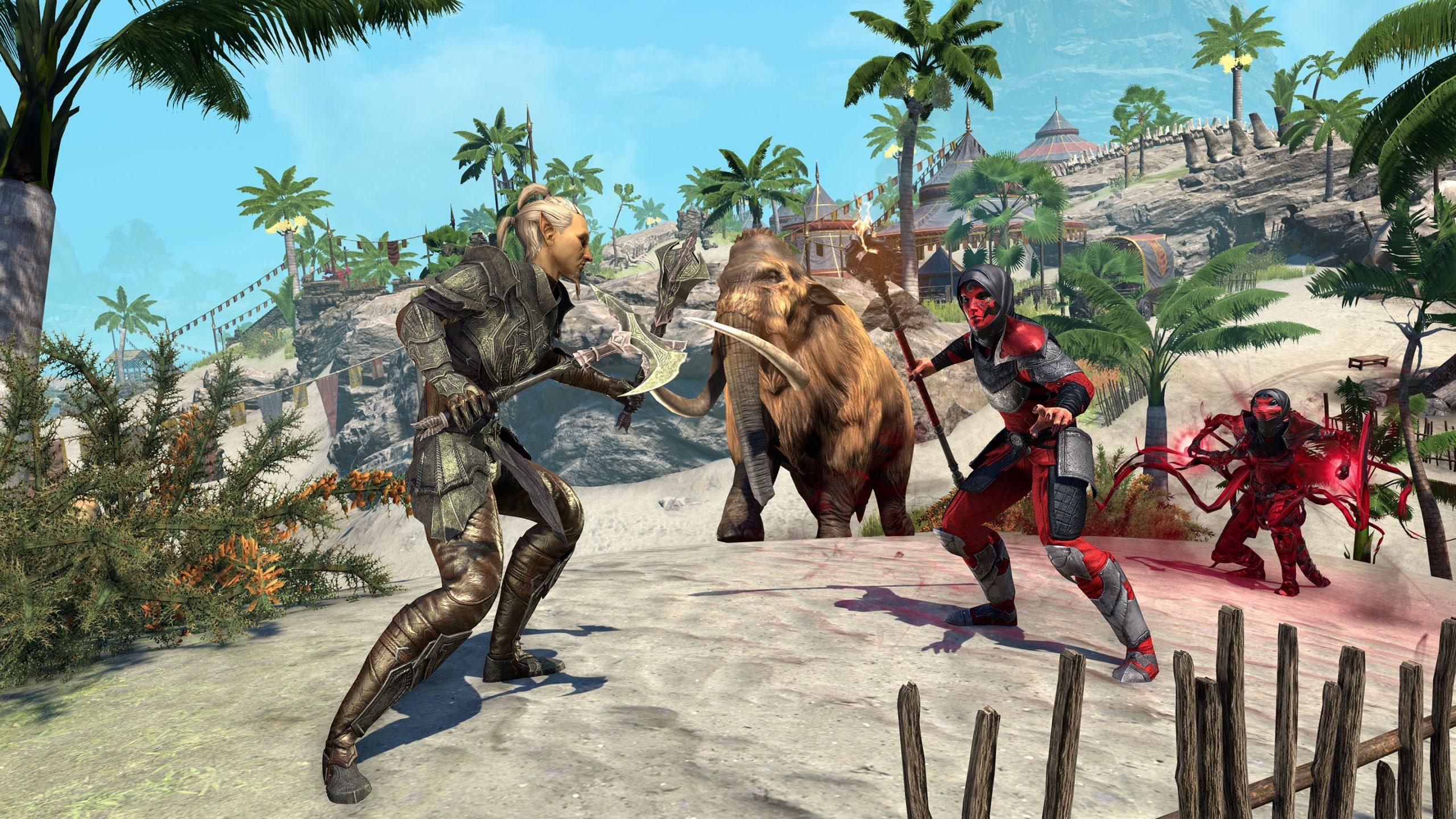
Because regardless of the single-player focus, for example, The Elder Scrolls Online repeatedly provides me with defining MMO experiences when I unexpectedly come across a huge dolmen train and suddenly stand in front of 30 people all farming said content (and now may admire my outfit).
Such experiences are virtually unavoidable for me; they occur regularly due to dynamic open-world events, world bosses, and the like, even if I am mostly playing solo. The “MMO Lites” lack this noticeably.
The need for MMORPGs is there
And what about the question of whether there is still a need for these larger-scale MMORPGs? A look at the titles released in recent years as well as the MMOs in development provides a clear answer. Because even though the yield of new, high-quality genre representatives has recently been – to put it mildly – rather meager, the interest in fresh, classic MMORPG experiences is nevertheless unbroken.
New World achieved over 900,000 concurrent players at launch despite its many structural issues and problems. No wonder, as this was finally a western MMO with realistic graphics, gripping atmosphere, bombastic sound design, and action combat.
Also worth reading: Amazon wanted to be a big player in games – The end of New World completes a sad story of failure
Lost Ark had even higher numbers. The MMO managed to gather over 1.3 million concurrent players with its outstanding combat system and brilliant dungeons and raids. At least until most realized what work was knocking at the door. Even Throne and Liberty, an MMO with an obvious big-scale PvP focus and therefore a rather niche orientation, had 336,300 concurrent players at launch on Steam.
The hunger for new, traditional MMORPGs is therefore well documented. The question remains why the industry creates so little supply for this obvious need. Sure, the high development costs and associated risks are significant hurdles when one can often earn a multiple with cheap and quickly cobbled-together mobile games.
Looking to the Future
However, a closer look reveals that the video game industry may not be as timid as one might think given all the recently discontinued MMOs (Zenimax, Lord of the Rings, Ghostcrawler, Warhammer, etc.).
Just a few months ago, Aion 2 was released, a new, classic, large MMORPG in its homeland (and also with us later this year), which has not only become a really decent but also an extremely successful MMO financially. This should send a strong signal to the industry as well.
Regarding the MMORPG from Riot, there was also a very promising update from CEO Marc Merrill recently. He stated via X that they are more committed than ever to building the next big MMO.
Guild Wars 3 is also still in the works, as indicated by numerous current job postings. The relatively new realization that there is even a sequel to the popular Tera being worked on also supports this. There is much to suggest that all of these titles will be classic representatives of their genre and rather not “MMO Lites”.
Scars of Honor has become one of the most exciting new MMOs of the foreseeable future:
Lastly, the ever-growing (and more promising) indie and double-A MMO segment should not be overlooked. Here, a thrilling playtest with Scars of Honor is just around the corner, along with games like Corepunk, Drakantos, Apogea, Anvil Empires, and many other titles that hopefully find their niche in the genre.
And what about the MMO hybrids? Even if only a small part of the player base of these games should have an interest in the MMO elements, I believe that these games will do exactly what has always characterized this genre’s jack-of-all-trades: they will differentiate it!
Whether we’ve welcomed a new player base in the past through fresh sandbox aspects, or new player types have felt addressed through a turn towards more story, more side activities, more “realm vs. realm” PvP, or more social focus, the genre has always succeeded in exciting a homogeneous mass of gamers who all actually want to do their own thing.
Yet they ultimately find themselves together under the large umbrella of MMORPGs. In the future, we can surely look forward to many new “MMO Lites” that will further complement the genre.
But certainly not replace it.

Many thanks to Entenburg for his exciting insight into the status quo and the future of the MMORPG genre. How do you evaluate the situation for genre fans currently? And which upcoming online role-playing games are you looking forward to? Feel free to let us know in the comments. If you want to revisit Karsten’s original article, you can find it here: 2 games from China show the future of MMORPGs; our expert doesn’t like it at all

Your opinion is important to us!
Do you like the article? Then let us know!