

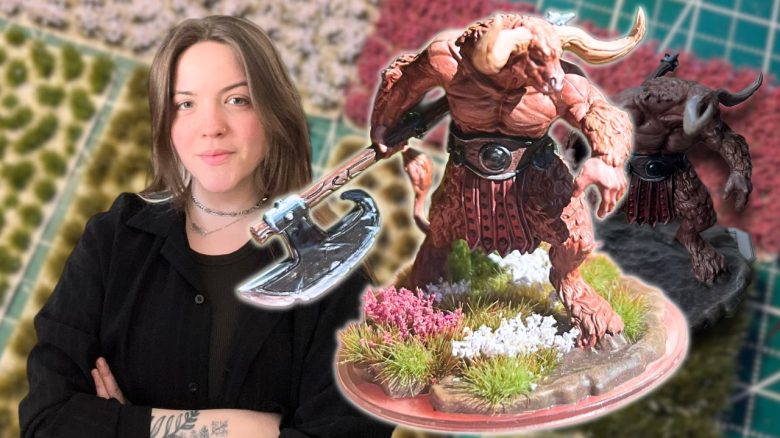
MeinMMO-Redakteurin Caro bemalt in ihrer Freizeit liebend gerne Miniaturen fürs Tabletop sowie Dungeons & Dragons. Nun ist sie auf eine Möglichkeit gestoßen, um sie noch hübscher zu machen, die sich jedoch eher auf das bezieht, worauf ihre Charaktere und Monster stehen.
Beim regelmäßigen Besuch meines lokalen Spiele- und Tabletop-Ladens befand ich mich erneut in der Ecke rund ums Bauen und Bemalen von Miniaturen. Dort bin ich bereits des Öfteren auf gestalterische Möglichkeiten für Terrain aufmerksam geworden, also die Gestaltung der Umgebung, sei es auf Battlemaps oder Bases der Minis.
Bisher habe ich die Bases meiner Miniaturen mit Farbe und Drybrushing gestaltet, anstatt mit Grasbüscheln oder Pflanzen. Doch vor wenigen Tagen fand ich etwas, wodurch ich mich nicht länger vor Terrain drücken konnte: Ein Starterset mit allem, um der Terrainkunst zumindest eine Chance zu geben.
Und nun, wenige Tage später, schreibe ich den passenden Artikel und sage euch: Ihr müsst es auch probieren. Ich bin zum Miniatur-Landschaftsgärtner geworden und ich liebe es!
Deutlich unkomplizierter als befürchtet
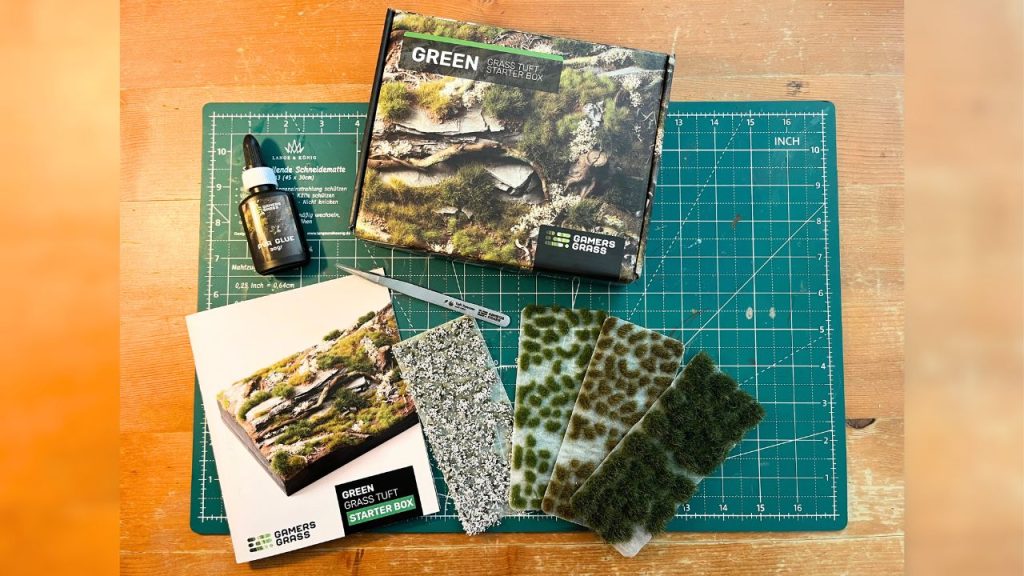
Ich habe mir die „Green Grass Tuft Starter Box” von Gamer Grass gekauft, die vier verschiedene Paletten mit Vegetation, eine Tube Kleber, eine Pinzette und einen Guide beinhaltet. Dafür habe ich ca. 22 Euro bezahlt.
Weshalb ich mich für diese Box entschieden habe? Es war das einzige Starterset, das es dort vorrätig gab. Außerdem habe ich mich einfach sofort in die kleinen Blümchen verliebt, die das Set enthält. Die kleinen Gräser und Büsche habe ich schon öfters gesehen, aber vor allem die Blumen sehen im Maßstab betrachtet einfach verdammt realistisch und süß aus. Deswegen habe ich mir diese einzeln auch noch in einer roten Variante gekauft.
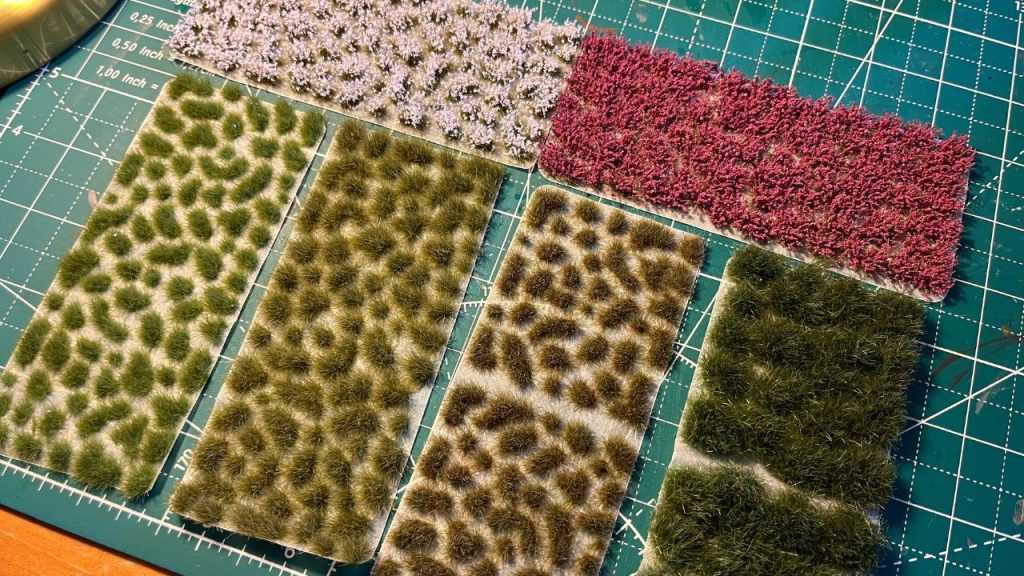
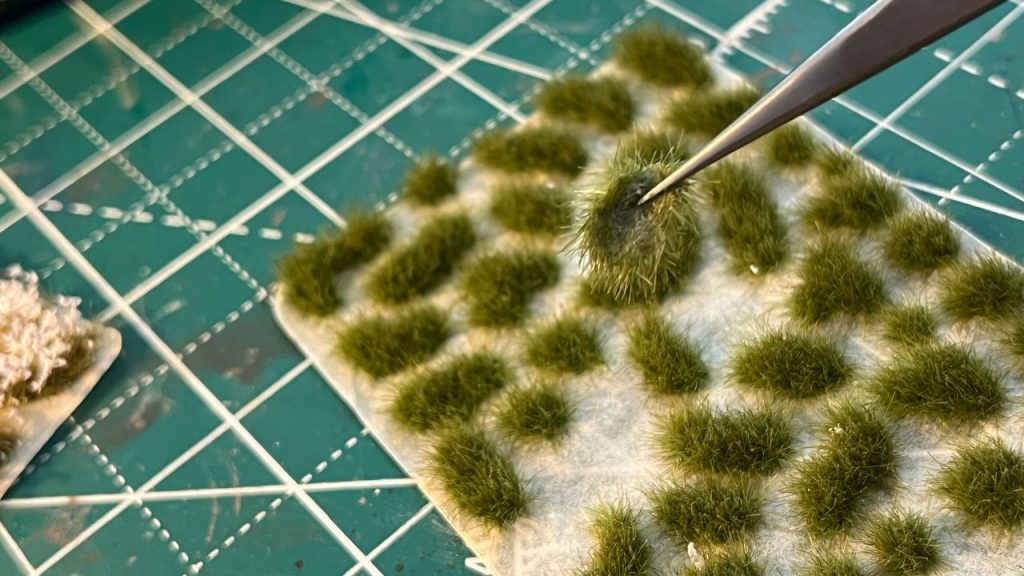
Die Grasbüschel und Blumen aus dem Set sind auf dünne Papierrechtecke geklebt, die man ähnlich wie Sticker mit der Pinzette abziehen, und auf der Base platzieren kann. So kann man zunächst die Platzierung überprüfen und dann mit dem beigelieferten Klebstoff permanent fixieren.
Dabei kann man frei nach Schnauze die Szene so gestalten, wie man es will, oder man richtet sich nach ein paar Tipps, die ich als Neuling brav versuche zu verinnerlichen:
- Um der Szene einen natürlicheren Look zu verleihen, kann man Grasbüschel näher aneinander in kleinen Gruppen platzieren. So kann man das Aussehen besser nachahmen, wie Vegetation oft in der Natur wächst.
- Apropos Natur: Pflanzen befinden sich oft an den Stellen, wo Halbschatten herrscht und/oder sich Wasser ansammeln würde. Das macht die Szene noch authentischer.
- Größe nicht ignorieren: Wenn man größere Büsche im Hintergrund platziert, schafft man beinahe einen dioramaartigen Hintergrund und mehr Tiefe. Ähnlich wie bei einem Foto oder einem Gemälde kann man so dafür sorgen, dass das Auge die verschiedenen Ebenen betrachtet und den Blick wandern lässt.
Nun dürfen meine Miniaturen endlich Gras anfassen
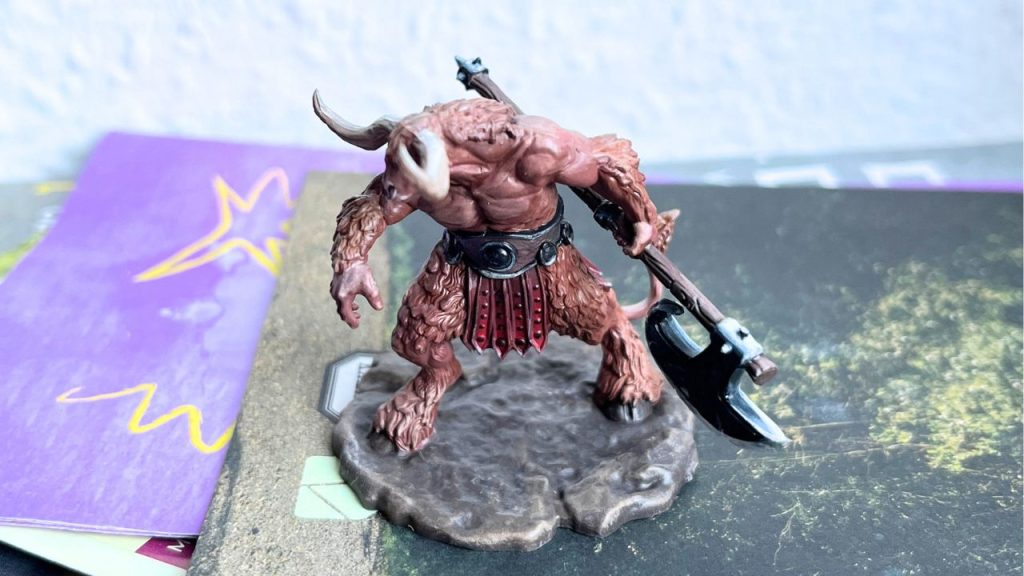
Als Versuchskaninchen opferte ich den Barbaren eines Freundes aus meiner D&D-Gruppe, dessen Minotaurus wirklich eine schönere Base verdiente als … Dreck. Seine Base ist etwas größer als die meiner anderen Miniaturen, wodurch ich für den ersten Versuch etwas mehr Platz hatte.
Ich platzierte die größeren Büsche (8 mm) eher im Hintergrund, an die ich direkt ein paar Pflanzen setzte, mit weißen und mit roten Blüten. Um diese setzte ich dann in kleinen Grüppchen abwechselnd kurzes 4-mm-Gras und trockener aussehendes 6-mm-Gras.
Ich bin ehrlich: Ich kann die Tipps nachvollziehen, arbeitete aber trotzdem größtenteils nach Gefühl. Viele der genannten Hinweise setzt man auch unterbewusst um, weil man durch die Klebefläche und das Testen einfach prüfen kann, was gut aussieht und was noch verändert werden sollte.
Deswegen gilt: Auch wenn ihr denkt, ihr habt nicht den nötigen Skill für Terrain-Gestaltung, kann man dabei nicht viel falsch machen.
Ich habe auf Teufel komm raus einfach drauflosgepflanzt und liebe mein Ergebnis:
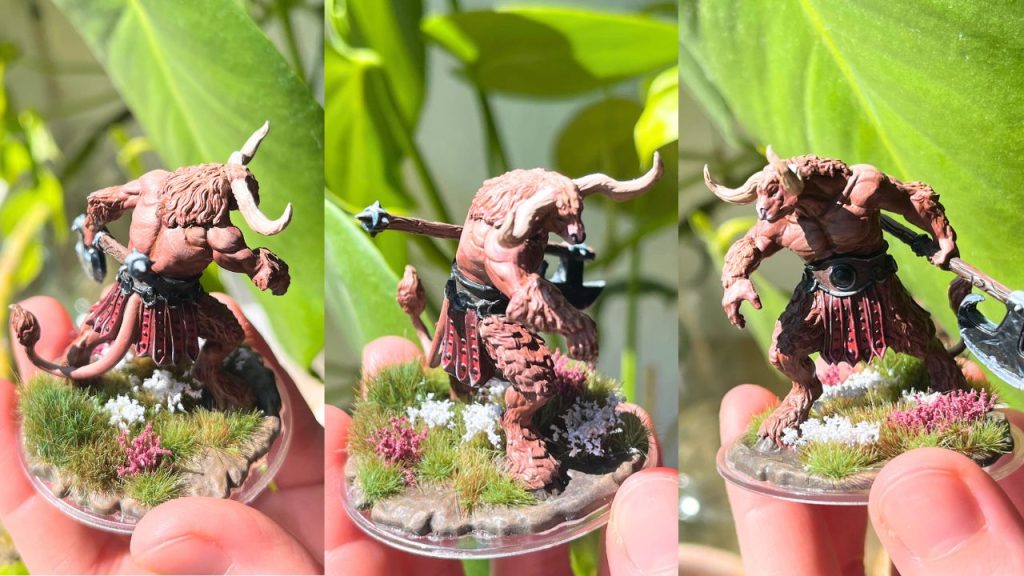
Das Platzieren der verschiedenen Gräser hat nicht nur Spaß gemacht, es gab dem Barbaren auch eine ganz neue Sichtweise. Und die passt auch obendrein noch perfekt zu seiner Persönlichkeit!
Unser Barbar ist nämlich ein großer, gefährlich aussehender, waffenschwingender Minotaurus, aber er ist auch ein Freund der Natur. In unserer D&D-Kampagne stammt er aus Ravnica und war dort ein Teil des Gruul-Klans, der den Ausbau der städtischen Zivilisation verhindern und stattdessen Platz für die Wildnis schaffen will. Außerdem ist er ein wahrer Sweetheart, weshalb die Blumenwiese zu seinen Füßen einfach besser zu ihm passt als die vorherige braune Suppe, in der er stand.
Terrain ist nur einer von vielen Aspekten beim Miniatur-Hobby, um seine Figuren und ihre Bases, aber auch gesamte Maps zu gestalten. Mit den Grasbüscheln habe ich das Thema Terrain nur dezent angekratzt, bin aber nun durchaus motiviert, mich mit noch mehr Möglichkeiten wie Steinen, Knochen und Sand auseinanderzusetzen.
Auch beim Malen lernt man nie aus. Was ich seit meinem Start vor ungefähr einem Jahr bereits lernen durfte, habe ich hier für euch in meinem Rückblick zusammengefasst: Rückblick auf mein erstes Jahr als Miniatur-Neuling – Diese 6 Dinge habe ich seit dem Start gelernt

Deine Meinung ist uns wichtig!
Gefällt dir der Artikel? Hast du irgendwelche Kommentare? Sag uns, was du denkst!





























Kommentare
Die Mengen an Dekosand, -kiesel und anderes Kleinzeug, die sich über die Jahre ansammeln xD
Oh ja, ich glaube davon wird meine Wohnung auch nicht verschont bleiben 😅