

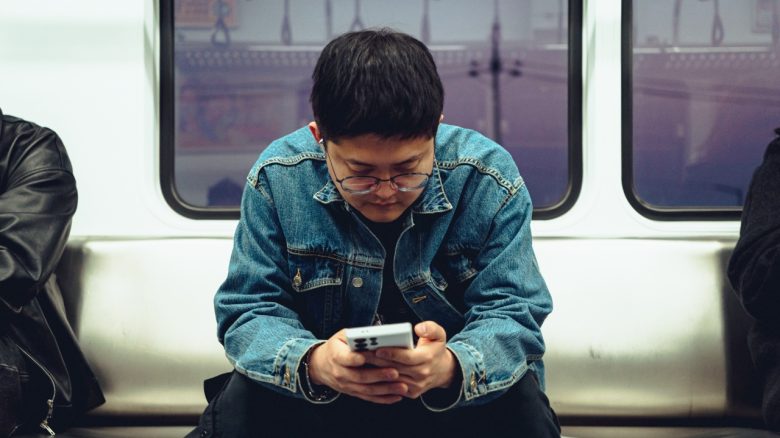
How social media and the digital world could change in a few years is already evident in South Korea.
Loneliness affects many people and is increasing due to social media. What seems paradoxical is a fact that is already a lived reality in highly digital South Korea.
The mega-stress that young people in the country have to endure is met by them with a whole new type of apps that actually do nothing.
Specifically for children, teenagers, and their parents/caregivers, there is also anonymous, free, and confidential help at the Number Against Pain (nummergegenkummer.de).
Fake Apps Against Real Problems
What kind of apps are these? In Asia, especially in South Korea, fake apps have been trending for some time. Imagine the following:
It’s Monday evening, you come home after a stressful workday and still have laundry and cooking waiting for you after already working for 9 or 10 hours. Ideally, you would like to order food to buy back some leisure time, but you actually need to save for the upcoming car repair.
In South Korea, many young people turn to fake apps here. On one platform, people can order fake food that is then virtually prepared and even sent to them. It never really arrives but is supposed to help forget one’s stress.
The same principle applies to fake shopping apps, where you can “buy” clothes, toys, or other items, but never actually receive them. This way, one can spend the evening shopping online without spending a cent.
What does this bring? The fake ordering helps young people relieve stress. Similarly, there’s an app for smoke breaks. It simulates a smoke break even for those who don’t smoke at all.
When you press the start button, you see who is currently online and can take a virtual smoke break together with others. Anonymous users leave messages like: “I want to go home” or “I can get through another day,” as one user reports.
The virtual smoke break helps against loneliness just as the shopping apps help with the stress of the modern work world. Kim Heon-sik, a professor at Jungwon University, says that the spread of the apps is strongly linked to a broader online culture based on constant stimulation.
Kim Heon-sik suggests that the phenomenon among youth is comparable to watching “Mukbang,” a type of online show where people watch others consume large quantities of food, helping to satisfy the viewers’ appetite without them having to eat in real life.
Recently, there are more and more contents that allow people to experience things like alcohol, cigarettes, and food indirectly […] These pages also reflect the desire to experience a similar satisfaction or atmosphere without participating in real life.
The trend also reflects the exhaustion and anxieties among young people, according to Kim. Even a weak sense of shared presence can play a role.
We live in a time characterized by uncertainty about the future and burnout […] People today tend to find comfort only in feeling loosely connected online. […] Just the feeling that others are online at the same time – no matter who they are – can lead people to feel that their loneliness and fears have lessened […] Not having to enter into burdensome relationships is also considered refreshing by young people.



The more time we spend on social media, work, and alone in front of our screens, the less time we spend in the real world, with real people, and at real events. Do you think that such fake apps can help tackle real loneliness and stress? Or do you think it’s all just nonsense? Feel free to share in the comments. The co-founder of Steam is now finally treating himself to a proper beach villa after three yachts

Your opinion is important to us!
Do you like the article? Then let us know!