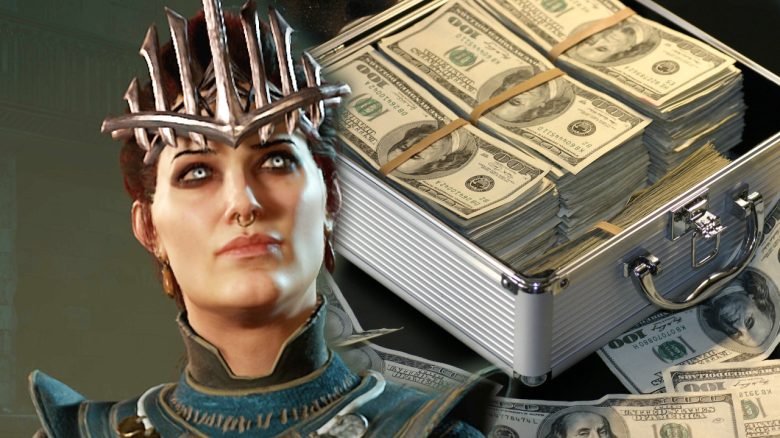
The “European Consumer Organisation” has addressed the issues of microtransactions and real money currencies in a report. MeinMMO summarizes the most important findings for you.
What was the focus of the EU organization’s investigation? Half of all Europeans aged between 6 and 64 play games. Three out of four children are said to play regularly. This is difficult because increasingly more trading practices are spreading in the gaming industry, to which children can be particularly susceptible.
Specifically, the report addresses the use of loot boxes, aggressive advertising, direct solicitations to children to spend money, and the implementation of real money currencies. The report by the “European Consumer Organisation” (BEUC for short) elaborates in detail how dangerous and questionable especially real money currencies in games are.
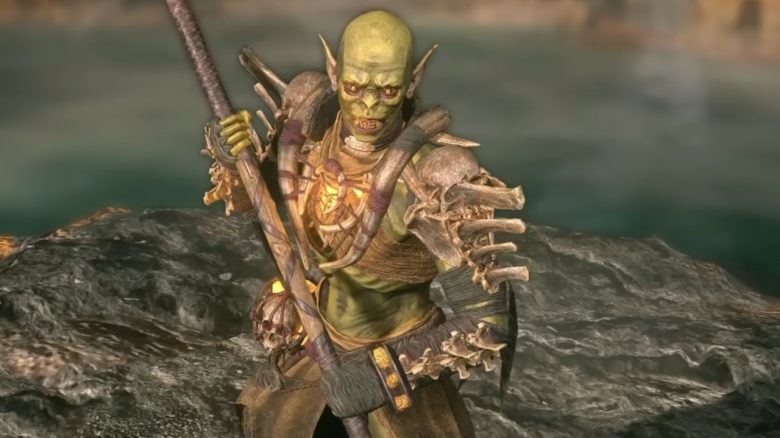
In Diablo Immortal, you will find a “Best of” the well-known monetization strategies.
Current regulations are insufficient
What are the organization’s findings? According to the report (via beuc.eu), there is EU consumer law that applies unconditionally to real money currencies in games and apps in all EU member states; however, it is only inadequately enforced in many countries.
Real money currencies are considered problematic by BEUC for the following reasons:
- Because there are often multiple different currencies in games and the prices for real money currencies cannot be directly translated to the things that can be purchased with real money currency, players lose any sense of how much the real money currency is actually worth. Experts refer to this as unfair and misleading methods.
- While online purchases with real money often invoke the “pain of paying” principle (spending hurts), many consumers lose this negative stimulus when using virtual currency. This is exacerbated because many microtransactions in games only involve small amounts.
- When purchasing with virtual currency, similar mechanisms to gambling may come into play (e.g., the use of chips).
- The digital environment facilitates immediate payment without further consideration.
In summary, it can be stated that providers deliberately utilize psychological mechanisms to extract as often as possible (usually small) amounts of money from consumers, causing them to spend more than they would in other games or than they actually want to.
What are BEUC’s demands? The European Commission should consider the possibility of completely banning the use of real money currencies in games and mobile apps, according to the organization’s recommendation.
Since BEUC itself knows that this is unlikely to happen, they give further recommendations; here are the main ones:
- Ban on real money currencies for games and apps for children (under 18 years old).
- Stricter transparency requirements for games and apps with real money currencies (e.g., displaying costs in the respective local currency).
- Stronger protective measures for children and stricter regulation of measures (e.g., the option to disable real money currencies and microtransactions).
- Ability to set a password to prevent unwanted transactions.
- Consumers should be able to play video games without their economic behavior being influenced by an algorithm. The privacy-friendly mode should be “enabled by default.”
- Legal warranty rights and the right of withdrawal should also apply to purchases made with real money currencies.
- Clauses that exclude refund claims should be declared abusive.
Who is BEUC? The “European Consumer Organisation” represents a total of 44 independent consumer protection organizations from 31 countries as an umbrella group and is supported by the European Union. The report from BEUC goes directly to the European Commission and the network of various consumer protection organizations. You can learn more at beuc.eu.
What is the situation in Germany? Although many games specifically exploit the psychological mechanisms of gambling to encourage players to spend money, games do not fall under the gambling sector here. The gambling state treaty, which was closed in February 2020, states (via game.de):
“In its statement, the game takes the opportunity to clearly distinguish the gaming industry from the gambling industry. There is a clear boundary between the two economic sectors. Unlike games, gambling centers around the potential win of money or other valuable items.”


Every friend of games should keep their fingers crossed that this assessment, also through the new report from BEUC, will change in the future. How dangerous gambling can be is shown by the following news from last year: 15-year-old becomes addicted to gambling through Twitch, loses €10,000, warns others of his mistake