

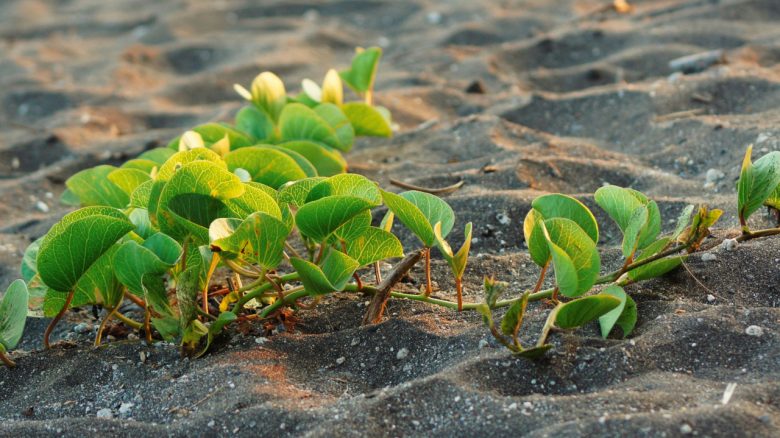
Wüstensand in fruchtbares Land verwandeln. In China hat man eine Technik entwickelt, die das langfristig wieder möglich macht. Es müssen aber Voraussetzungen erfüllt sein, damit das auch klappt. Wasser ist selbst für diese Technik unerlässlich.
Sand zerstört jährlich viele Quadratkilometer fruchtbares Land. Die weltweite Ausdehnung von Wüsten (Desertifikation) ist ein ernstes Umweltproblem. Menschliche Eingriffe wie Überweidung, Abholzung und intensive Landwirtschaft fördern die Desertifikation.
Die Chinesische Akademie der Wissenschaften (CAS) hat jetzt ein Verfahren entwickelt, wie man aus Wüste wieder fruchtbaren Boden machen kann. Zumindest dann, wenn die Grundvoraussetzungen stimmen. Das Ergebnis wurde im Magazin Soil Biology and Biochemistry veröffentlicht (via sciencedirect.com).
Cyanobakterien bilden Bodenkruste auf Wüstensand, die Nährstoffe zurückhalten kann
Was haben die Forscher gemacht? Chinesische Experten haben in Wüstengebieten spezielle, im Labor vermehrte Cyanobakterien auf Sandflächen ausgebracht, die mit Strohnetzen im Schachbrettmuster überspannt wurden.
Diese Mikroben bilden eine sogenannte „biologische Bodenkruste“: Sie umhüllen Sandkörner mit einem schleimigen Zuckerfilm, der aushärtet und die Körner wie Klebstoff zusammenhält.
Innerhalb von etwa 10 bis 16 Monaten entsteht so eine stabile, dünne Kruste an der Oberfläche, die Sandverwehungen stark reduziert und Nährstoffe sowie Wasser besser im Oberboden hält. Dadurch wird eine Art Vorstufe fruchtbaren Bodens aufgebaut, auf der Gräser und Sträucher deutlich bessere Chancen haben, zu wachsen und zu überleben
Was ist daran besonders? Normalerweise dauert der natürliche Entwicklungsprozess solcher Schichten in der Natur Jahrzehnte. Die chinesische Forschung zeigt jetzt, dass man diesen jahrzehntelangen Entwicklungsprozess auf etwa ein Jahr verkürzen kann und das mit sichtbaren Erfolgen: Lockerer Sand wird zu einer stabilen Oberfläche, die anschließend genutzt werden könne (via indiandeferenceview.com).
Wo kann die Technik helfen? Die neue Methode kann Sandverwehungen eindämmen, Oberboden aufbauen und damit Aufforstungs- und Begrünungsprojekte in Trockengebieten unterstützen. Laut Forschern könnte man die Verwüstung (Desertifikation) damit deutlich reduzieren. Mehr organische Substanz im Boden bedeutet potenziell mehr Kohlenstoffspeicherung und weniger Staub- und Sandstürme (via earth.com).
Welche Einschränkungen hat das System? Die Methode funktioniert vor allem dort, wo es zumindest gelegentlich regnet. Ausbleibende Niederschläge oder Extremhitze können Aufbau und Aktivität der Krusten stark bremsen. In der tiefsten Sahara funktioniert die Methode daher eher nicht.
Langfristige Klimaschäden oder menschliche Eingriffe wie eine starke Überweidung oder eine Entwaldung können mit der Technik ebenfalls nicht kompensiert werden.



8,2 Milliarden Menschen leben auf der Erde. Doch Forscher haben nachgerechnet und glauben: Wir haben uns um Hunderte Millionen Personen verrechnet. Denn vor allem eine Personengruppe hat man wohl kräftig unterschätzt: die Landbevölkerung: Offiziell gibt es 8,2 Milliarden Menschen, doch Forscher haben gemerkt: Wir haben uns kräftig verrechnet

Deine Meinung ist uns wichtig!
Gefällt dir der Artikel? Hast du irgendwelche Kommentare? Sag uns, was du denkst!





























Kommentare