
MMOs don’t have to be time-consuming
MeinMMO: An MMORPG no longer competes only with EverQuest or World of Warcraft, but also with Fortnite, TikTok, streaming services, and the Game Pass. How does an MMORPG in 2026 justify the enormous entry barrier and time investment it demands from players compared to fast, instant-gratification-based alternatives?
Benjamin Zuckerer: MMORPGs can offer something that few other media can: a community. TikTok delivers entertainment for minutes. An MMORPG can create memories that last years or even decades.
Many Tibia players still remember their first guilds, their first big battles, or the people they met there. Of course, MMORPGs need to become more accessible today. But I don’t believe they can win by trying to copy TikTok.
They win by playing to their own strengths: persistence, social bonds, identity, and meaning. The core idea behind Persist Online arose from exactly this thought. We liked the excitement of games like DayZ or Escape from Tarkov but wanted to create a world where progress is preserved and players can build something over the long term.

Greg Street: I think the unpopular answer is that they can’t. You can’t make a game that takes 200 hours to really get good and 1000 hours to master and expect players to just give it a shot.
Your game has to be good quickly and it has to provide something interesting to do in small time chunks, say the 45 minutes someone might have before bed.
An MMO cane and should still have the long from content – I am a fan of 3 hour raids. But they need more than that, and in fact I think compressing the raid into 15 minutes is the wrong approach. Just provide different experiences for the short and long time slices. For many MMOs the only short time slice activities are pretty lame like check your auction house or gather a few resources.
Jack Emmert: I’m not sure I agree that a MMO requires either a high barrier to entry or massive time investment – I think if a modern MMO tries to play that game it’ll lose. I think a MMO should identify the different types of players it has and make sure that there is an easy, achievable and rewarding progression path for each.
I try to think of the different types of players – the casual, the hard core, the wanna be hard core but don’t have time anymore, the casual I only play because my friends do, etc. And then I try to design the rewards that each one values the most – and make those obtainable within their constraints.
In recent years, Emmert has been working with his own studio Jackalyptic Games on fulfilling a lifelong dream: the development of an MMORPG for Warhammer. However, due to a cost-cutting measure, the Chinese company NetEase halted financing for the project last year.
With his return to Cryptic in January 2026, the MMO expert can leave this unfortunate chapter behind, look ahead, and make a fresh start. He spoke with us about his plans here: “A new MMO is coming from me” – The failed game for Warhammer brings genre stalwart Jack Emmert back to Cryptic
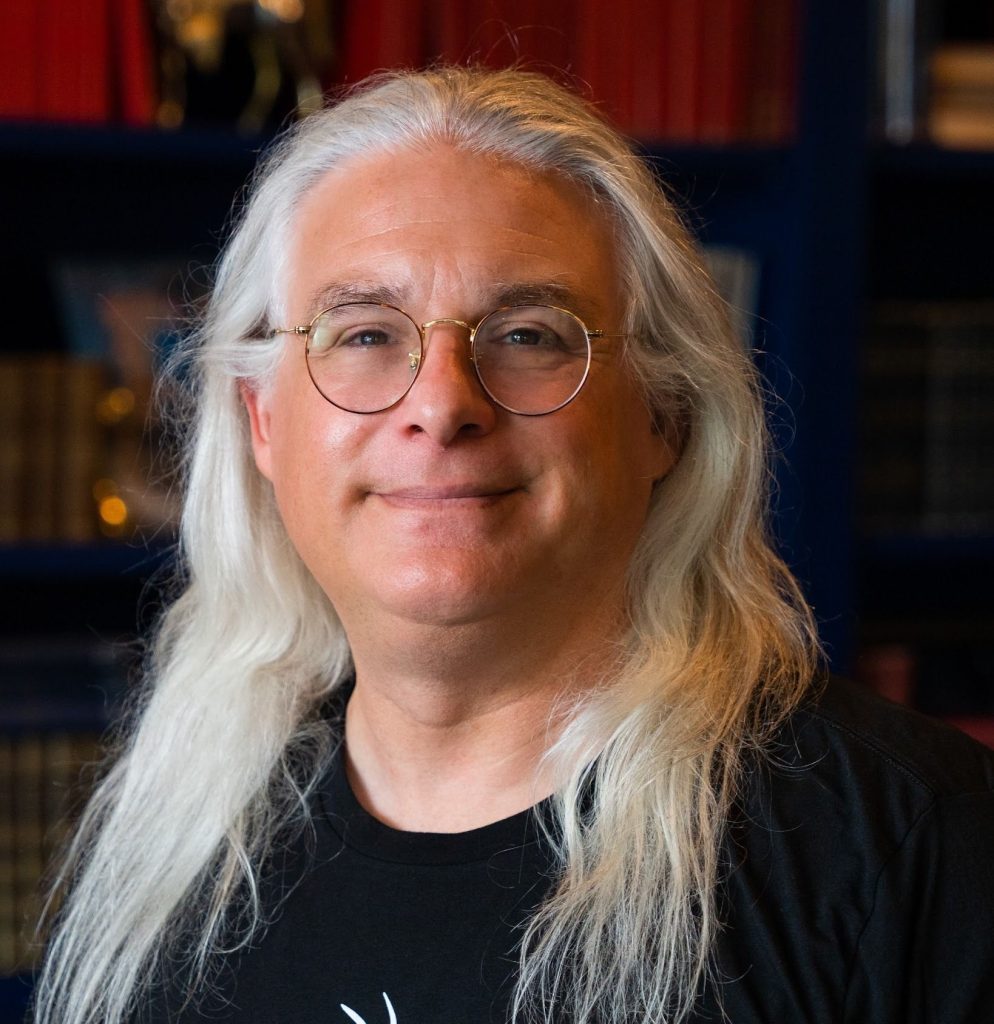
Moritz Bokelmann: MMOs have always been in direct competition with other entertainment budgets – both monetary and time budgets. It has always been a competition with cinema, TV, board games… There will always be an audience willing to invest more for great entertainment. Just look at the still booming Warhammer 40K.
The answer, or at least part of it, is probably: “Your game is not made for everyone. And that’s okay. You don’t need everyone – you need some.” And if “some” is a large enough group and you develop a game tailored to them, made for them – then they will come. And if you’re lucky, they’ll break down your doors. A clear vision, a clear target audience, a clear implementation – those are necessary and perhaps even sufficient prerequisites for delivering a good or even great game.
But to return to the question of “how does…” : No other type of game will ever work as well as a means for social interaction and as a foundation for communities like an MMORPG. It is, potentially, an endless source of entertainment where you achieve goals and forge social connections at the same time. Is that for everyone? No. But it doesn’t have to be.
Although Albion Online is from Germany, the MMORPG only got an EU server in April 2024 – here is the trailer:
Raph Koster: I don’t think MMOs have to have that high a barrier to entry, is the main thing! So many of the things that cause that are choices that we tend to make by default. For example, having strongly party-driven gameplay causes sessions to get longer as people work to form parties, and if you don’t allow soloing, means that having a pack of friends is part of the barrier. But that’s a choice, and it’s not one we need to take for granted. You can support party and soloable gameplay in one game!
One of our pillars when we started was, “you should be able to log in, get to your friends instantly, and have a fun session in fifteen minutes.”

Rich Lambert: People play games like Skyrim, Hades, and Pokemon for hundreds of hours. How is that fundamentally different from playing an MMO for hundreds of hours? I don’t think the issue is the amount of time. It is whether that time feels worthwhile.
Modern MMOs have already put a lot of effort into making the genre more accessible, respecting player time, and making sure players can make meaningful progress in shorter play sessions. You can see that across the current crop of MMOs.
Are we perfect yet? No. But there has been a massive shift, and teams are still pushing in that direction. In my opinion, the issue is not asking players for time – the issue is wasting it.
On the next page, we discuss the issue of the payment model and how to reconcile rising costs with a fair system.

Your opinion is important to us!
Do you like the article? Then let us know!