
A new theme park MMORPG like WoW, with content for all types of players, should definitely be at the top of many genre fans’ wish lists. However, according to experts, this is the exact wrong way to successfully implement a modern online role-playing game in 2026.
When looking at the most successful and popular online role-playing games of the past decades in the West, you will find the major, well-known theme park MMORPGs like World of Warcraft, Final Fantasy XIV, The Elder Scrolls Online, Guild Wars 2, or Star Wars: The Old Republic at the top of the list.
This is not surprising. With their vast worlds full of clearly structured PvE and PvP attractions (hence the name theme park), they appeal to a wide target audience. Whether you enjoy quests, dungeons, raids, battlegrounds, arenas, crafting, or optional side activities like housing or mini-games, there is something for almost everyone.
Will Guild Wars 3 ultimately feel like a real theme park MMORPG?
After the enormous success of WoW, such theme park MMORPGs mushroomed over the years. But that was a long time ago. Since 2015, only one representative of this MMO genre from the West has been released, and it was only transformed into a theme park at the finish line: New World.
However, the immensely successful Steam launches of New World and Lost Ark (an isometric theme park MMORPG from Korea) emphasize that the Western community still has a strong desire for this type of online role-playing game.
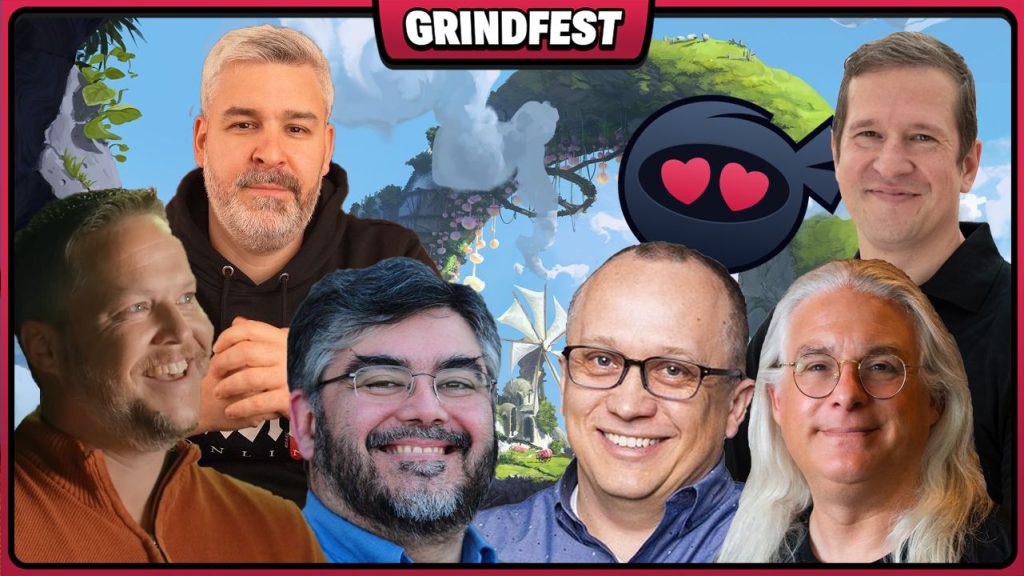
The problem: The people currently working on MMOs don’t think much of pure theme park MMORPGs. This can be inferred from the responses we received from 6 MMO legends for our Grindfest 2026.
You can check out one of the MMO talks from Grindfest 2026 below – also make sure to regularly visit the GameStar Talk channel for many more exciting discussions about the best hobby in the world:
Theme park MMORPGs have a problem that cannot be solved
What is the major problem with theme park MMORPGs? This type of online role-playing games defines itself by having many handcrafted “one-way” contents, such as the leveling phase, story quests, dungeons, and raids.
They shine, at best, through their high production quality and can possess a high replayability (through leveling twinks or repeatedly visiting a raid to optimally equip oneself). However, producing such “one-way” contents is also very time-consuming and expensive.
Experts agree: Players will finish this type of content faster than it can be developed. If you enter this race, you will inevitably lose or accept long periods without new content, during which players will find their fun elsewhere.
From the perspective of MMO veterans, it is therefore not a good idea to rely on such a theme park today.
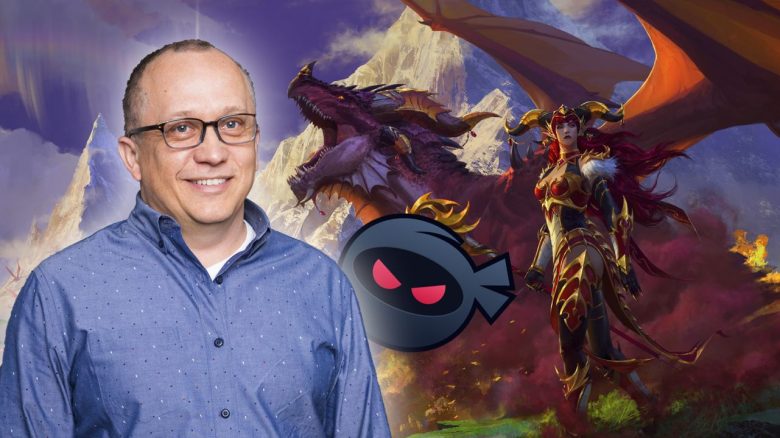
What is the more promising option? According to experts, it is most promising to give players a foundation of systems from which inherently new experiences can emerge over a long period of time. Benjamin Zuckerer, one of the managing directors of CipSoft (Tibia), describes it to us as follows:
Sustainable MMORPGs therefore do not primarily live from content, but from systems. A functioning economy, conflicts between players, territories, social relationships, rivalries, or cooperations can generate new experiences over the years without developers having to build each individual situation.
An example that seems obvious is PvP – because players create new experiences in competitive challenges through their potentially unpredictable actions.
Former WoW lead designer Greg Street also recommends focusing on systems instead of content:
The better approach is a more systemic way, where the game rules interact in such a way that they provide players with content without the development team having to pre-determine and design around every single possibility.
Stars Reach aims to offer a foundation for thousands of hours of gameplay through its highly simulated universe:
Sandbox or theme park? None of that – a playground!
It sounds like all the experts we interviewed tend to develop a sandbox MMORPG that promises players as much freedom as possible. In fact, many veterans also consider this extreme case to be difficult. Greg Street explains that a middle way might be the optimal solution:
I think the right model is not in the extremes of theme park or sandbox, but is more like a playground: There is a certain structure and direction that players can go, but also a lot of freedom.
In a theme park, everyone experiences the attractions in exactly the same way – you stand in line, get in the ride, see the animatronic pirates doing the same thing, etc. In a sandbox, everyone gets a blank canvas and is supposed to create something: “Here is sand! Do something with it!”.
But a playground gives you a certain structure, but not too much. You don’t have to climb the jungle gym in a specific way. You can slide down the slide, or climb up the slide, or pretend the slide is a dragon. (Other climbing frames or slides might even have a real sandbox underneath).
Rich Lambert, the creative head of Zenimax Game Studios, supports this middle path. In his view, it is essential to find a balance between well-written stories and systemic, emergent behavior. In his opinion, you can’t do without the large, handcrafted contents. But you also shouldn’t rely solely on these “one-way” contents.
What do you think: Do you prefer theme park or sandbox MMORPGs? Or maybe a playground instead? Let us know in the comments! What the experienced MMO developers had to say during Grindfest 2026, you can find out here: 6 MMO legends reveal why it is so hard to create a successful MMORPG today
In addition to PvP, he offers two more examples that can serve as a foundation for an MMORPG: physics-based simulation and the variance of the roguelike genre, where each run behaves a bit differently due to randomness. Cryptic’s CEO Jack Emmert touches on this randomness in his response:
In my own MMO, I have played the Neverwinter dungeon well over 100 times to get the complete gear set for my fighter! Of course, the content has to be fun so that players don’t mind playing it repeatedly.
For me, this always meant incorporating elements into the content that create interesting new twists. Small random elements – that could be the boss’s attack cycle – those could be the adds – those could be environmental elements.
6 experienced MMO developers have given us exciting insights at Grindfest 2026: Benjamin Zuckerer (CipSoft – Tibia, Persist Online), Greg Street (formerly WoW, LoL MMORPG and Project Ghost), Jack Emmert (Cryptic – Star Trek Online, Neverwinter, Champions Online), Moritz Bokelmann (Sandbox Interactive – Albion Online), Raph Koster (formerly Ultima Online, Star Wars Galaxies – now: Stars Reach) and Rich Lambert (Studio Game Director at Zenimax Online – Elder Scrolls Online).
A future MMO that strongly focuses on physics-based simulations is Stars Reach. There, players can terraform entire planets and even manipulate the age of materials and living beings with tools. Chief developer Raph Koster (Ultima Online, Star Wars Galaxies) describes the philosophy behind it:
If you design your game based on rules rather than handcrafted content and one-off solutions, you get a simulation-based design on which you can build handcrafted elements.
Rules can interact with each other and create emergent behavior – things that were not predictable. This makes everything in the game deeper and more consistent.
Moritz Bokelmann, the creative head of Albion Online, explains that this is precisely why they chose a sandbox instead of a theme park approach:
We were a really, really small team when we started – and in comparison, we are still a small team today. So we always had to act smart and develop systems that allow players to find their own content – or be their own content.
To make this work for theme park MMOs, you as a developer have to cleverly create repeatable content, accept that you will never, ever be able to keep up with and satisfy the content hunger of players – and also accept that in the inevitable slower times, players will play other games.
Stars Reach aims to offer a foundation for thousands of hours of gameplay through its highly simulated universe:
Sandbox or theme park? None of that – a playground!
It sounds like all the experts we interviewed tend to develop a sandbox MMORPG that promises players as much freedom as possible. In fact, many veterans also consider this extreme case to be difficult. Greg Street explains that a middle way might be the optimal solution:
I think the right model is not in the extremes of theme park or sandbox, but is more like a playground: There is a certain structure and direction that players can go, but also a lot of freedom.
In a theme park, everyone experiences the attractions in exactly the same way – you stand in line, get in the ride, see the animatronic pirates doing the same thing, etc. In a sandbox, everyone gets a blank canvas and is supposed to create something: “Here is sand! Do something with it!”.
But a playground gives you a certain structure, but not too much. You don’t have to climb the jungle gym in a specific way. You can slide down the slide, or climb up the slide, or pretend the slide is a dragon. (Other climbing frames or slides might even have a real sandbox underneath).
Rich Lambert, the creative head of Zenimax Game Studios, supports this middle path. In his view, it is essential to find a balance between well-written stories and systemic, emergent behavior. In his opinion, you can’t do without the large, handcrafted contents. But you also shouldn’t rely solely on these “one-way” contents.
What do you think: Do you prefer theme park or sandbox MMORPGs? Or maybe a playground instead? Let us know in the comments! What the experienced MMO developers had to say during Grindfest 2026, you can find out here: 6 MMO legends reveal why it is so hard to create a successful MMORPG today

Your opinion is important to us!
Do you like the article? Then let us know!