

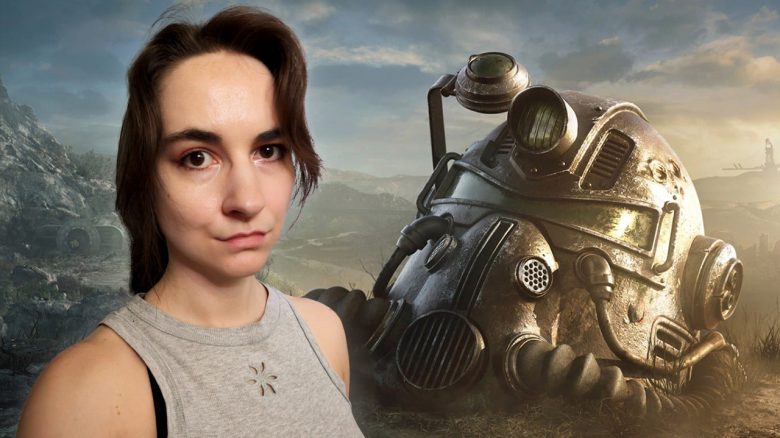
The radical Xbox overhaul leaves the gaming world in shock. But while the management is raking in billions with Minecraft and Candy Crush, a dangerous gamble looms on the traditional core front. Why the frantic focus on Fallout and The Elder Scrolls 6 is the completely wrong lesson from the crisis – A commentary by MeinMMO editor-in-chief Leya.
For days, a tremor has been shaking the gaming industry. At the beginning of June, Xbox chief Asha Sharma announced that 3,200 employees would be laid off and five studios sold off. Smaller, creative teams are being cut, and the middle base is being ruthlessly wiped out.
Amidst the rubble and poor morale, the new core strategy is taking shape: Everything is panicking focused on the mega-brands. Obsidian is being assigned to Fallout, all hopes rest on The Elder Scrolls 6. In addition, the established cash cows around Minecraft and Candy Crush are now being milked like never before.
This is not a brilliant rescue plan, but rather a risky regression into exactly the AAA arms race that has summoned this crisis in the industry.
The Two Worlds of Xbox
Superficially, Xbox’s strategy makes sense.
From the investors’ perspective, a well-known brand like Fallout is the safest investment one can make – especially after the huge success of the TV series. The market is so saturated that new, original brands are finding it increasingly hard to break through. Betting on nostalgia and known names is the logical survival strategy in this recession.
Skyrim has sold over 60 million copies and is a pop culture phenomenon. Just the name The Elder Scrolls 6 will likely earn millions on its opening weekend – no matter how the reviews turn out. For Microsoft, this is the ultimate Game Pass driver and system seller that they need as a flagship for their ecosystem, even if the game ends up getting “only” a solid 80 rating.
The expensive gamble is to be financed by a completely different world in-house: On the profitable side, there are Candy Crush and Minecraft. These are the cash cows that now report directly to the head, carry little risk, and secure the financial foundation, while the Activision-Blizzard branch with Call of Duty, World of Warcraft, and Diablo at least brings in stable service money.
The risk-free platforms are thus financing the traditional giants laterally, and in the end, we happily hold our hardware with a pre-installed Elder Scrolls 6 in our hands. Xbox is saved. That sounds solid.
And yet, I cannot believe in this strategy.


The Starfield Trauma and a Moral Powder Keg
The assumption that TES 6 will be a guaranteed, infallible mega-hit is naive.
Starfield has painfully proven that the old Bethesda formula is crumbling. Today’s players are simply accustomed to other experiences thanks to Baldur’s Gate 3 or creative surprise hits like Clair Obscur: Expedition 33. By the time TES 6 is released, almost two decades will have passed since Skyrim. The expectations are so astronomical that the game can almost only disappoint. If a 300-million-dollar project is developed over eight years and ends up delivering only solid results, it is an economic total loss in today’s AAA business.
This is one of the biggest problems that has plunged this industry into crisis: the blind focus on a single project with the largest open world, the fanciest graphics, and the most astronomical costs. If this one gambit fails, gaps emerge that a corporation can hardly cover.
And now, Obsidian is supposed to save Fallout. What sounds like sweet New Vegas 2 romance to fans is in reality a powder keg. Team morale after the mass layoffs – including directly at sister studio id Software – is at an all-time low. Developers are not machines that can be programmed at the push of a button to achieve “creative peak performance.” When a masterful RPG studio like Obsidian is treated from above as a mere assembly line command receiver for a foreign Bethesda brand, creative burnout and the departure of key talents are imminent.
Yes, with Tim Cain, the creator of Fallout is returning – but with a burned-out team, he too will not be able to work wonders. Microsoft must now hope that developers are satisfied with sitting safely on a known brand while the rest of the industry crumbles around them. This is certainly not a visionary starting position for a mega-hit.
The Homemade System Error
While hits from the second tier prove that players are hungry for fresh, lean ideas, Xbox is doubling down on the sluggish supertankers.
Microsoft is trying to solve a structural problem with sheer size. If The Elder Scrolls 6 or the new Fallout stumbles, there is no springy safety net of creative AA projects anymore – those teams have just been cut by management. Microsoft is splitting its gaming division into two extreme worlds: While in the background, the absolutely safe mobile and platform cash cows are being milked, they are putting everything on these two cards at the traditional core front with the last remaining cult brands.
However, the strategy suffers from a homemade system error: the Game Pass. The subscription model swallows hundreds of millions in development costs for mega projects on the first day, but cannot recoup them through stagnant subscription numbers. By sacrificing the creative mid-level to plug the gap in the Game Pass with even larger, slower brands, they are only maneuvering themselves deeper into the dead end.
Now, Xbox wants to force giantism again, on which they are just choking.
In the end, it should just be said: At the casino, the player rarely wins.
What do you think of Xbox’s current strategy? Currently, even more teams are suffering under Microsoft’s umbrella: The layoffs at the creators of Elder Scrolls Online are even more drastic than expected. Can the big turnaround for Xbox succeed?

Your opinion is important to us!
Do you like the article? Then let us know!