

After the end of Destiny, some big names in the gaming industry comment on the topic of live service in video games, why everyone wants to do it, and why it is so difficult to keep games of this kind running. MeinMMO editor Benedict Grothaus says an important detail is being overlooked.

Service games have been a thing for years: games that are not (only) financed by a one-time sale, but through recurring payments. World of Warcraft requires a subscription, League of Legends offers tons of skins for purchase, Fortnite invented the modern Battle Pass.
Since the rise of Fortnite, it feels like every studio is trying to somehow enter this service market. Even before that, WoW killers attempted to get a piece of the pie, but many of them have failed spectacularly.
The result was a flood of games that couldn’t hold their ground and blocked the production of new games. However, the last few years have shown that this fixation on supposed success was a big mistake.
Service games can be lucrative – or a nasty pitfall
But why do “games as a service” hold such a fascination for studios and publishers? Media expert Jason Schreier addresses this in a new YouTube video. Service games promise a long-term cash flow and seem to be self-sustaining.
Once established, a small team of developers can guarantee steady income, at least that’s the impression that’s often created. The money can then – in theory – be used for developing new games.
Schreier explains that the development of games has become increasingly expensive over the years. Accordingly, studios have to cover higher costs, and this is easier to achieve with promises of large revenues (like those from service games). Even flops from other productions can be cushioned this way.
This is all a result of an industry driven by hits. Not only does Schreier believe this, we see it repeatedly, and even the head of Epic, Tim Sweeney, who has one of the largest service games in the world with Fortnite, shares this view.
“It is nearly impossible to move an entire group to a new game”
In the presentation for Unreal Engine 6, Sweeney explains that multiplayer games are in a crisis because they can’t manage to entice players away from established games:
Users tend to enjoy games with their right friends, and it is nearly impossible to move an entire group of friends from an existing game to a completely new one. Only massive mega-hits manage this community migration about once every few years.
Tim Sweeney, via Inven Global
This statement receives a lot of backlash on X with the criticism that Sweeney does not understand his players – and I have to agree to some extent. Yes, it is difficult to get people to switch. But that is not the real reason for the recent failures of games.
A game doesn’t have to be a mega-hit, just better than the competition
As someone who has been playing video games (and service games) since childhood and has been professionally involved with the industry for years, I often notice that circumstances like those described by Sweeney are used as an excuse for failure.
However, the reality is often simpler: the games in question are simply not good enough.
Yes, it is difficult to encourage gamers to switch to a new game. However, this only applies if that game does not offer more, or perhaps even less than the current title. On the other hand, it is very easy to persuade players to switch from a good product.
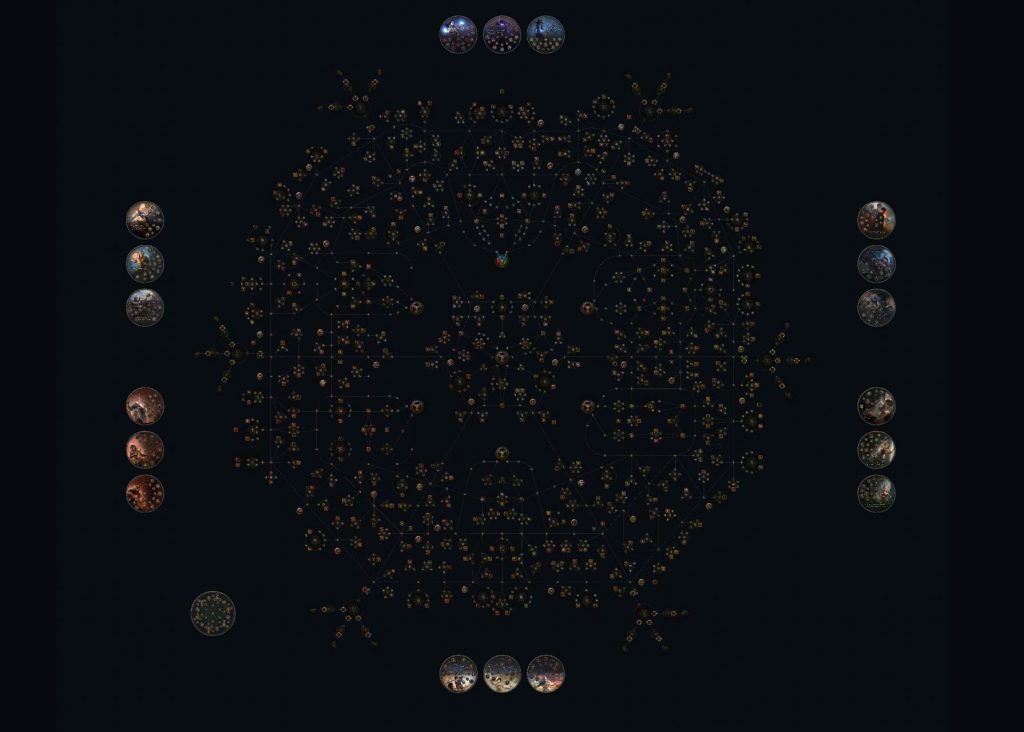
Diablo, for instance, was long considered the market leader in the hack-and-slash genre, with individual competitors such as Grim Dawn or Torchlight – all of which came without much consideration for service. Only Path of Exile dared to challenge the throne here and succeeded.
Is Path of Exile bigger than Diablo? No, certainly not. It is not a “mega-hit.” But is it successful enough to sustain itself and allow the studio to continue? Well… Path of Exile 2 is currently in development and is already considered a good game. So yes: even without the mega-success of a “once in a decade” blockbuster, a game can be successful.
Path of Exile has simply done certain things better or differently than Diablo. Players who have fully switched sought more challenge. ARPG fans who simply enjoy slaying monsters play both games.
Working service games are no longer a guarantee for sustained success
There is also the assumption that a service game can endlessly secure a studio’s existence. This may be true for some titles like World of Warcraft or GTA Online. But even the service segment of gaming has become volatile by now.
Destiny 2 has officially received its last patch and how the franchise will continue is unclear. The loot shooter long stood as a staple in gaming with a large, albeit slowly shrinking fan base.
Releasing a new game always carries a risk – even with service games. But Destiny shows that even successes don’t have to last forever. A bad sign for the industry, which even the competition recognizes. Warframe, for example, respectfully bids farewell to Destiny and laments the loss of the shooter (via Eurogamer), even though both games vied for the same players.
Gamers apparently reward good games with a clear thought behind them
The idea that there is simply a huge mass of players from which you can surely grab a few by simply copying a successful game has proven to be false. Gamers are not a pie to be divided, but people with their own thoughts.
Sweeney is right that mega-hits attract the masses and siphon players from established service games. However, one must ask what actually makes these games hits and whether they are really so mega
.
For you don’t have to invest hundreds of millions into an idea that has already been out there and then hope that enough players will be convinced by the same gameplay that already exists. That’s why I found the statement so annoying. You can even keep players engaged over years with single-player games if the quality is right:
- Expedition 33 comes from a small studio and is still considered an absolute masterpiece that has attracted millions.
- Baldur’s Gate 3 and Cyberpunk 2077 remain so popular years after release that they regularly appear among the most played games on Steam.
- Black Myth: Wukong and Elden Ring demonstrate that even games in the same genre can coexist and be successful simultaneously.
All these games have in common that they are backed by teams that did not simply chase the latest trend. The studios created games they knew: we can do this, or games they simply wanted to make themselves.
Baldur’s Gate 3 has captivated players with its attention to detail, ensuring they still want to play it years after its release:
A game is not a flop just because it isn’t the next mega-hit
Especially Baldur’s Gate 3 comes from a genre that no one would have expected a blockbuster from in today’s time. However, this does not mean that service games are dead because even here there are examples of functioning titles:
- Helldivers 2 is the prime example of “simple done right” – a game principle that everyone understands immediately and anyone can get into, but with refined details instead of “innovative” new ideas.
- ARC Raiders, on the other hand, was able to impress with a completely new type of enemies, but now faces the problem that is often overlooked: service games require maintenance.
- Space Marine 2 explicitly does not want to be a service game and still delivers constant updates, engages with the community, and precisely meets what fans want, doing what service games should actually provide.
Executives like Tim Sweeney overlook in their desire for the next hit that even a small success does not mean a flop. Unless, of course, you measure in such large dimensions that only a handful of studios worldwide can even comprehend. Currently, gamers can look forward to so many interesting games like never before.



Just this year, alongside expected blockbusters like GTA 6, we have some gems like the 1.0 release of Valheim or the role-playing game Dark Heresy – games that may not necessarily be expected to achieve millions of success but will definitely attract tens or hundreds of thousands of players.
What do you think? Do you think even good games fail to break a group’s habits? What makes a good game, what is the secret recipe for a hit? Let us know in the comments!
Baldur’s Gate 3 is considered an absolute outlier, but it was apparently just the first step on a new path. Despite criticism from other developers who said something like this can’t be expected constantly, Larian’s cRPG seems to have made some waves: Players hoped that Baldur’s Gate 3 was a wake-up call for developers – a game director now says: It worked

Your opinion is important to us!
Do you like the article? Then let us know!