

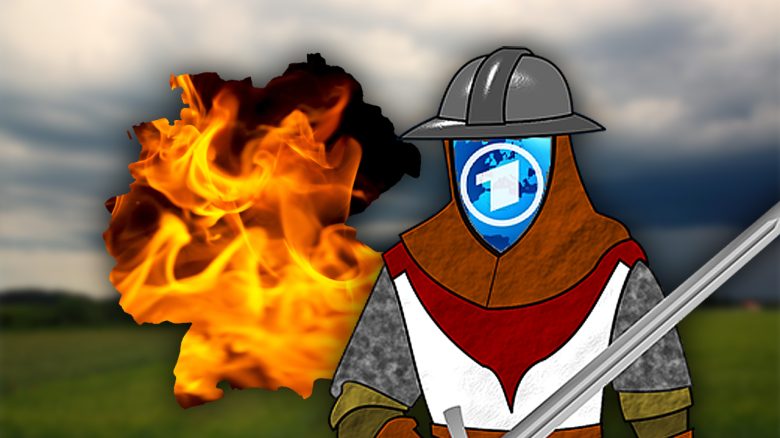
According to commentators on social media, Tagesschau spreads fake news – especially about the weather. Now the weather team is responding and explaining how it really is.
What is Tagesschau accused of? On Instagram, Tagesschau writes in a post that it is repeatedly confronted with accusations regarding its weather forecasts: High temperatures are displayed more red than before. This is said to dramatize global warming.
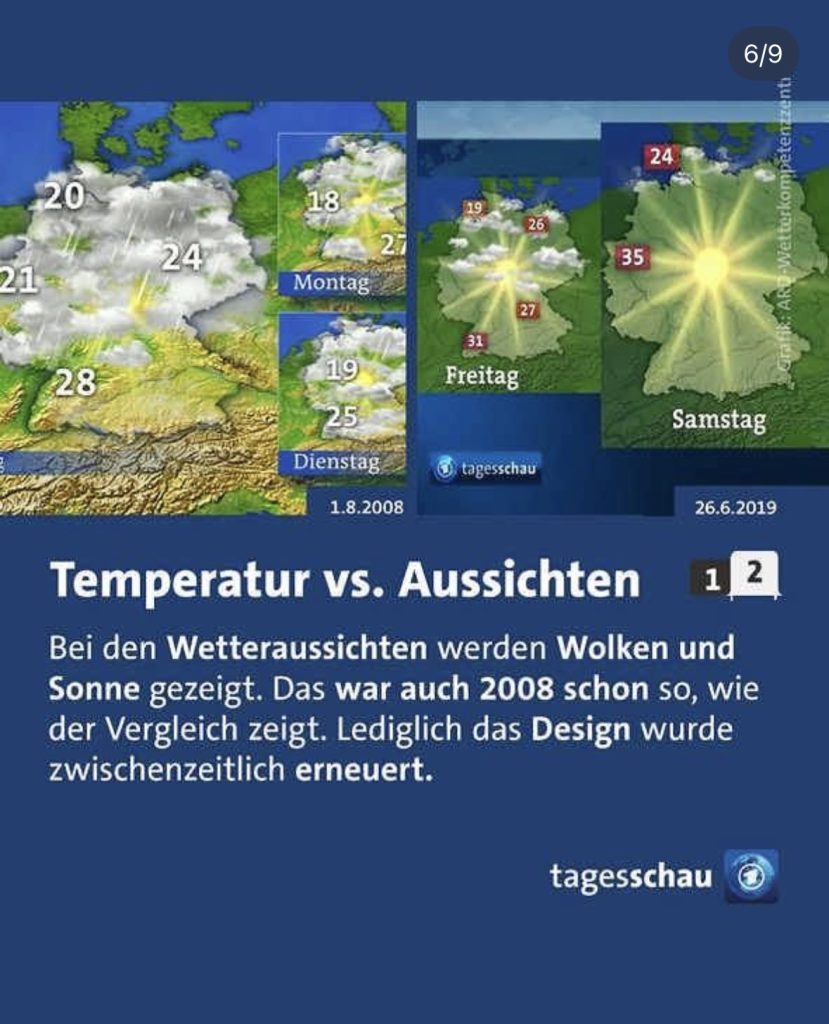
Images are posted, such as one where a presenter stands in front of a burning map of Germany. Additionally, a second example is shown that compares two weather maps. One from 2009 shows a green map with clouds and sun. The second from 2019 shows Germany entirely colored red.
Now Tagesschau is clarifying the accusations. The image with the presenter in front of the burning map is simply a fake. In the map comparison 2009 vs. 2019, different display formats are compared that highlight different things. And then they explain directly how their weather maps actually work and what they are for.
We adapt the temperature colors to the seasons
How is it really? Tagesschau directly addresses the false comparison: The red map from 2019 shows temperatures, while the map from 2009 shows weather forecasts. So, two completely different information formats. In the latter, the design was renewed once since 2008, but it still shows clouds and sun – depending on the forecast.
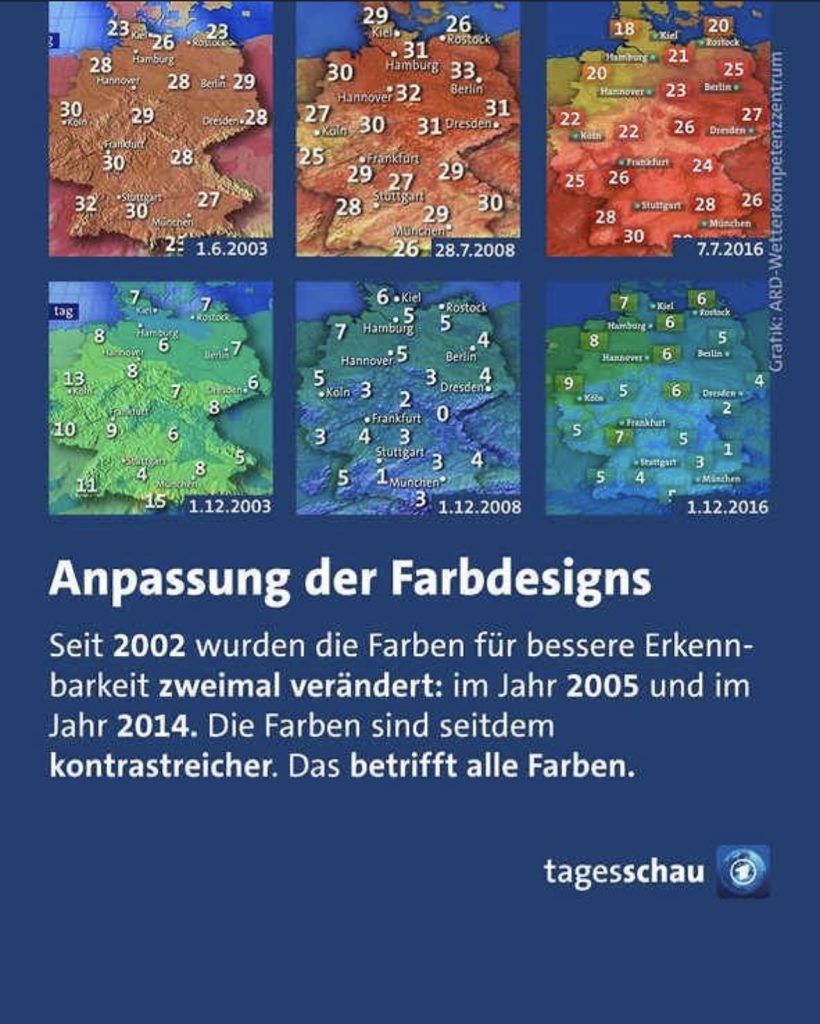
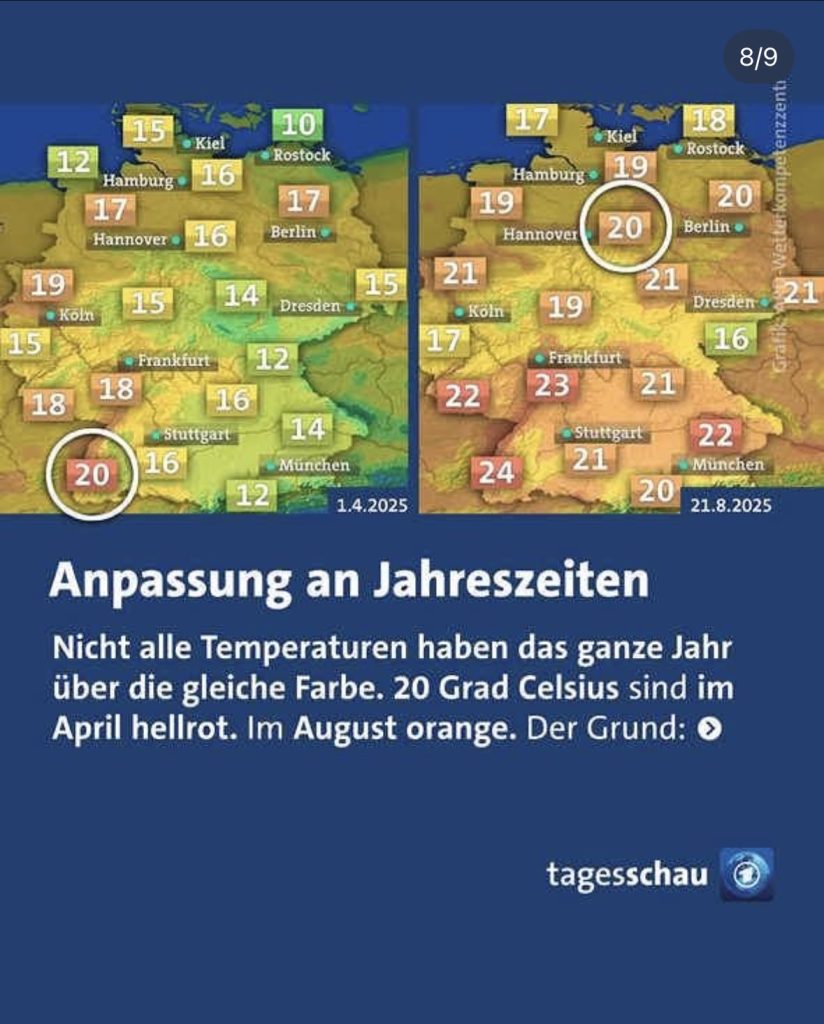
Furthermore, they explain that for the temperature maps in 2005 and 2014 all used colors were adjusted for more contrast. Additionally, the maps receive slightly different color combinations depending on the season: 20 degrees in April are light red, while in August they are orange.
Silke Hansen from the ARD Weather Competence Center comments on this in the post:
We adapt the temperature colors to the seasons. The most important thing is that everything can be clearly recognized. That would not be possible with a color scale from -20 to +40 degrees. However, we do not scale the red tones up in summer; on the contrary! Higher temperatures are displayed with less red than in spring or autumn – because there are more frequent higher temperatures in summer.
Here are the three explanatory slides from the Instagram post. Click on them to view them in a larger size:



At the time of this news, persistent temperatures with almost daily highs over 30 degrees Celsius are forecasted for the coming weeks in Germany. Do you have tips and tricks on how to prepare for summer and game without sweating? Let us know your temperature hacks in the comments. If you are also currently very excited about new hardware, maybe check out our live ticker on the Steam Machine: Embargo and Release in the Live Ticker – Rumors, Leaks and more

Your opinion is important to us!
Do you like the article? Then let us know!
Comments