

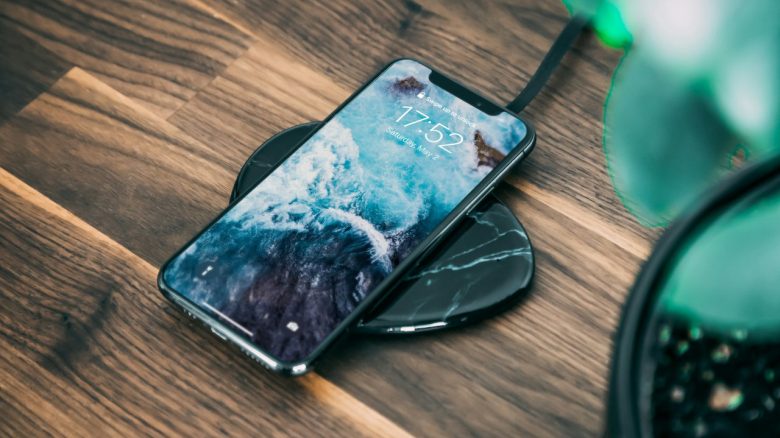
Researchers have managed to hack wireless chargers. By manipulating the inductive charging stations, they were able to heat a smartphone and other objects in close proximity significantly.
Wireless chargers are a convenient invention. The annoying search for a suitable charging cable is eliminated, and one spares the charging port of their phone. However, a research team has now shown that this inconspicuous device can be manipulated in everyday life.
Through a hacking attack, the tested chargers began to continuously supply energy to various objects, thereby heating them significantly. The results are alarming.
Hacking Attack on Everyday Device Nearly Melts Objects
What was hacked? A team of researchers from the University of Florida and the security auditing company CertiK hacked the nine best-selling wireless smartphone chargers worldwide.
Such wireless charging stations use electromagnetic fields to transfer energy to the devices being charged based on the principle of induction. In their experiment, the researchers manipulated these magnetic fields and nearly set objects on fire.
How did they proceed? Using an intermediary device, a noise signal was transmitted to manipulate the input voltage of the chargers.
This so-called VoltSchemer attack creates interferences that disrupt the communication between the charging station and the smartphone resting on it.
In this way, the researchers were able to trick the existing restrictions and carry out different types of attacks.



What were the consequences of the attacks? In their first attempt, the researchers made the wireless charger unable to recognize when a phone was fully charged. This caused the smartphone to overcharge. A Samsung S8 reached a scorching 81 degrees.
In the second test, safety standards were circumvented, and large amounts of energy were transmitted to objects near the chargers. These included USB sticks, car keys, and paper clips.
All objects were damaged in this VoltSchemer attack. The USB stick became unusable, and the small battery in the car key even exploded due to the extreme heat.
For the paper clips holding the papers together, there was an almost fire incident, as the paper clips reached an incredible temperature of 280 degrees.

In the third and final variant, the research team transmitted noise signals to the chargers to inject inaudible voice commands into a smartphone. They were then able to make phone calls and launch any apps.
What was the purpose of the hacking attacks? The alarming results were used by the researchers to point out the existing security vulnerabilities to the charger manufacturers.
They hope that manufacturers will take appropriate countermeasures and work on better security standards for this reason.
Due to excessively high temperatures, devices can be damaged unnoticed. Hardware that was subjected to strong heat may end up as defective items on eBay and similar platforms. A tinkerer made a smart purchase when buying a listing with defective hardware: Tinkerer buys 4 broken AMD processors for 64 euros – Gets lucky and saves a lot of money
Our title image is a symbolic picture.

Your opinion is important to us!
Do you like the article? Then let us know!
Comments