

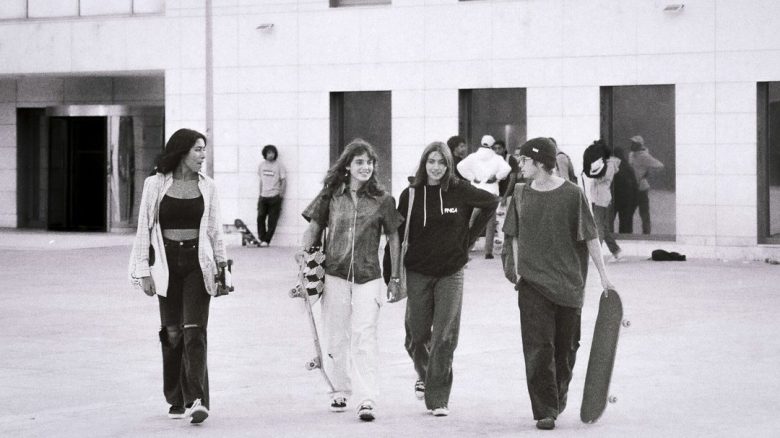
A new study from Austria comes to a conclusion: Generation Z places a high value on a high income, but is becoming less interested in academic STEM professions. Similar developments have been observed for some time.
What conclusion does the study come to? Generation Z (those born between 1995 and 2010) allegedly has a problem with STEM professions. At least that’s the conclusion of a current study by FH Upper Austria, which was reported by the Austrian Broadcasting Corporation ORF. The curious thing about it: at the same time, the respondents of the sample cite a high income as one of the most important criteria in career choice. (FH OÖ)
At first glance, this seems contradictory. After all, professions in computer science, technology, or engineering have long been among the fields with the best earning opportunities in Austria as well as in Germany. (via kununu/AT & Kununu/DE)
Generation Z as a scapegoat? The interpretation and summary of the results (full version not publicly available) quickly raises a question: Is this really a problem of Generation Z – or a trend that affects society as a whole?
According to FH Upper Austria, interest in STEM professions has declined since 2023. However, this decline is said to be particularly strong among Generation Z (men: 7.18 percent less, women: 5.75 percent less). Across generations, however, the decline is only relatively moderate at minus 1.69 percent between 2023 and 2026.
The study’s author sees social media as the main influencing factor. Platforms like Instagram or TikTok shape many young people’s perceptions of success and careers. “You get a certain image of what is beautiful or cool, and the individual is at the center. One forgets that it is also about making a contribution to society, earning a salary through work, and thus supporting the tax system,” explained Prof. Dr. Kindermann to ORF.
A new problem?
Why are technical professions losing attractiveness? So far, there hasn’t been a clear answer to that. Large international surveys show, however, that expectations about careers have changed.
According to the current Deloitte study for Generation Z and Millennials, factors such as work-life balance, flexibility, and personal fulfillment play a significantly larger role today than they did a few years ago. This is consistent with a report from Zeit on the wishes and concerns of Generation Z.
That salary plays a crucial role for young people is nothing new given the current state of the world economy. According to Deloitte, 45 percent of Generation Z and 39 percent of Millennials in Germany have delayed important life steps for financial reasons.
Has it always been this way? Recruitment problems in technical degree programs are not a new phenomenon. The US National Center for Education Statistics documented over ten years ago that many students leave STEM fields during their studies or switch to other areas. The challenge is not only to excite young people for technology but also to keep them in these fields long-term.
That enthusiasm, or rather access, to STEM areas is declining can also be attributed to the general tenor. It is repeatedly emphasized how much technical fields are struggling, how much AI is taking away jobs or where cuts are needed. (among others Die Zeit; Die Zeit; Business Insider; Handelsblatt)
At the same time, the Institute of the German Economy Cologne reports that there are around 369,400 unfilled positions in STEM professions. In contrast, there are 274,130 registered unemployed individuals seeking a job in a STEM profession.
Whether such reports actually influence career choices is difficult to prove, but they shape the public image of the industry.


How do you feel? Do you share the researchers’ interpretation and believe that social media influences career choices? Let us know in the comments.
Whether the vacancies in the STEM sector will continue to grow and whether Generation Z indeed makes their career choices increasingly dependent on social media remains to be seen.
What is more interesting is why technical professions have had difficulties attracting young talent for years, despite high salaries, good career opportunities, and thousands of open positions. What is certain is that AI also plays a role repeatedly. Researchers have now tested how AI reacts to overload, and the results are surprising: Because AI starts to complain and grumble about hierarchical structures.

Your opinion is important to us!
Do you like the article? Then let us know!