

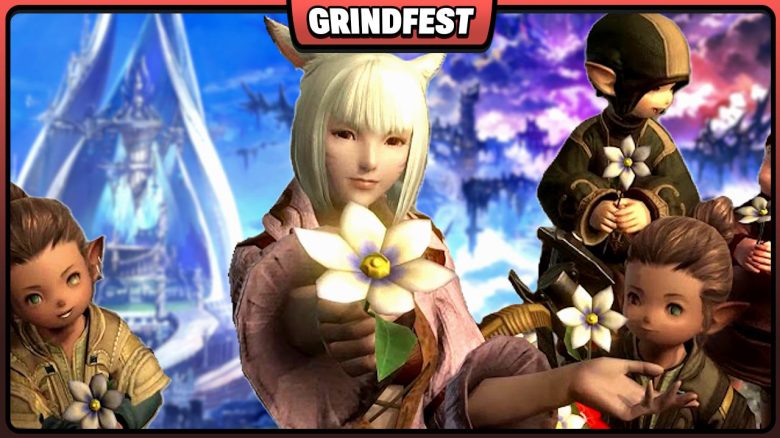
Few games have such an impressive development history as the MMORPG Final Fantasy XIV. From an initial disaster, it has evolved over the years into one of the most successful MMOs. How this was possible is explored in our MMORPG theme week.

What kind of game is Final Fantasy XIV? Final Fantasy XIV is a so-called theme park MMORPG. Similar to a visit to an amusement park, with clear attractions and routes, players are guided through a main story from quest to quest and content to content.
The path along the campaign is lined with side quests, raids, dungeons, and other instanced content. The game takes you by the hand, along an epic story, offers well-designed “attractions” and ensures a clear sense of progress.
You dive into the world of Eorzea as a character created by yourself, where you experience various epic adventures and engage in content with your fellow players. With 5 expansions now available, the game easily offers several thousand hours of gameplay and has become one of the most popular MMORPGs of this time.
This week, exciting articles about MMORPGs await you every day. Included: a journey through the history of online role-playing games, nostalgic retrospectives, streaming nights, interviews, columns, and analyses.
Here’s the program for the great MMORPG theme week 2025 by MeinMMO
But it wasn’t always like this: The game was so flawed, inaccessible, and frustrating at the release of version 1.0 on September 30, 2010, that it faced massive rejection even from loyal fans of Final Fantasy. Initially, it seemed that the game had fundamentally failed and would not meet the expectations of players and the demands of a modern MMORPG in many respects.
You can read here how FF14 managed to pull itself out of misery and the historical rise from the ashes. We were also able to ask producer Naoki Yoshida some questions about the game’s development. You can read the complete interview here: The amazing history of Final Fantasy XIV from the producer’s perspective – Naoki Yoshida in an interview
Here you can see the trailer for version 1.0:
An experience between technical catastrophe, overloaded world, and boring content
Why did 1.0 fail? At that time, Final Fantasy XIV was technically immature, frustrating to play, and design-wise overly ambitious. The engine was extremely resource-intensive and poorly optimized, causing even powerful PCs and the PS3 to struggle with performance issues. The user interface was slow, confusing, and made even simple actions unnecessarily complicated.
The gameplay also left much to be desired: many game mechanics were poorly explained, cumbersome, unclear, or simply boring. Additionally, while the game world seemed ambitious and comprehensive, a closer look revealed it was full of copy-paste elements. Entire sections consisted of identically looking environmental elements or buildings, which detracted from the world’s credibility.
Another problem was that for a long time, the feedback from players was ignored, as many of the aforementioned weaknesses became apparent during the beta phase. However, the development team clung too long to their own concept, causing the community to grow increasingly frustrated.
You can get an impression of version 1.0 here:
All of this was exacerbated by the lack of motivating content: There were hardly any exciting dungeons, raids, or quests. Multiplayer content was scarce, and battles were often tedious, unengaging, and sluggish. Additionally, there were no world bosses or events within the game world.
Players could mainly level up through quests and letters, but there was only a limited number that could be completed per day. Although players could switch between different classes with a single character even back then, many parts of the system were illogical or heavily restricted, for example by a weekly XP limit.
All of this led even huge fans of Final Fantasy to turn away disappointed and avoid the game.
The destruction of the world
Ultimately, Square Enix recognized the gravity of the situation and made a simultaneously risky and unprecedented decision: the world of Final Fantasy XIV was destroyed in a large in-game event, as a symbolic and narrative fresh start, but also as an official acknowledgment of the failure of the previous version. The event took place on November 11, 2012, well over two years after the release of 1.0.
In the game world, this event became known as the “Seventh Calamity” – a massive apocalypse in which the moon Dalamud fell from the sky, unleashing Bahamut. The mighty dragon then devastated Eorzea and laid almost everything to waste.
You can experience the last minutes of version 1.0 here:
The event culminated in an impressive cutscene that directly transitioned into the reboot and still plays a role in the current story of the MMO today.
Instead of completely erasing version 1.0 from the history of Final Fantasy XIV, the new team decided to make it part of the fresh start and integrate its end into the story of the new version. This finale is still considered one of the most memorable shutdown events in MMORPG history.
That this event also remained part of A Realm Reborn had, besides shaping the story, another important reason, as producer Naoki Yoshida revealed in our interview:
At the time, I was thinking about “regaining trust”. This not only encompassed the
rebuilding and rebirth of FFXIV, but I made a judgment that the most important thing was
to make our customers trust us once again for the future, rather than for the business-
related success of the company. If we terminated the service and simply rebuilt the game
after a failed launch, the memories, data, and time of everyone who played the game up
to that point would be lost.– Producer Naoki Yoshida in the interview with MeinMMO
How the MMORPG rose from the ashes can be read on page 2.

Your opinion is important to us!
Do you like the article? Then let us know!