

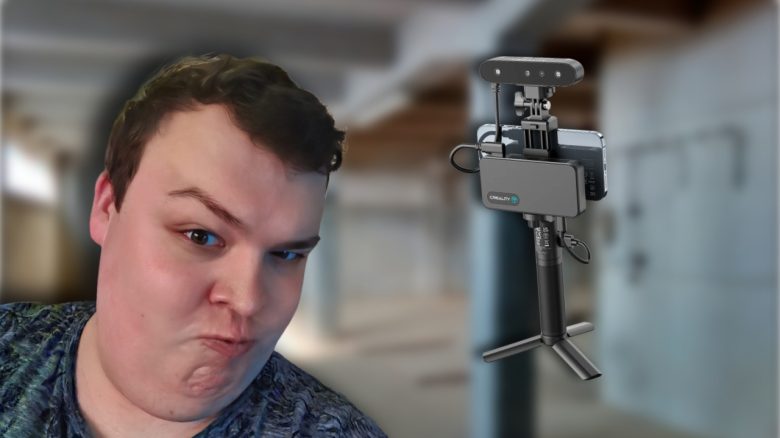
The hobby of 3D printing is constantly changing and gaining new possibilities to expand and improve designs. Our tech author Jan Hartmayer has now gotten the taste for scanning. With his new gadget, he tinkers for hours on new projects.
I have been working on various projects related to 3D printing for several years now. From replicas to useful tools in everyday life to complete cosplay parts, everything is included.
In doing so, I use many pre-made models and adapt them to my specific needs. I measure various aspects. The entire process takes, depending on the complexity of a project, between a few hours and several days.
I have always wanted to print and paint a helmet for cosplay myself. However, with a simple tape measure, I get inaccurate measurements in the centimeter range, and that is not enough for me.
With my latest €300 upgrade of my hardware, a so-called 3D scanner, I can not only scan all sorts of objects but also save myself hours of measuring work.
Scanning, Importing, and Printing
A 3D scanner works similarly to conventional devices at the checkout in the supermarket. The difference is that it can capture a three-dimensional object instead of a barcode.
Thus, after completing a scan, a complete image of an object results, which can be imported into an editing software like Blender or Tinkercad and then modified.
Subsequently, the file can be loaded into a slicer program and either further modified or printed directly. This allows one to scan their head, for example, and place a bust of oneself in the living room. (Not that I would do such a thing…)
It should be noted that the software of my €300 Creality CR-Scan Ferret Pro is not exactly beginner-friendly, and it took me hours of testing to produce my first proper scans. It also had recurring connection issues via the mobile app, which did not occur when using a PC.
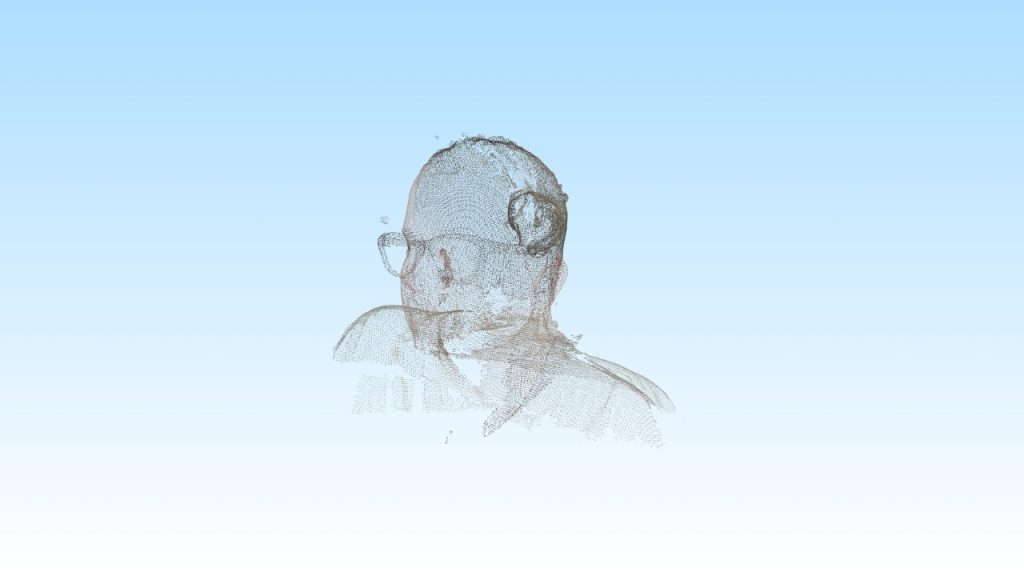
I now frequently use the scanner and only wonder: Why didn’t I buy a 3D scanner earlier? Because with it, I can simply scan my head, throw this unedited file into my Bambulab slicer, and use it as a template for cosplay helmets.
This saves me hours of measuring and test printing until I finally find the right size for a part. I am really satisfied and will probably purchase even better scanners with higher accuracy in the future.


Therefore, I can only recommend to any 3D printing enthusiast to at least engage with the topic of scanning. There are also free smartphone apps like Polycam, but these are very limited in terms of resolution and detail level. Furthermore, there are fanatics who go one step further: Fan prints 1,752 individual parts on 20 3D printers for a life-sized statue of Horus from Warhammer 40k, takes 5 months for it
What do you think about 3D scanners? Do you use them? Are you considering getting one, or do you think they are overrated? Let us know in the comments.

Your opinion is important to us!
Do you like the article? Then let us know!