

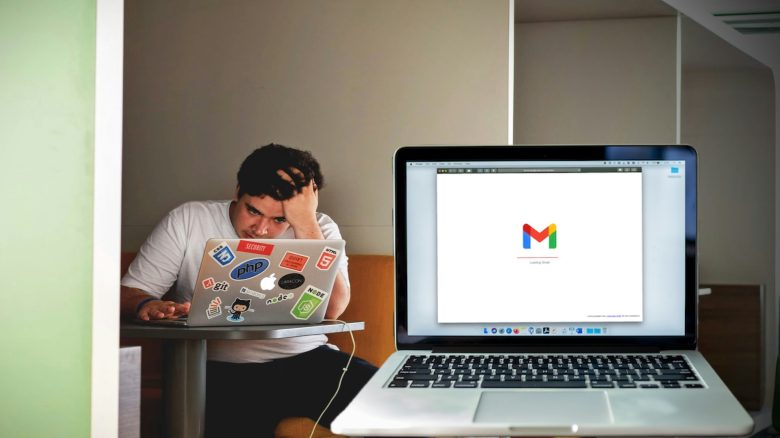
A new AI extension for Chrome doesn’t improve your emails; it intentionally makes them worse. There is more behind it than just satire, as this new tool highlights a real problem in modern communication.
What exactly did the student develop? Many can now recognize AI texts at first glance: They are often strikingly well-written and tend to use dashes. Moreover, the texts usually consist of very clear, almost too perfect, paratactic (that is, rather short and clear) sentences.
This problem
is addressed by a student from Harvard University, who developed a Chrome extension called “Sinceerly” that intentionally worsens such texts to make them appear more human by introducing small errors, looser wording, and natural-sounding inaccuracies (dexerto).
The idea: Many emails now sound the same because they are written with AI. This is exactly what developer Ben Horwitz wanted to change.
His reasoning is simple: “I was fed up with this AI garbage in my inbox,” Horwitz said on the TBPN podcast (via X).
Being Human or Not Being
How does the AI intentionally make your emails more human? The tool works with various modes that specifically introduce typical “human errors”:
- Subtle mode: Removes unnecessary words, introduces small typos, and slightly alters formulations.
- Human mode: Makes the text looser and more conversational and combines several “types of errors”.
- CEO mode: Writes everything in lowercase, is extremely reduced, and automatically adds “Sent from my iPhone”.
To ensure the Chrome extension really works, Ben Horwitz claims to have contacted several CEOs with Sinceerly:
It works. I tested Sinceerly by sending a spontaneous email to 5 CEOs [of the 500 highest revenue companies]. 4 responded. Each of these responses consisted of less than 10 words. 2 responses contained typos. One CEO called me Larry (my name is Ben – maybe they used Sinceerly in CEO mode?), he wrote on X.
At the same time, the developer made it clear in the TBPN podcast that the tool is meant to be less of a serious business and more of a satirical comment on the current use of AI. In other words: a mirror of a development where people first generate perfect texts and then artificially “humanize” them, and for that, they might even be willing to pay.
So far, the tool only works in English. Those who want to test it can currently deliberately worsen 3 test texts for free (via Sinceerly).
What does MeinMMO tech author Claudio think about it? As an AI enthusiast and tech author at MeinMMO, I naturally become alert when an AI does not want to steal my job.
Those who now polish their emails only with ChatGPT or Claude might feel a bit caught by the Harvard student. Even I find that certain formulations already trigger a real AI “ick” in me.
As soon as too many dashes appear, I become suspicious. Therefore, I sometimes wish for more courage to leave gaps (including typos). However, I also catch myself double-checking important emails at least 2 times. Most of the time, however, by real people. How about you? Do overly perfect texts annoy you, and would you really be willing to use a tool like Sinceerly?



AI applications are obviously becoming indispensable in the daily lives of many. The actual areas of application are still very diverse. The Austrian daily newspaper DerStandard published an evaluation of a survey on AI usage: 73% of people use AI to solve computer problems

Your opinion is important to us!
Do you like the article? Then let us know!