

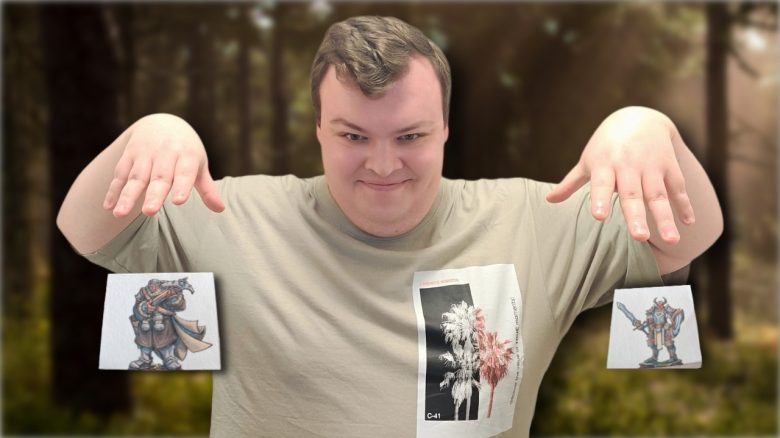
Every D&D player knows the craving for new miniatures. There can never be enough figures. Especially Game Masters often need to draw from a large pool of characters when the group deviates from the campaign. This can quickly get expensive. Our nerd and proud Swabian Jan Hartmayer has a cost-effective solution for this.
When I started playing Pen&Paper, I often had to be the Game Master because no one else wanted to take on the task. However, I quickly encountered a problem: I love to complement my sessions with music, gadgets, and especially miniatures. Unfortunately, figures can be particularly expensive, often costing 30 euros or more each (via worldofdice).
To save money, I simply make the miniatures myself. But how does that even work?
- Drawing individual figures takes a long time, and I don’t have the talent for it.
- A 3D printer is expensive and requires a lot of time. Moreover, I also have to paint the figure afterward.
As an alternative to 3D printing or the expensive purchase of miniatures, I create so-called “Paper-Minis”. These are small 2D representations of various D&D figures that can be easily printed on paper and then set up. No more annoying post-editing, painting, and long printing times!
If you can’t get enough of Dungeons and Dragons, check out the trailer for the LEGO set of the popular Pen-and-Paper:
Thanks to the community!
On the internet, there are already many different templates for Paper-Minis and how to make them. A good overview of the various Paper-Mini providers is given by YouTuber Jack on his website. Personally, I use the free Paper-Minis from PrintableHeroes.
The site offers an extensive repertoire of high-quality figures of all kinds: from monsters to props like taverns or castles to floor tile sets to create entire landscapes. Many miniatures are free and can simply be downloaded and printed. However, for a paid subscription, there is also access to new characters, various color variants, and alternative designs.
This is what the first results look like after less than five minutes of work.
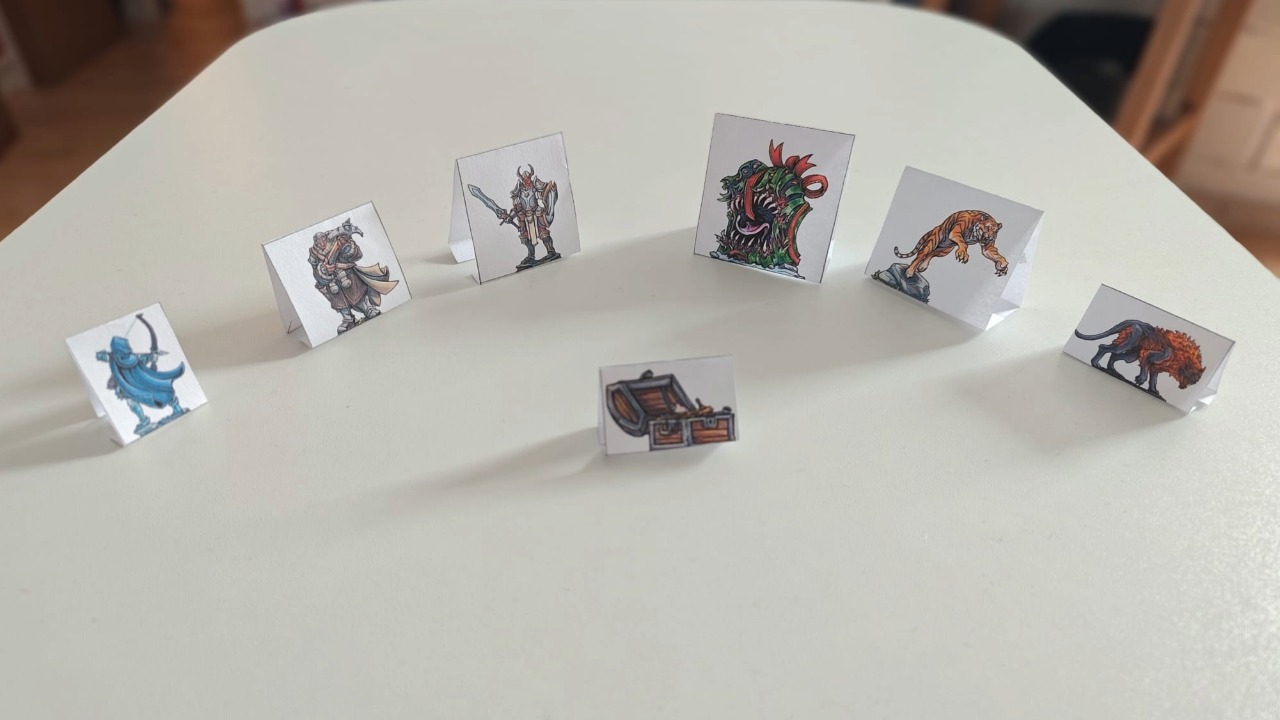
Pro tip: I often print the figures on glossy photo paper with at least 160 g/m² paper thickness. This not only improves the print quality but also makes the figures more durable and less prone to damage. Alternatively, you can glue the printed figures onto cardboard.
If you want to additionally protect your new adventurers and monsters from liquids, laminate them. Then even a spilled drink is no longer a disaster. However, you can also create three-dimensional miniatures cheaply using 3D printing, just like I do for my collection of action figures.
My army is growing
To give my new figures some base, I used the Base set from PrintableHeroes. These are basically stands that I download for free and print on paper or cardboard so that my figures have a stable and nice stand. However, if you want a more stable version, you can buy cheap plastic stands or create them with a 3D printer.
If you don’t have a printer at home, you can have photos/pages printed cheaply online or at most drugstores. You can wonderfully use the photo service for the 2D figures.


Within a month, I created several hundred figures and assembled a huge collection of miniatures. And since these are 2D representations, they are relatively easy to store. For this, I repurposed an old board game box and stacked all the figures flat inside.
My D&D group still surprises me and constantly thwarts my campaigns, but now I just reach into my treasure box, and et voilà, the right miniatures for every situation are on the table. I look forward to every figure when it comes into play – and my players are always amazed at where I got all the monsters from. But our author Caroline also knows a lot about Pen&Paper and gladly shares her wisdom: Dungeons & Dragons: Here are 6 tips to spice up your sessions on a budget

Your opinion is important to us!
Do you like the article? Then let us know!