

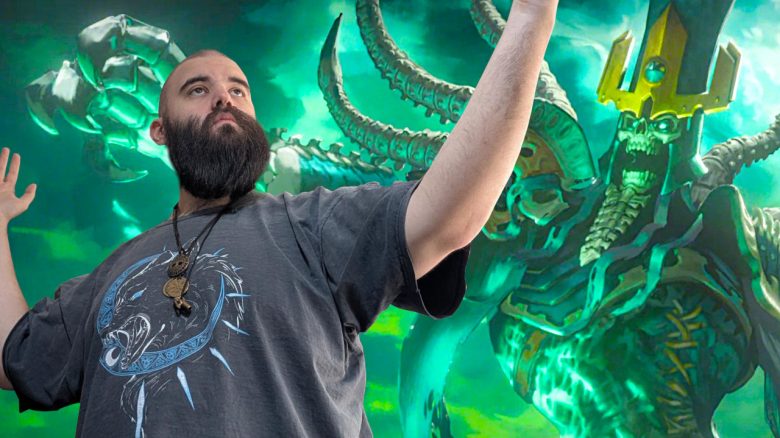
With “Lords of the End Times”, Total War: Warhammer 3 receives its largest DLC yet along with an update. Not only are there four new Lords (with one free addition), the entire world is changing – and not just visually. MeinMMO editor Benedict Grothaus played in advance and was lost in the strategy game like never before.
Since “Lords of the End Times” was announced at the end of 2025, I’ve been looking forward to this DLC like an inquisitor looking forward to executing an Exterminatus. So … very much. After all, the End Times are THE world-changing experience of Warhammer Fantasy.
The chaos is destroying the world, almost everyone is dying, and only a few can escape. Warhammer Fantasy ends, and Age of Sigmar begins, that’s the canon, and of course, as a Warhammer fan, I am eager to play this era myself.
Now, developer Creative Assembly and publisher SEGA have invited MeinMMO to play the DLC (as well as the free update) in advance, and I lost over 30 hours in the new content without having seen everything yet.
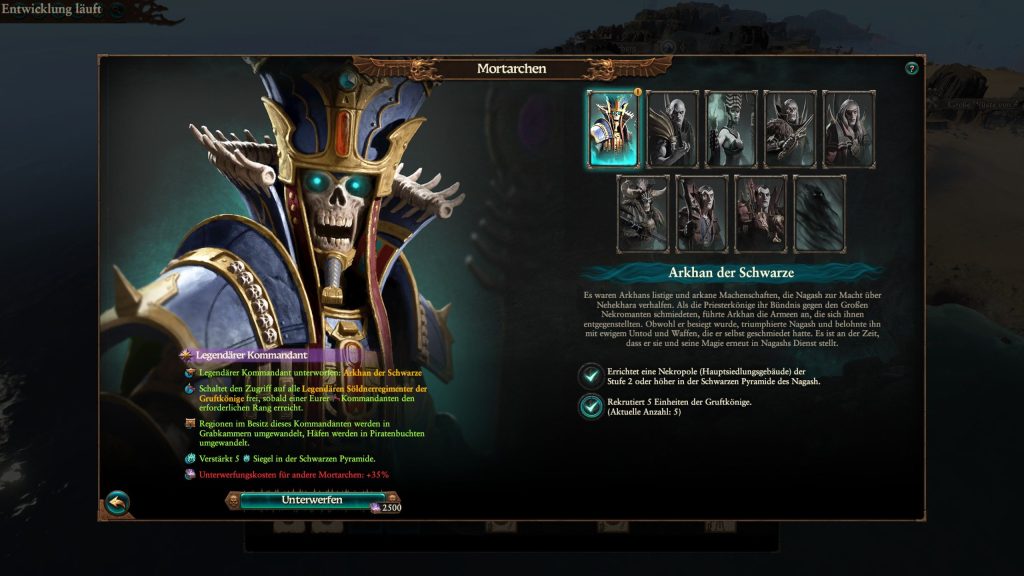
My first stop was directly to Nagash, one of the new Lords and the first Necromancer ever in the world of Warhammer Fantasy. His campaign alone captivated me, but the highlight is the end of the world … quite literally.
The end of the world is here, but I don’t want to destroy it, I want to kill it
Nagash is an exciting Lord because he brings a completely new faction into the game, but it actually consists only of all undead factions, namely: Tomb Kings, Vampire Lords, and Vampire Coast.
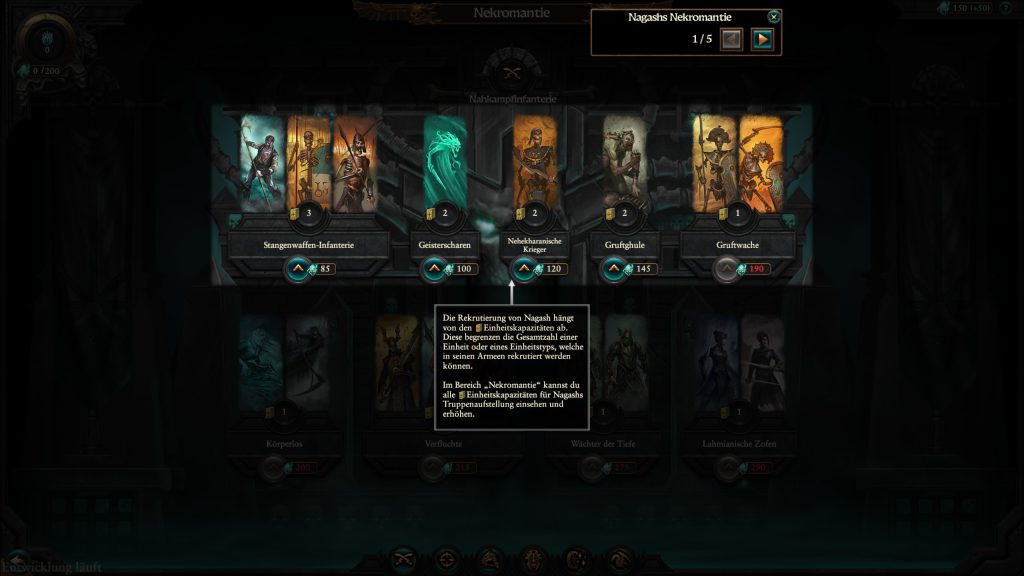
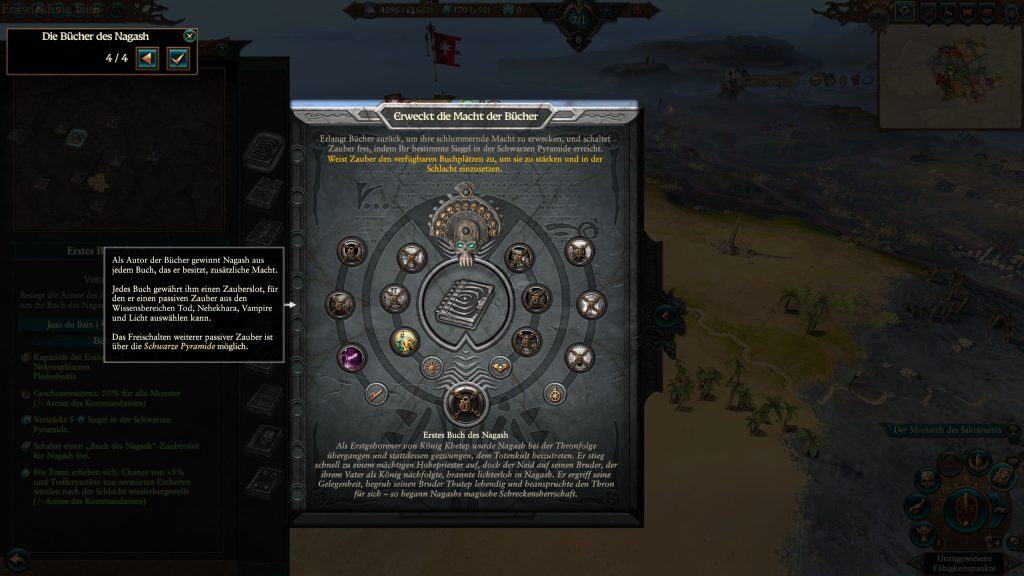
He has access to units from all these factions and can even force some of their legendary Lords to serve him. I found this super intriguing, as I want to become the king of the undead for a long time. Nagash’s “Undead Army” comes with many new mechanics such as:
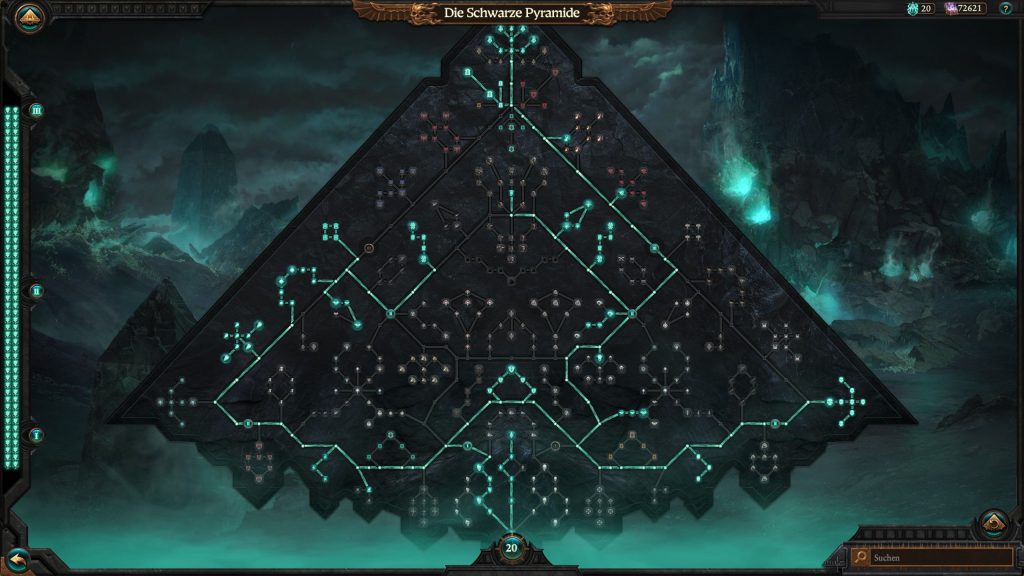
- a skill tree instead of a tech tree, in which over 400 nodes can be selected to strengthen Nagash himself, his commanders, magic, settlements, or units
- Necropolises that replace cities but can only be built to a limited extent, making the economy a real challenge
- a new recruitment function through necromancy, which the vampires also roughly make use of
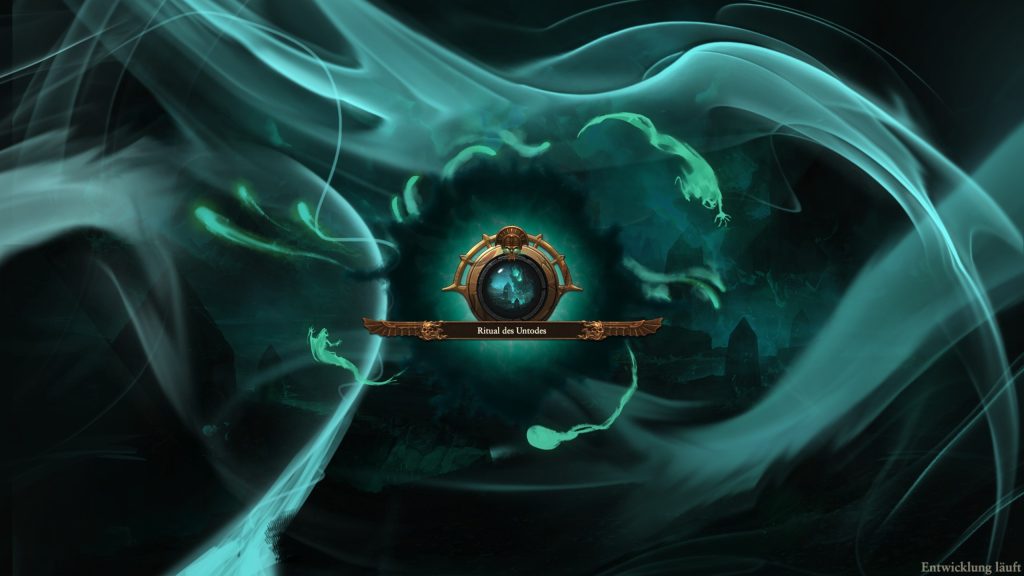
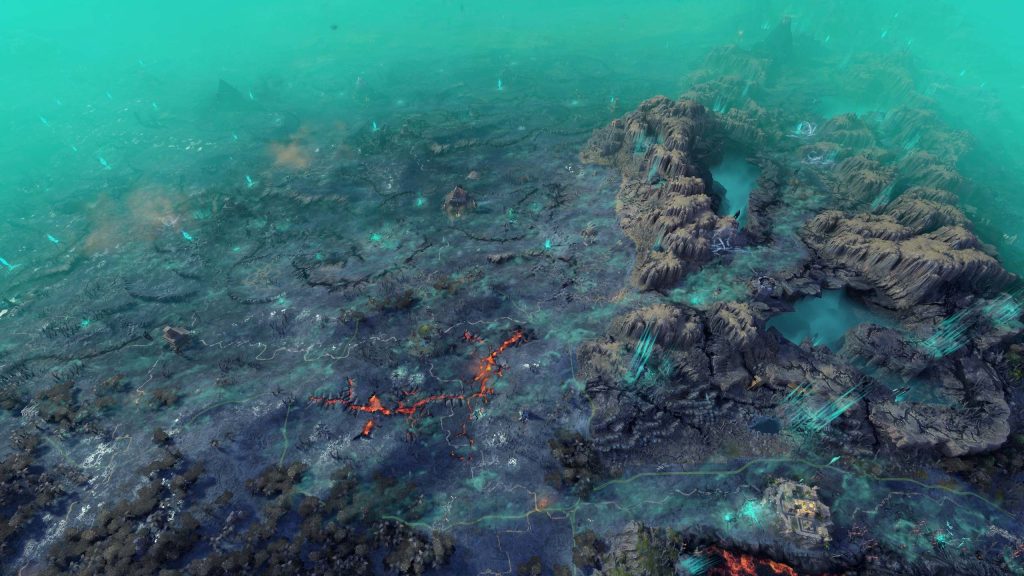
- the possibility of terraforming: through a ritual, the climate is transformed into “undead wasteland”, granting bonuses to the undead and looking incredibly cool
All of this fuels the fantasy of Nagash as the absolute ruler, someone who wants to tolerate no one beside him and controls with violence. However, his goal is not just absolute domination but to ascend to something higher – and I am, of course, happy to help!
I’m not just a king, I am a god
Nagash’s campaign (and this is not a spoiler, it’s simply his goal from the very beginning) consists of performing rituals that allow him to ascend to godhood. The path there is epic on its own and, what I am not used to, narratively told.
All new Lords – besides Nagash, Thanquol, Boris Ursus, the Glottkin brothers, and Neferata – receive almost poetic narratives upon completing certain milestones, describing what has really happened, what reactions there are, and how things will proceed.
I don’t want to retell the entire campaign to you, but Nagash’s campaign battles are absolutely epic. In particular, his final battle, in which he breaks the last remnants of resistance to ascend to godhood, truly feels like I am assisting an unholy presence in achieving apotheosis. Even though I had to play the mission twice.
SPOILER on Nagash’s final battle
Snikch, the sneaky little rat, caught me off guard on the first attempt and gave me a defeat. On the second attempt, I was prepared. Here too: A delightfully fitting narrative where I was not even angry, but excited about how fitting the whole thing felt.
However, it almost didn’t happen that I would even play the final battle. Because around round 80, something stirred in the north and ensured that the world would almost end …
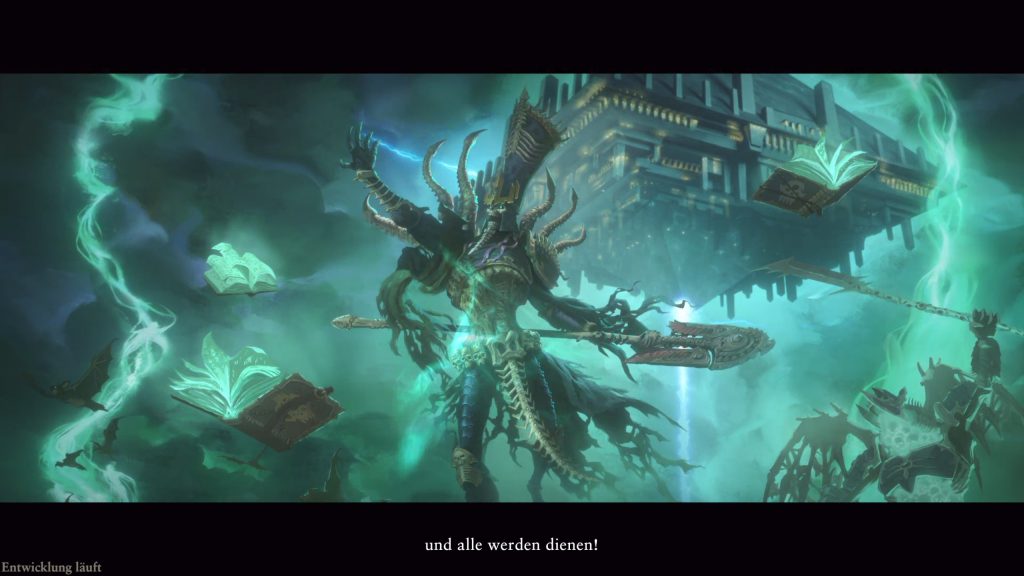
Suddenly some Chaos Boy walks in and steals the show
Part of the free update that accompanies “Lords of the End Times” is the overhaul of the endgame crises. Wars like those of the Chaos Dwarfs and Wood Elves are now “mid-game” crises, the End Times are brought about by three truly great threats:
- Nagash proclaims the realm of the undead and wants to control the world in undeath – which is exactly what I intend to do,
- the Skaven flood the surface world in their “Vermintide” and destroy everything and everyone in the name of their own god,
- or Archaon, the Ever Chosen unites all chaos under him and destroys the world as the lore of Warhammer predicts.
By the way: The End Times scenarios all come with their own cutscene or cinematic, which illustrates how great the impending danger really is.
The latter happened to me. Archaon appeared as the harbinger of the apocalypse, and it felt just like that. All chaos factions are allied under him, their previously controlled territories are being destroyed, and everything that has been destroyed cannot be rebuilt until Archaon is defeated.
Archaon himself is initially untouchable. Until his strongholds and commanders are defeated, he has 100% protection against … everything, in principle. He cannot be defeated.
All other factions – even I, as the undead incarnate – meanwhile have strong diplomatic bonuses, so it ultimately comes down to “us against them”: two camps, one great war. And what a war it is!
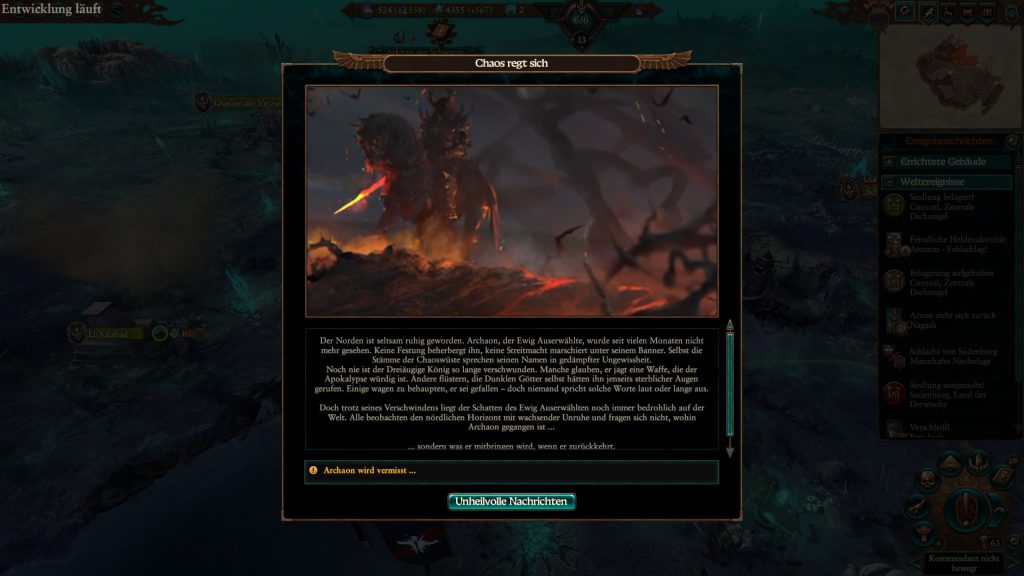
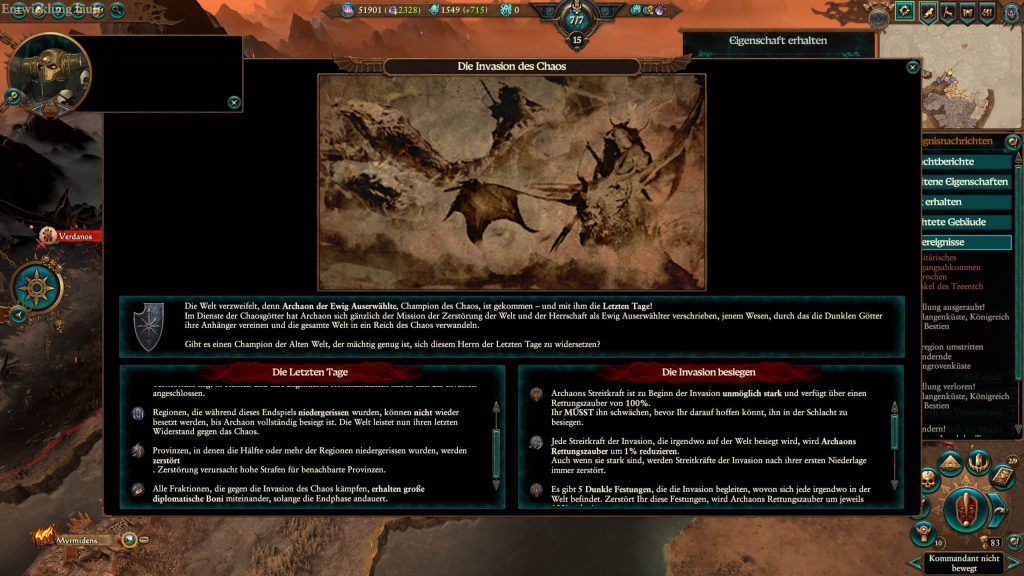
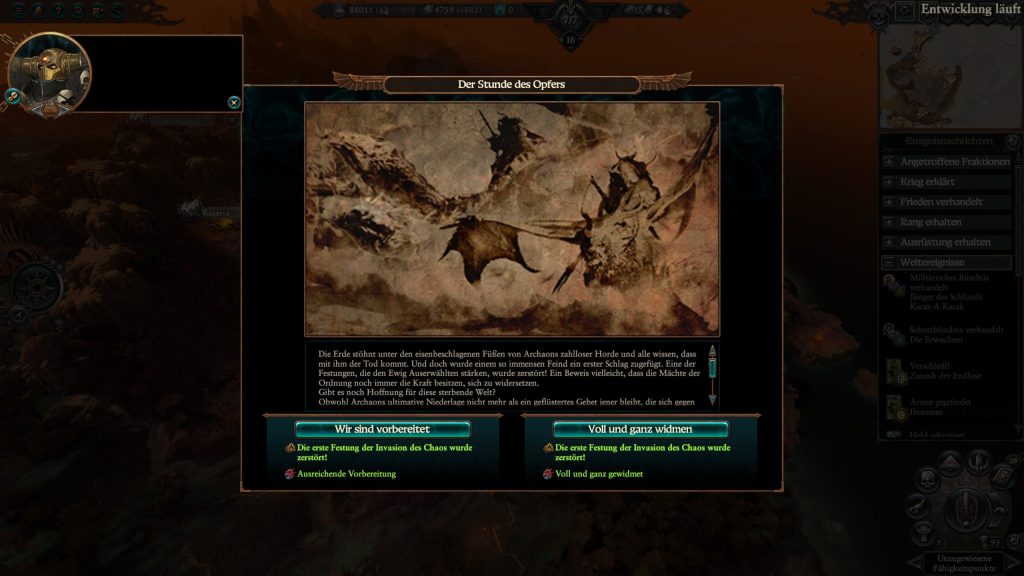
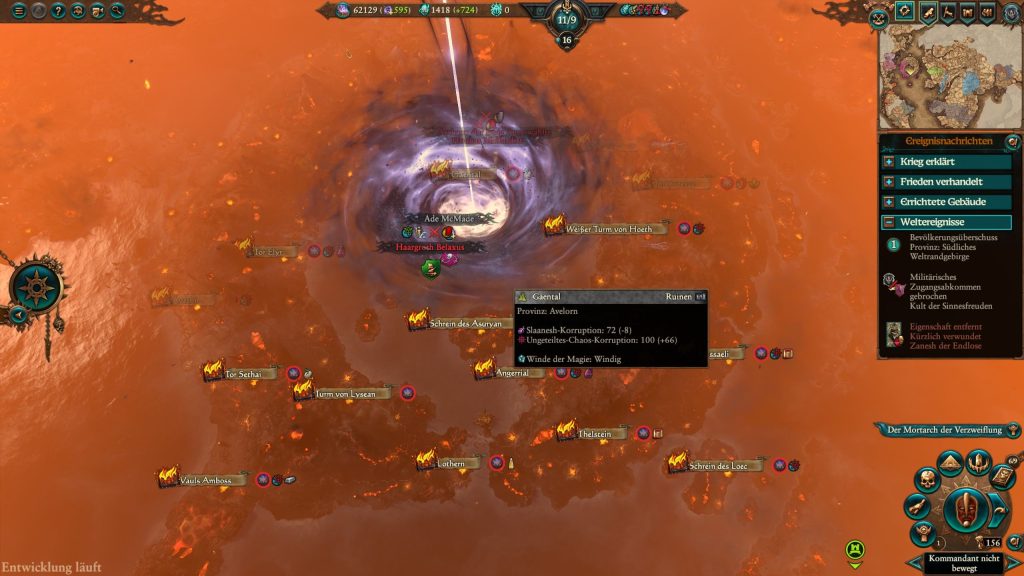
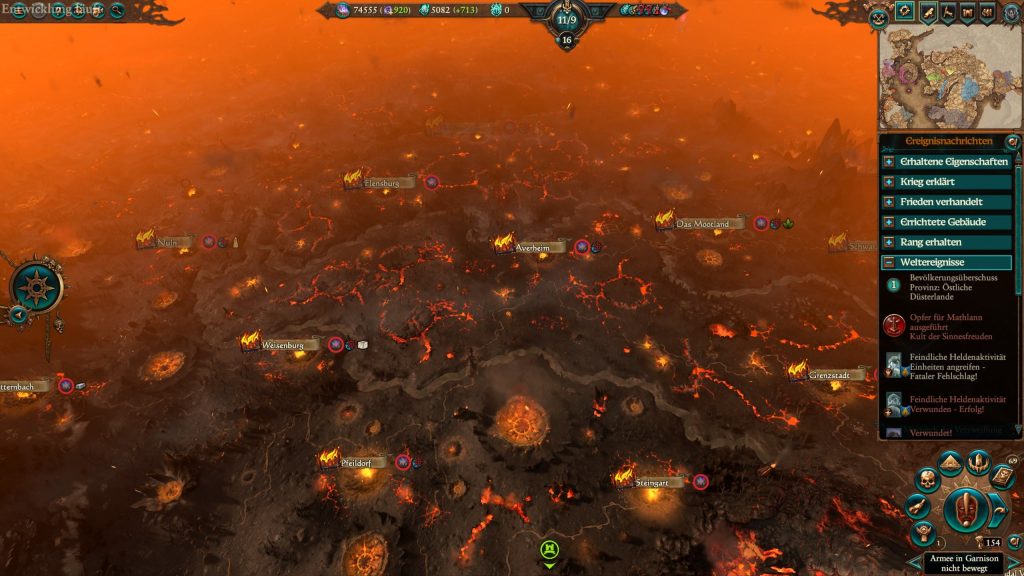
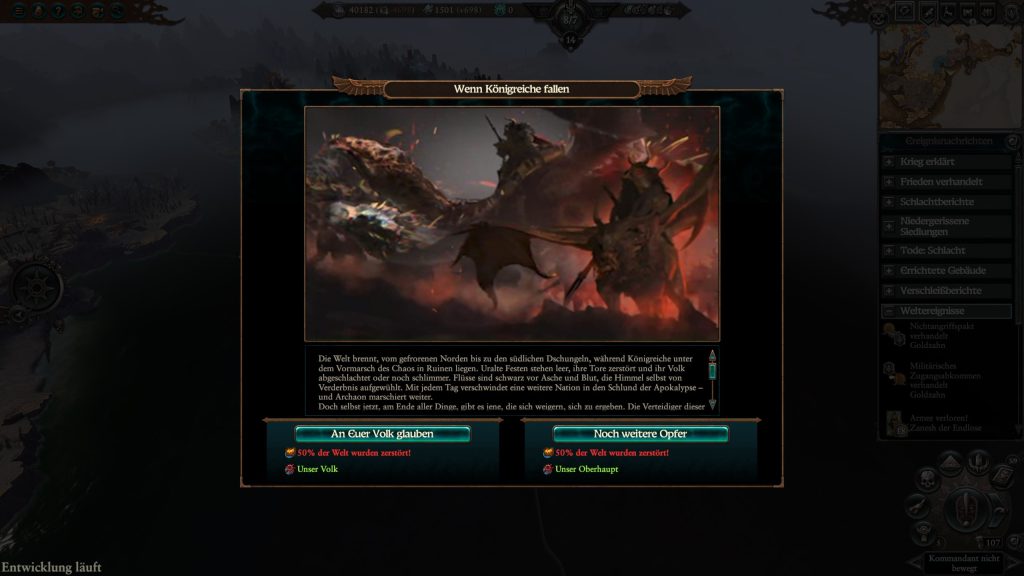
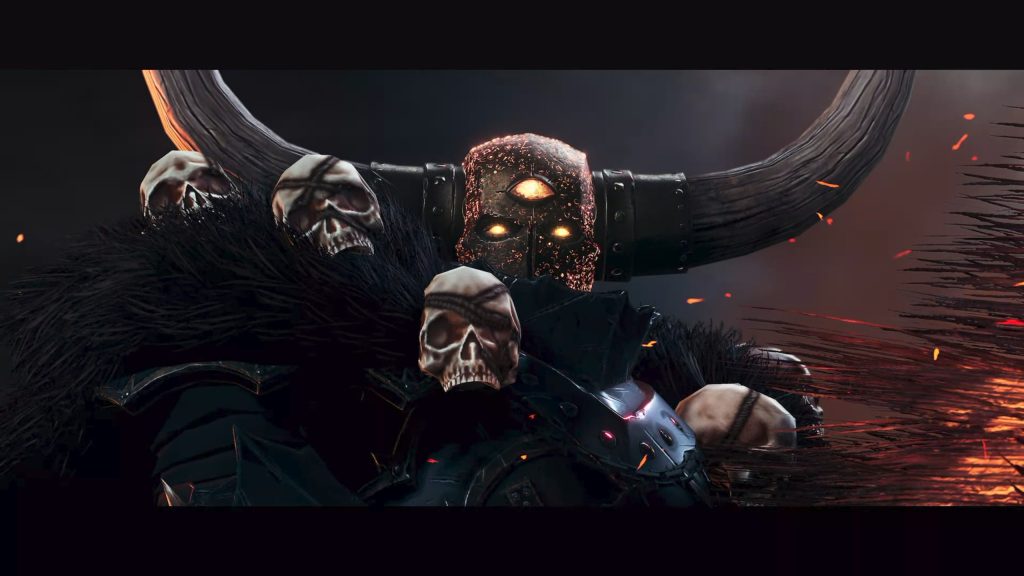
The “End Times” are not just a name, the end of the world is here program
During the End Times crisis, various “dilemmas”, or prompts with different information, keep appearing. After defeating a commander, for example, I receive buffs that compensate for the strong penalties the destroyed world places on me.
About 20 rounds into the crisis, the game notifies me: 50% of the world has already been destroyed. That’s when I realize how tough these new crises really are (by the way, I played on “hard” and barely made it). Several times, I thought to myself: “That’s it. The campaign is lost.”
Only through great effort and a further war against a stubborn dwarf who absolutely refused to cooperate was I able to push back Archaon and finally pursue my own goals. The journey to that point was absolutely epic, and I wish more strategy games could achieve such dramatic narratives.
To maybe clarify how serious the situation was: Of the over 280 factions present at the beginning of Immortal Empires, only 33 remained after the invasion – and more than 20 of those were “Uprisers’ armies”, meaning pirates and roaming camps consisting of a single army. Besides me, there were a few dark elves left, a dwarf clan, and Carsteins and Khalida, whom I probably overlooked during my crusade of the undead.
Lords of the End Times is so much more than I ever expected
When I started, I expected a DLC with a few new lords and new stories, a revision of my favorite faction, the vampires, and some cooler endgame scenarios.
What I got was so much more. Total War: Warhammer 3 feels different with Lords of the End Times. Not just bigger and not necessarily “better” (even though it is), but primarily different. Absolute.
It’s not just that the world is literally ending, but that Creative Assembly is refocusing the entire setting.
All lords now have their own intro that briefly outlines what their realm looks like (voiced over, by the way), and all lords have their own campaign objectives for short and long victory. This may sound like a small thing, but it sharpens the profile not only of the factions but of the lords as well. Especially for nerds like me, it’s a delight.
I haven’t even touched on my highlight, the revision of the vampires and especially Neferata as the first vampire and new lord for the vampire lords, but I’m saving that for another piece.
Total War: Warhammer 3 has delivered so well with Lords of the End Times that the waiting time for Total War: Warhammer 40,000 will now seem much shorter. And at the end of the year, I can even look forward to another Warhammer strategy game: Warhammer 40,000: Dawn of War IV is postponed, but the community is fine with it: “Let the Emperor cook!”

Your opinion is important to us!
Do you like the article? Then let us know!