

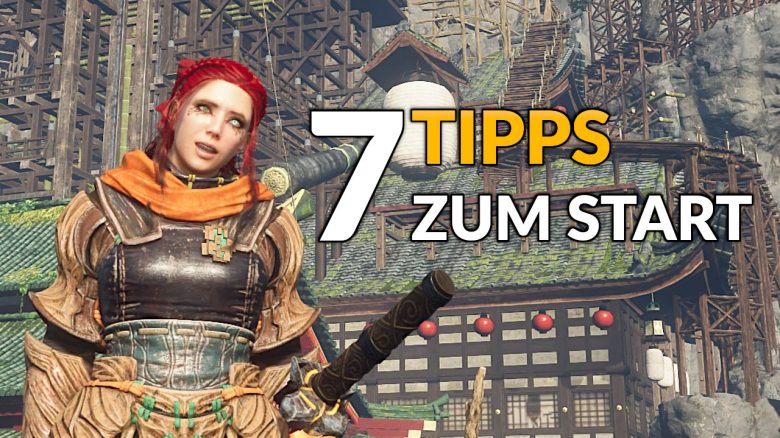
Wild Hearts, the new hunting game from EA and Koei Tecmo, can be quite tricky. MeinMMO editor Benedict Grothaus has already played it before release – as a complete newbie. You can now learn from his ignorance and take away tips that would have greatly eased his entry.

Today, on February 16, 2023, Wild Hearts is released for PC and a few hours later for PlayStation 5 and Xbox Series X|S. I have already invested over 14 hours into the game before release, but without much preparation.
As someone who has played more Dauntless than Monster Hunter, some systems were new to me. But even the players who played the 10-hour demo in advance were quite surprised by some systems.
I died to some monsters multiple times, and I took down others much slower than I want to admit. To ensure you don’t make the same mistakes as I did, I will explain what would have helped me during my initial play.
My first impression of Wild Hearts is really positive, even though there are a few points of criticism. You can find a summary of the gameplay here:
1. Don’t get too distracted – Play the story!
The gameplay of Wild Hearts is dangerously fun. I spent a good portion of my playtime just hunting the first gigantic Kemono in the world.
While I was able to collect some upgrades, cool armors, and improved weapons, I missed out on a lot. Many contents are locked behind progress in the story, such as:
- 3 new weapons: Claw, Staff, and Cannon
- New Karakuri, i.e., building elements that can also make fights easier
- Additional areas with more enemies and new materials for even more weapons
Sure, I could have thought of that, but my hunting instinct was too pronounced. If I had known beforehand what cool new weapons and enemies awaited me, I would have focused more on the story.
One downside: If you simply follow the story, you may not find all Kemono, i.e., monsters. Some are just out in the world and can be found much earlier than the story might suggest.
Wild Hearts starts with 21 different monsters. You can find all of them here in the list:

2. Use the building system and improve Karakuri
Wild Hearts uses a Fortnite-like building system as a unique feature, which distinguishes the game from the genre classic Monster Hunter. However, the system is not just a gimmick but is essential if you want to play well.
Even the basic Karakuri like boxes and especially springboards help you dodge attacks or execute stronger attacks. Moreover, they can be connected or “fused” for stronger effects in combat.
Using the Karakuri and learning how to use them is just a small hint. The actual important thing is: Improve your stuff! You can distribute points over a huge skill tree that you collect during hunts on Kemono.
There, you can find upgrades for various Karakuri that you can build in combat or in your camp. It’s best to take a close look at this tree and consider which upgrades you want the fastest. I spent way too long just collecting upgrade points…
A fight where you will definitely use Karakuri: the icy wolf from the tutorial:
3. Take a close look at the forge
In Wild Hearts, there are 8 different weapons, all of which you can craft at the forge for just a few materials. This allows you to quickly craft and easily try out the basic weapons.
However, they only become really strong through upgrades that you can unlock by hunting monsters. The skill tree is the same for each weapon, so it’s worth taking a look at everything at first.
What I failed to do, however, is utilize the system correctly. You can undo invested upgrades in weapons for a small price of gold. You will get all upgrade materials back.
Since each weapon uses the same tree, you can easily switch, for example, from the katana to the umbrella and continue playing with the same upgrades. Or you build the same weapon with different effects. This is also important because…
4. Read the darn manual! Seriously, take a look at the monster entries
This is something I didn’t even figure out until I started researching for guides. Wild Hearts offers a kind of bestiary that lists every monster.
In the encyclopedia, you will find numerous useful information about each of the available Kemono, such as:
- Which body parts can be severed and what loot you get
- Which elements, damage types, and effects are strong or weak
- How the Kemono change when they get angry
This not only helps you decide which weapon to take with you but also assists you in gathering specific materials that you need for upgrades.
The encyclopedia also provides information about small Kemono and creatures that you need for other crafting.
The tips would have certainly helped us in co-op to defeat the nasty wild boar more easily:
5. Look for Tsukumo and improve him
Easily found early in the game is a small, round wooden robot: Tsukumo. This is your hunting companion when playing solo. You should definitely engage more with Tsukumo than I initially did.
Because the little guy gets stronger as you upgrade him. However, you need to look for other Tsukumo in the world that reward you with gears. Whenever you hear a wooden jingling, check your surroundings. Tsukumo often hides on cliffs or behind walls.
You can also search for Tsukumo via the hunting tower when it is upgraded enough. That’s why upgrading the Karakuri is so important. Here are some hints about upgrading Tsukumo:
- Tsukumo can specialize in damage, support, building, and “tank”
- Each upgrade in the same category costs more gears than the previous one
- Each upgrade also increases your limit of threads needed for building Karakuri in combat
Always upgrade what you can upgrade best instead of specializing too early. That way, Tsukumo becomes a true all-rounder who helps in every situation and, more importantly, you will have significantly more threads available. This even helps in co-op, where Tsukumo does not accompany you.
6. Use the shop and the fishing guild in Minato
Once you reach the city of Minato, some new areas will be shown to you, but not necessarily explained in detail. One of these areas is the Scarlet Treasure Chamber – a shop that offers all sorts of things.
Although you would gather most things yourself in a hunting game, you’ll find useful items here for crafting or consumption. More importantly: You can sell loot. Some items are only for sale. Items that have a coin as an icon should be sold regularly for gold. You can then use the gold for upgrades or to dismantle weapons.
The second important place in the city is the fishing guild at the pier down below. The guild master always offers you quests, of which you can have up to 5 active at the same time. However, these are not quests but things that can be completed on the side, such as:
- Collect X materials
- Kill X enemies
- Hunt X Kemono
- Hunt Kemono in a specific area or without dying
The rewards range from crafting materials to gold and do not require direct focus on the tasks. For faster progress, always have guild tasks active.
You also need to save Minato from a particularly nasty enemy:
7. Eat your food!
The last tip is more of a hint. Food, as I know, is important in Monster Hunter and I knew that you can cook somewhere in Wild Hearts. However, it is much simpler than I initially thought, as there are only 3 preparation methods:
- Drying
- Pickling
- Smoking
This happens through corresponding buildings in the camp, by simply processing the gathered food there and waiting. You then have the finished food in your inventory and can simply devour it, whereby each dish has a “nutritional value” – which limits how much you can eat.
Different foods can be combined and the effects stack. Everything can even be eaten raw. Keep in mind that you can only carry 20 different types of food at the same time – so throw things away, or, what would be better, eat heartily!
You can best implement my tips directly when you test Wild Hearts. For this, a demo is available for 10 hours:
Wild Hearts: Everything about the demo – Download, content and duration

Your opinion is important to us!
Do you like the article? Then let us know!