
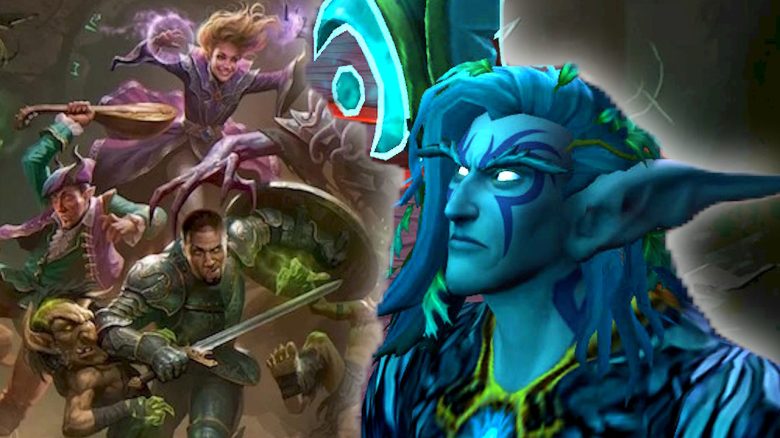
Modern MMORPGs are played very differently today than during the “golden days.” Therefore, they often leave a void for MeinMMO editor and MMORPG enthusiast Alex, which he currently fills mainly with tabletop role-playing games.
Players who were there in the early days of World of Warcraft can probably understand this:
In the past, MMORPGs felt different.
The whole sense of community was different. People played more together than apart, exchanged ideas, hung out in the chat for hours, and worked together on the next challenge. They supported each other in crafting, planned guild events, jumped into role-playing, and immersed themselves fully in the societies that brought the game worlds to life. They suffered together, celebrated together, and grew together, like a second family. Victories felt significant, each level up like a big step.
The journey was somehow the destination, and along the way, you took many companions with you or met them in the nearest tavern while role-playing. You could completely sink into the digital worlds, like in a second life—alongside like-minded individuals.
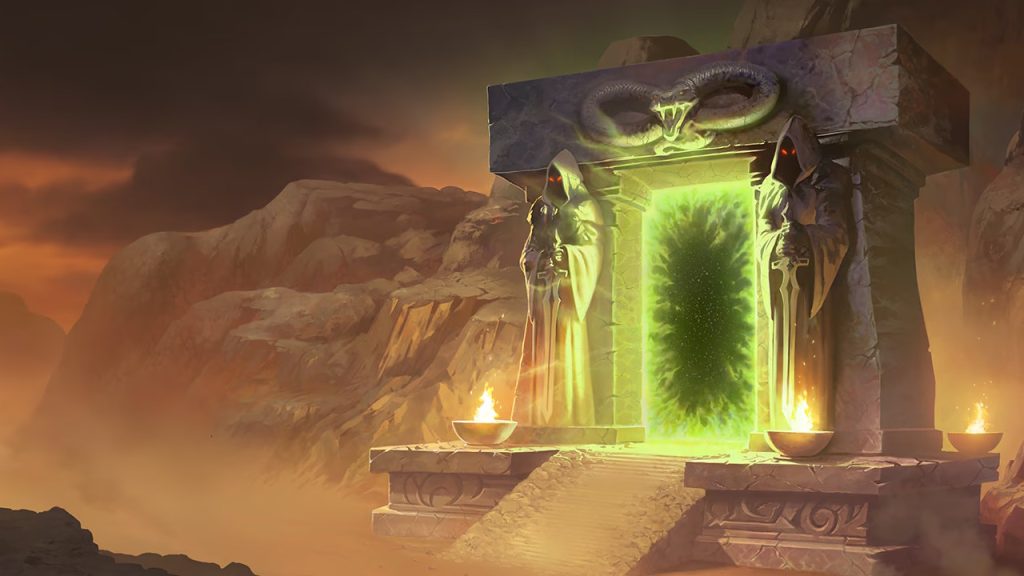
Today, it feels more like you have to win a race to reach the endgame and always be at the top. You only have your eyes set on the end of the game, focusing only on self-optimization for the very best equipment with the highest item level and the cleanest rotation of your skill bar.
How often do you throw yourself into difficult content in WoW or FF14 with others, only for them to leave as soon as they hold the desired piece in their hands? Too often.
How often do you read complaints in the chat about someone from a total stranger because they don’t meet their predetermined damage count for their class on the damage meter, even though you just want to run a regular dungeon or farm mounts in old content, where damage really shouldn’t matter that much anymore?
Level-ups feel rushed and insignificant, and the community is also left behind. Also because you don’t need them to play the game. Many things are now optimized for solo players.
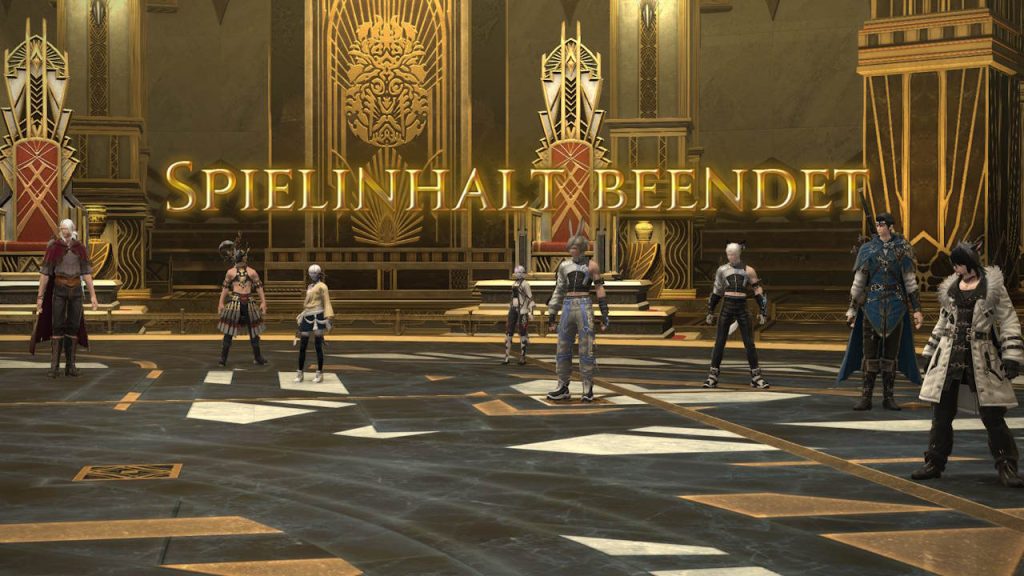
The automatic group searches and content finders make meeting strangers much easier, but after the content, you usually part ways again—on to the next content with the next strangers. This is particularly evident in large MMORPGs like Final Fantasy XIV or WoW, which I actually love very much.
Additionally, many contents in MMORPGs today feel significantly easier (which certainly also has something to do with many years of practice), more accessible, and designed for fast-paced gameplay and endless self-optimization.
Sure, every now and then you might encounter players with whom you run more than one piece of content, or team up with the guild or a raid static for difficult runs. But it just doesn’t feel the same, does it? Somehow, that feeling of shared adventure is missing…
Fortunately, another hobby has accompanied me almost as long as my beloved MMORPGs, which now fully takes over this role and gives me the feeling of genuine community and victories worth celebrating: tabletop role-playing games—especially Dungeons & Dragons.
What are tabletop role-playing games?
Tabletop RPGs, or pen and paper, are role-playing games that you play without a PC or console gathered around a table or online via common tools. The story and interactions mainly take place in your heads, and important decisions and attacks are determined with dice and your character sheet. Some groups also use miniatures and built battlefields or digital maps to visually enhance the experience. A game master guides any number of players through the story, and they in turn decide what they want to do in the narrated situations—similar to an improvisational theater with your thoughts as the stage.
But he doesn’t stop at role-playing games in analog settings either, and so, tabletop worlds like those of Dungeons & Dragons, The Dark Eye, and Daggerheart have also been his beloved places for over 16 years.
True adventures without boundaries in the theater of the mind
Tabletop role-playing games like Dungeons & Dragons not only offer countless possibilities to lead a second life, as was common in MMORPGs in the past. They are also incredibly social. Because they thrive on you telling the story together.
Here, you don’t play side by side to obtain the best equipment or reach the next level, but to master challenging situations and battles together. And mainly for the sake of mastery.
Although a game master generally guides the story, your decisions, ideas, and interactions create the big picture, and you jointly influence the flow of events.
How rewarding it feels when the group finds itself in a heist, and the bard cleverly talks their way out of the situation after the group gets caught by guards due to a blunder (also known as bad dice rolls) can almost be compared to the feeling of progress through a genuinely difficult raid.
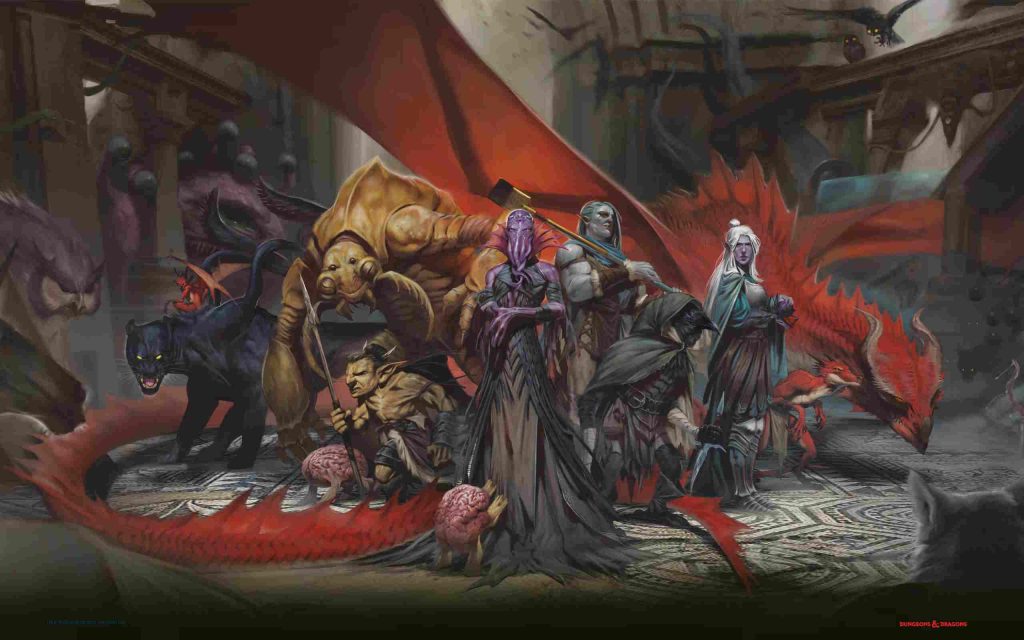
Just through that, the adventures experienced feel significantly more meaningful than in most video games, which is inherent to the nature of the matter. It’s not about being better or worse than other players, but about achieving a goal together—just like MMORPGs used to feel. The journey is the destination, not the goal the reason for the journey.
Moreover, you must develop strategies together to overcome the challenges presented. Clever gaming and teamwork are rewarded with heroic, epic victories, although, of course, luck through dice always plays a role.
However, it’s this little bit of uncertainty that also brings people closer together and has caused many a group to cheer aloud when a critical dice result is achieved in a delicate moment.
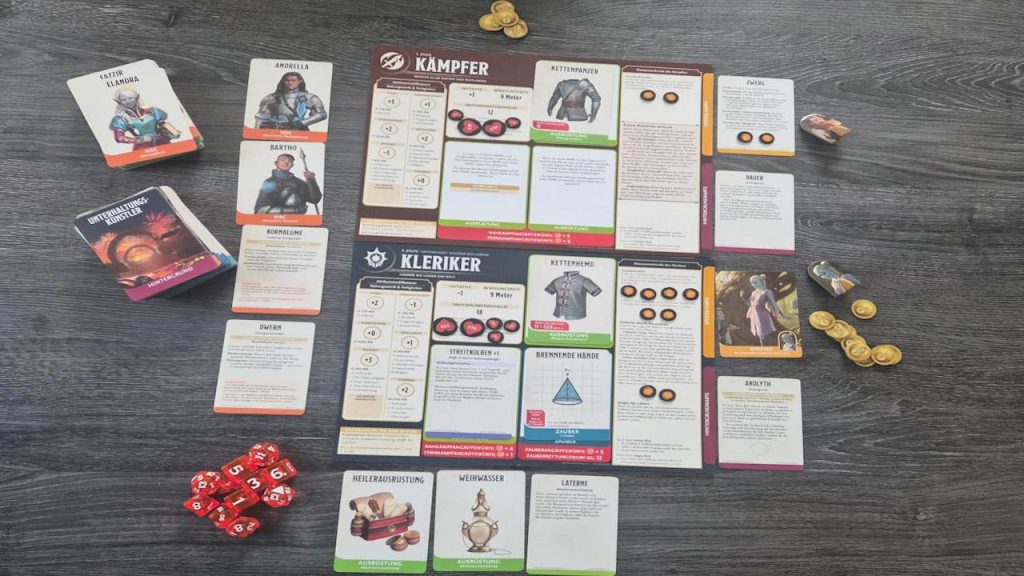
Of course, you can also try to maximize the value of your character in almost any role-playing system, but the entire experience is slowed down by the fact that the game master and the group jointly set the pace, creating a sense of collective flow.
The group and the shared adventure are at the heart of the game.
Level-ups feel more important as they are usually tied to significant milestones in the story. While there’s also the option to play with experience points, this is generally used less frequently.
Loot is prescribed by the campaign book or the game master and brings a significantly more uncertain component than most MMORPGs, where you specifically target certain content or areas for specific loot.
As a result, the equipment items gained also carry much more weight and contribute to the individualization of your character and their development within the world and the story.
All of this conveys the feeling that I find lacking in modern MMORPGs: a sense of community and gameplay milestones created by the very nature of the game that feel truly significant in terms of development.
Now, one could say: “Yes, but tabletop RPGs also require people.” True, but you need them for MMORPGs as well if you want to have that feeling. Many tabletop RPGs can now also be played online without great difficulties over long distances with the right tools, so you don’t have to come together in person.
And once you’ve found the right people, it can easily happen that a “let’s start a one-shot” unexpectedly turns into a campaign played for years. And your stories and experiences belong only to you and are not influenced by developers or many, many other players who might be looking for something completely different in your favorite MMORPG than you.
Do you feel the same way as I do, or do you feel completely differently? What do you currently miss in MMORPGs, and what are you playing to satisfy that nostalgia? Let us know in the comments!
Our video producer Anna is also passionate about MMORPGs, and she feels very similarly to me. In her video, she wonders whether the golden age of the genre is now finally over or if there is still hope on the MMORPG horizon: Is the golden age of MMORPGs finally over?

Your opinion is important to us!
Do you like the article? Then let us know!