It’s not new that companies pay influencers a lot of money to play their games on YouTube and Twitch. But are the companies choosing the right influencers? An analyst shows how Ubisoft could have allocated its marketing budget for Assassin’s Creed Shadows.
What data is this? Nick Lombardi, the co-founder of the marketing portal Streamforge, analyzed Ubisoft’s marketing strategy for the new Assassin’s Creed Shadows in a post on LinkedIn. Ubisoft is entering collaborations with brands for the new Assassin’s Creed and is working with professional parkour athletes.
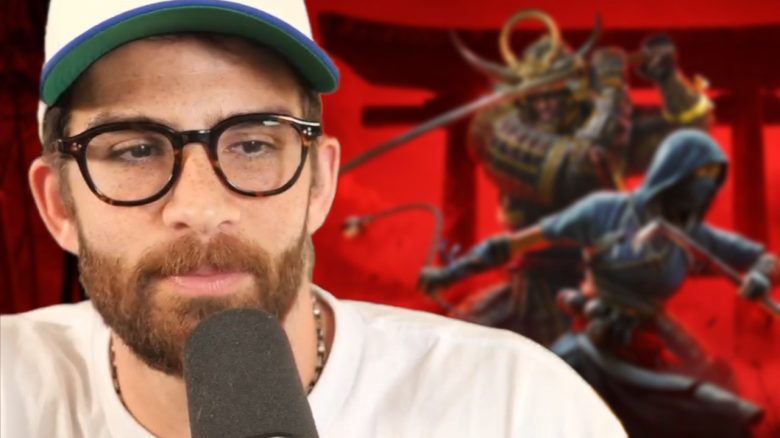
However, what particularly attracts attention are the expenses Lombardi estimates for influencers: among them is Twitch streamer Hasan “HasanAbi” Piker, who represents a controversial figure for rather right-wing currents in the influencer scene.
Ubisoft apparently places high value on Twitch, but on the wrong streamers
This is how much Ubisoft is said to have spent: According to Lombardi, Ubisoft is said to have spent more than 2 million US dollars in total for sponsored content with influencers. 1.1 million is said to have gone to Twitch streamers – among them, HasanAbi is said to have been the highest earner.
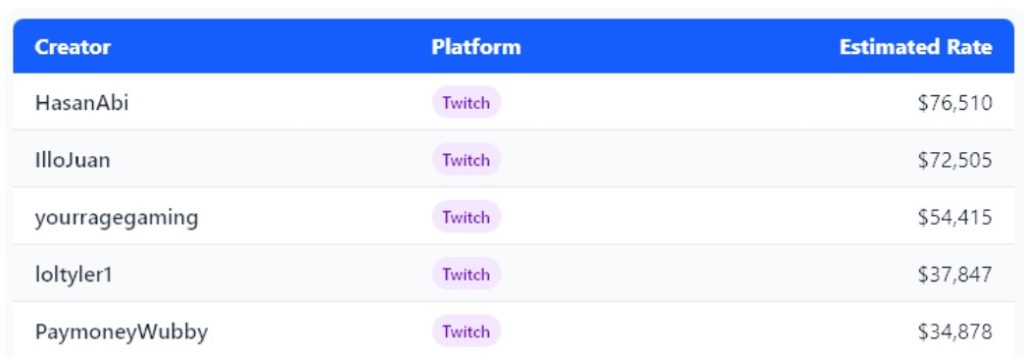
Analyst suggests: Ubisoft is relying on the wrong influencers
What does this tell us? Lombardi points out that, according to his calculations, Ubisoft spent about half of its influencer budget on content on Twitch, even though sponsored content on YouTube and TikTok would have received significantly more views.
The analyst concludes that Ubisoft seems to value the community aspects of the streaming platform more. On Twitch, viewers interact with the content on a completely different level than on the ephemeral TikTok.
In this context, however, the choice of streamers raises questions, as HasanAbi is, as Lombardi emphasizes, not actually a gaming streamer. According to TwitchTracker, non-gaming content constitutes more than 80% of his content. HasanAbi mostly plays games during sponsored streams.
So the streamer has also only spent the – presumably contractually agreed – 4 hours with Assassin’s Creed and then returned to his usual content. During this time, HasanAbi averaged 18,700 viewers – just half of the average 33,000 who watched him in March during “Just Chatting” (via TwitchTracker).
Lombardi concludes that gaming is simply not what the core audience at HasanAbi wants to see.
A similar picture emerged with the LoL streamer Tyler1, who, according to the analyst, might have received 37,000 dollars for playing Assassin’s Creed for 2 hours and then immediately switching back to League of Legends. He also had significantly fewer viewers with the “foreign” content.
Here, one might wonder how sensible it is to pay big streamers a lot of money when neither they nor their audience have a particular interest in the game.



How reliable are the data? This is a mix of estimates from Lombardi and AI-driven analyses.
In the comments under his article, he explains that he works with industry-standard rates and scales them up to the size of the respective creator. As a basis for calculation, he goes from a sponsored video on YouTube or TikTok or a two-hour stream on Twitch.
In the case of HasanAbi, the actual amount Ubisoft pays him could even be significantly higher. The streamer showcased Assassin’s Creed Shadows in two streams of two hours each. The calculation example is: 1.25 $ × 4 hours × 32,600 average viewers.
With a “bulk discount,” according to Lombardi, the streamer could have received as much as 120,000-140,000 US dollars.
However, we probably won’t find out exactly, as streamers usually do not disclose precisely how much they earned from a deal – at least not intentionally. Thus, the exact figures should be taken with caution.
Thanks to one or two accidental leaks, we do know that such sums are not entirely out of the question. Twitch streamer accidentally reveals a deal of 35,000 $ with the largest MMORPG on Steam – “Don’t donate to streamers”