

Paradox is known for making absurdly complex strategy games. Ones where you can claim to understand the basics after 1,000 hours. MeinMMO editor and strategy fan Benedict Grothaus checked out their latest project Afterworld at gamescom 2026 and didn’t want to stop – but the devs also encouraged him to continue.
And no, that’s not an exaggeration. Hearts of Iron IV is so complex, that some players only feel like they’ve finished the tutorial after 900 hours. The folks at Paradox are absolutely crazy, but it’s worth it. Their strategy games are among the best on Steam.
I’ve probably spent around 2,000 hours, if not more, in their titles. Crusader Kings 3 and Stellaris are my top games from Paradox, and Age of Wonders 4 is one of my recent highlights, even though they are just the publisher here.
So of course, I was somewhat confident when I checked out their new title Afterworld at gamescom. I wasn’t prepared for what they showed me, but damn, I had a lot of fun!
A little bit of Stellaris, a tiny bit of Crusader Kings, and a lot of Frostpunk and Fallout
Afterworld takes place in a USA in a nuclear post-apocalypse. Rockets and bombs have destroyed the country – those few people who survived are now fighting for survival. This is also somewhat the idea of the studio, as they explained:
- Crusader Kings 3 was supposed to be a strategy game with features borrowed from role-playing games.
- Stellaris was meant to explore space, a foray into science fiction.
- Afterworld is now the idea of pairing strategy games with survival games – a bit like what Frostpunk 2 has already done, only much, much bigger.
After the brief intro, where I was already really excited about the game, I was allowed to play for about half an hour – or rather, to play a bit and conduct an interview. However, I was so engrossed in Afterworld that the devs gathered around me to watch.
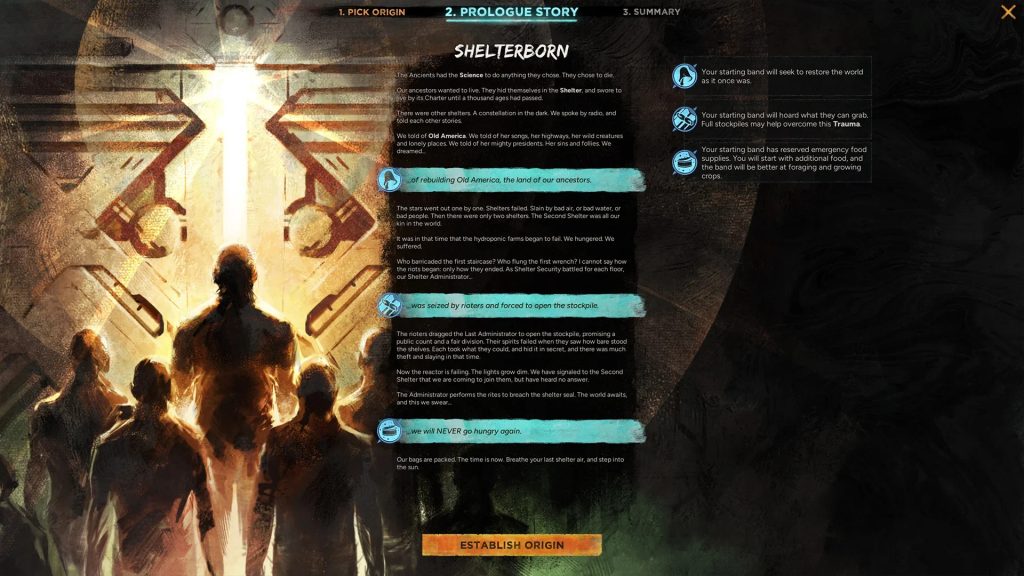
Out of the bunker and into the randomly generated world – Yes, really!
Unlike most Paradox titles you might know, especially in the historical realm, the map of Afterworld is never the same. There are familiar places like New York, but what happens there is different every time.
In one run, New York might just be a radioactive crater, while in another, it could be the palace city of a people of super mutants. Each playthrough is supposed to play out differently, the developers said. There are also various starting options available.
For example, there are “Nomads” in the nuclear wasteland, or followers of the “Ancients” – which I will talk about later. For the demo, I could only play a group of people who are supposed to leave their bunker a few hundred years after the war because it is slowly giving out (Fallout, anyone?).
However, there aren’t strict guidelines. At the beginning, various choices are enticing that shape the society and later dilemmas that have further effects on the inhabitants. I wanted to play a group of fanatical zealots – and ended up with mutated fish people with an almost pathological obsession for bionic augmentations. Delightful!
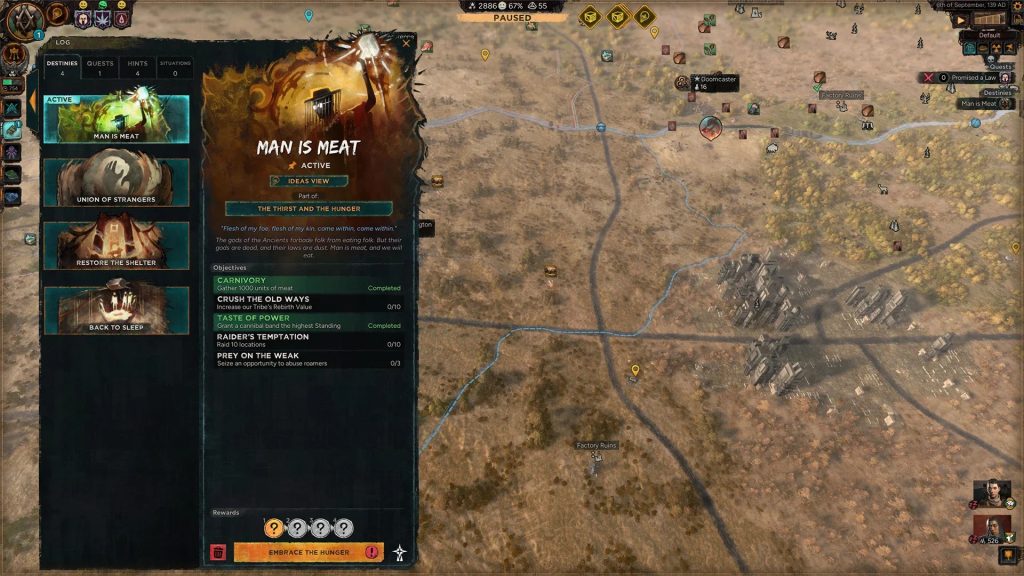
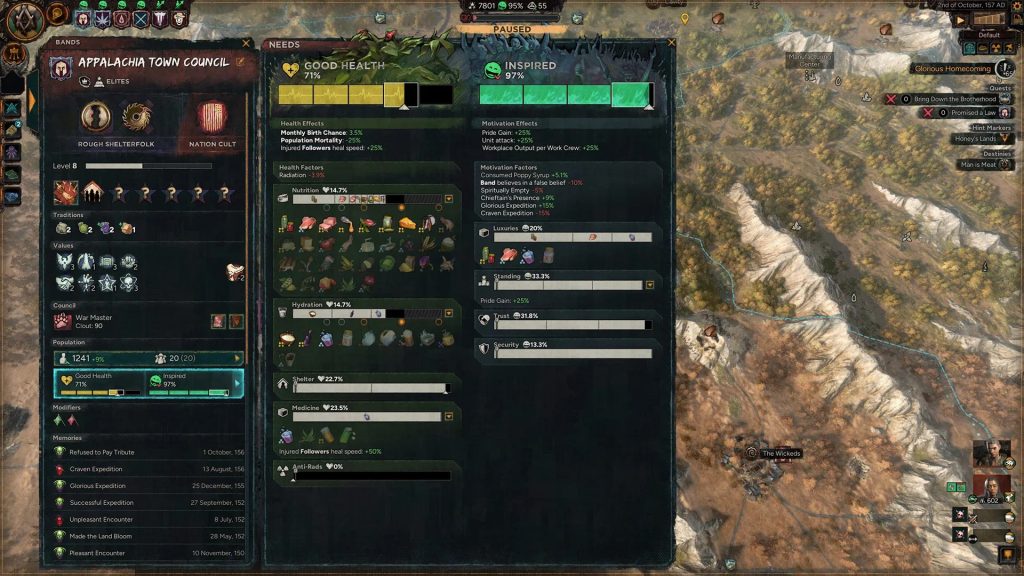
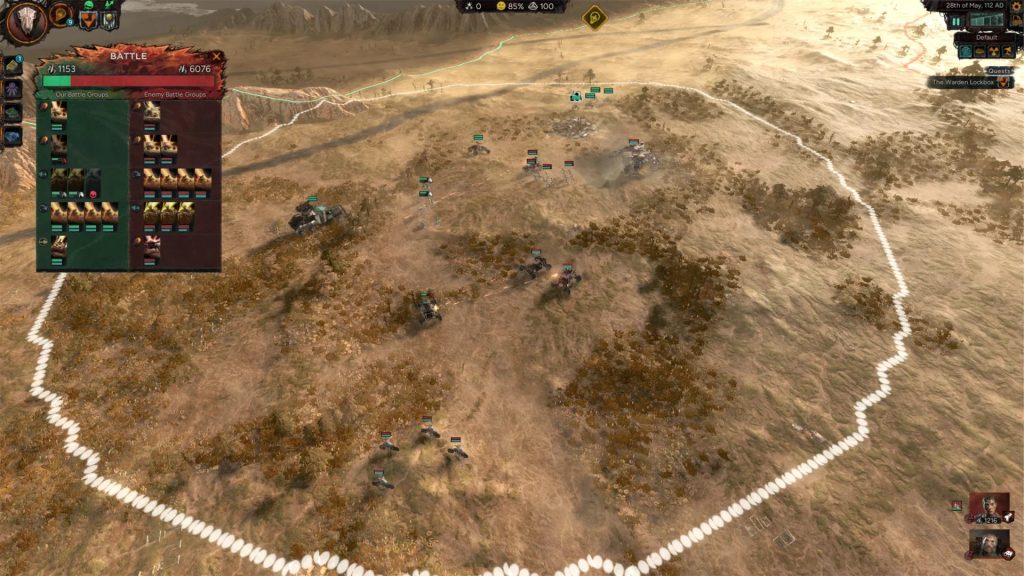
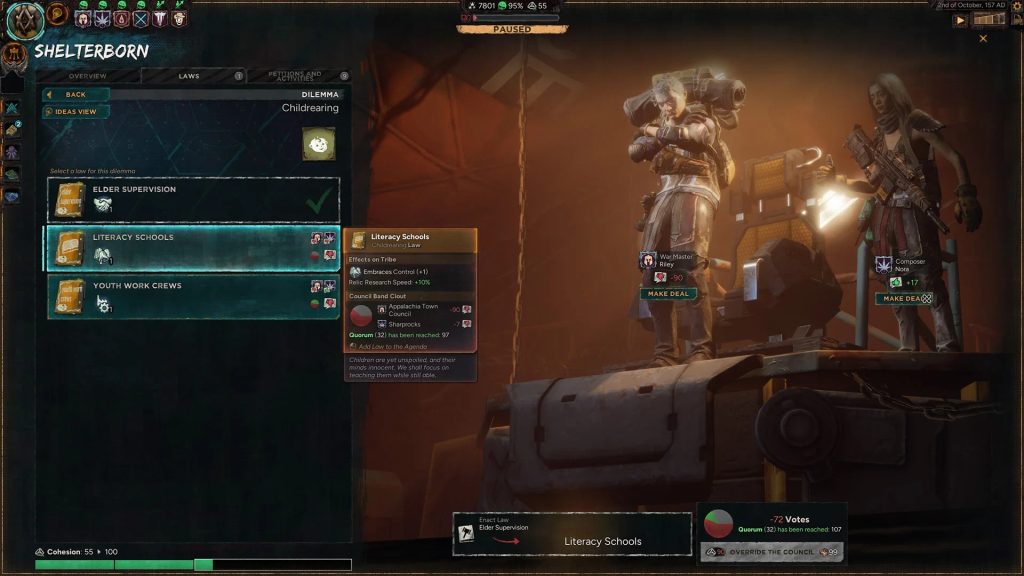
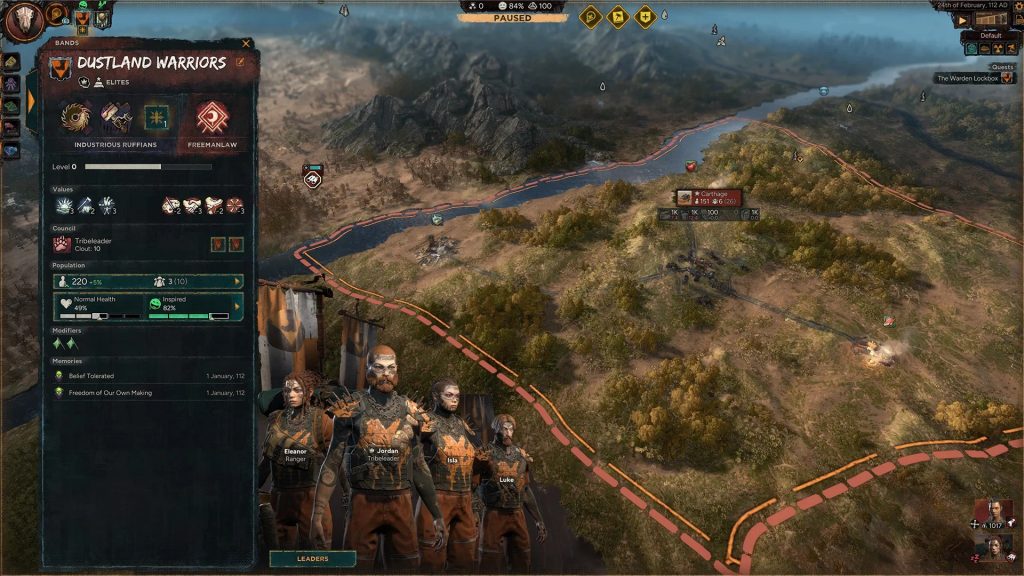
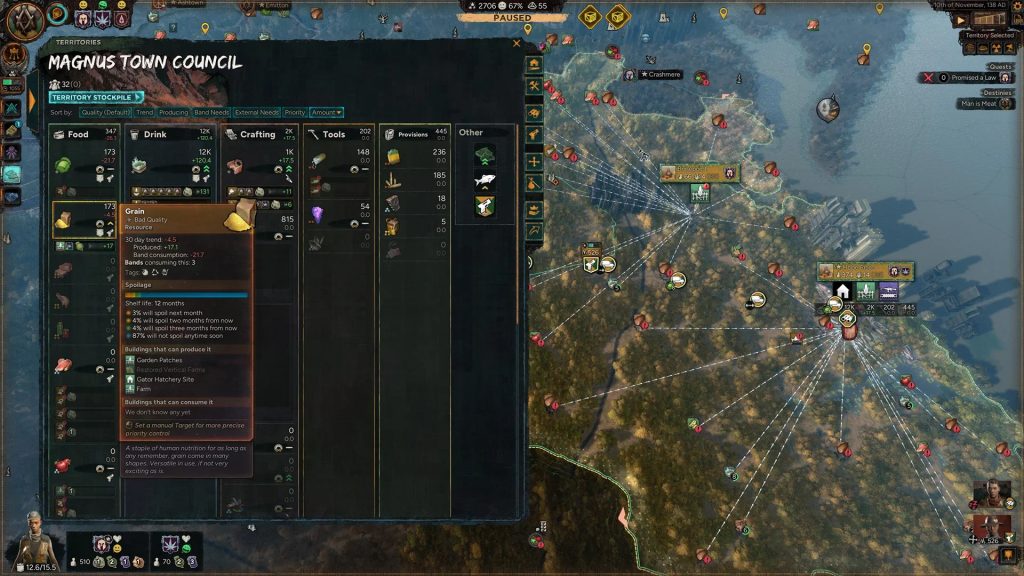
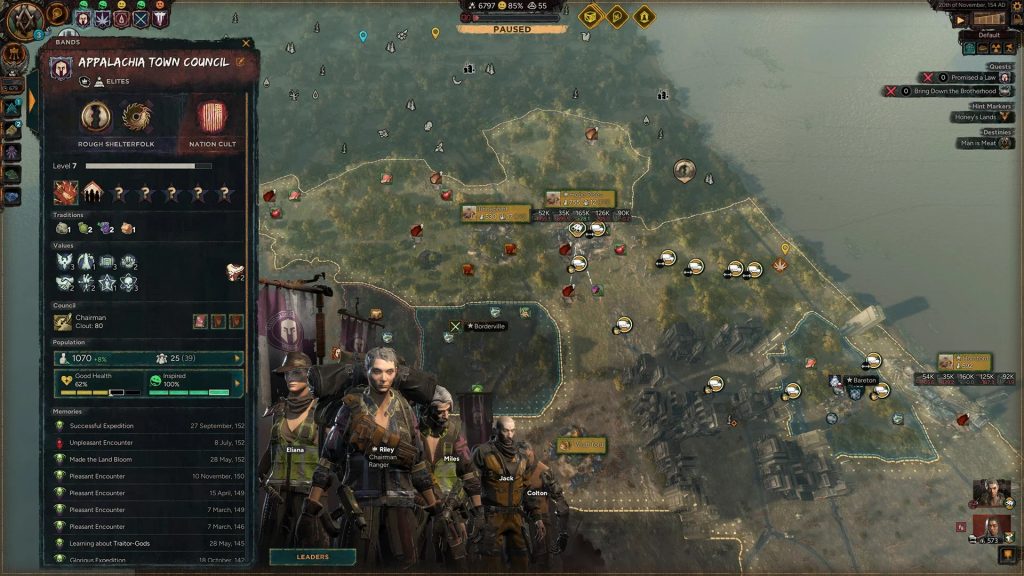
The planet doesn’t want me, but I want everything!
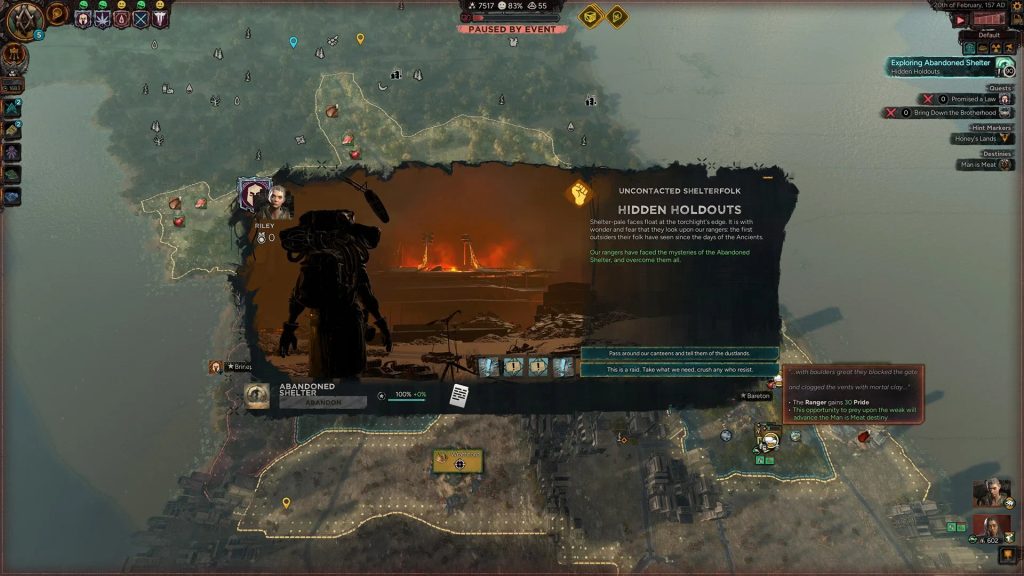
The game itself roughly resembles Humankind or Civilization, at least in the first “stage.” My scouts investigate the area for water, food, and supplies, and I build a settlement that I slowly develop, depending on what I find:
- With fertile land, it’s sensible to improve vegetable production, maybe even turning my people into vegetarians.
- Radiated areas are harmful to the people and harder to settle, but mutations can bring advantages.
- If I encounter other people, I can either practice diplomacy – or choose the path of war.
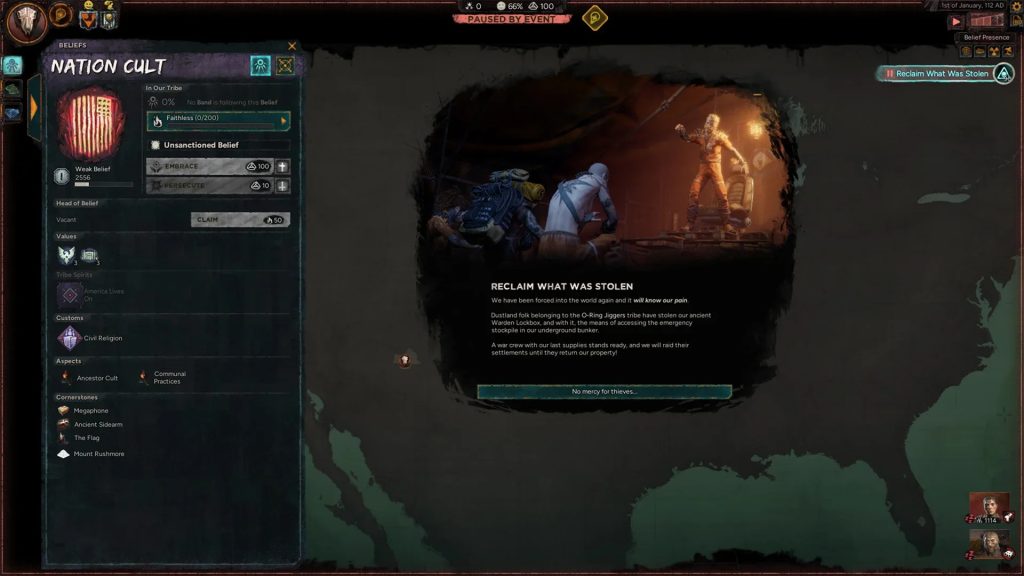
It got quite exciting right here because I had a “death zone” right next to me, an area controlled by a powerful ruler with a bunker that promised sweet loot. The devs said I was the first one to find such a “death zone.”
Of course, I had to disregard the offered interview and did everything I could to explore this zone before the demo ended. And: I made it! With a bit of overtime. But since four people or so were gathered around me wanting to know what was happening, that was okay … I think.
Not just strategy, but Grand Strategy … of course
It is a bit difficult to explain in writing what Afterworld really is, as it is divided into the stages mentioned above. First, it is about survival, then about becoming stronger and shaping society, and finally about achieving your own goal.
What that is is open to you as a player – as in almost all Paradox games – rebuilding America, annihilating everyone else, going back to the bunker and sleeping on. Everything is possible.
While I couldn’t see the endgame, it is likely where things get really interesting, especially politically. Because in the world, there are not (only) other humans anymore, but also those “humans” who become ancient, almost immortal.
They lived through the war and the time before that, hundreds of years ago, and have become so powerful that they don’t regard us as “on the same level” at all. These “Ancients” are basically the endgame powers you can either join or try to become so powerful yourself that you can compete with them. What you are used to from Paradox.
Learning by Doing, or rather: by Exploring
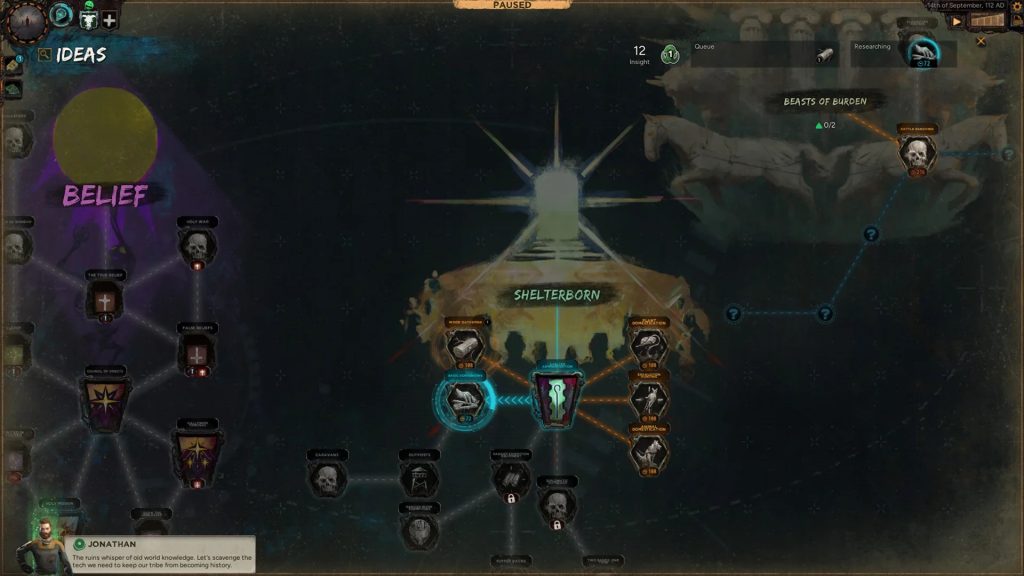
However, the journey to the goal is particularly exciting. There is a research tree, which is not static but dynamic. Researches are not simply open; you must discover what you want to explore.
Do you want to do something with fish and water? Find a river. Diplomacy is only open when you find other human groups. And the Ancients themselves also have their own research trees.
All of this slowly comes together into a large tech tree, which is also different in each run, a bit like the ever-changing compositions in Against the Storm. A principle where I already see: I am willing to invest a few hundred hours.
Of all the games at gamescom, Afterworld may have surprised me the most. Not only because it captivated me so much, but because I was able to sink right in – which is rather unusual for Paradox – and still see that there is a tremendous amount of depth lurking.
Are you excited about Afterworld, or are you still in the tutorial of Stellaris? What do you think about the idea of groups and Ancients? Write us a comment!
As a fan of strategy games, after a long drought, there is so much I’m looking forward to right now, as I haven’t in a long time – besides Afterworld, especially Dawn of War 4 and Total War: Warhammer 40,000. The latter I even got to play already, most recently (again) at gamescom: Total War: Warhammer 40,000 no longer feels like Total War and I love everything about it

Your opinion is important to us!
Do you like the article? Then let us know!