

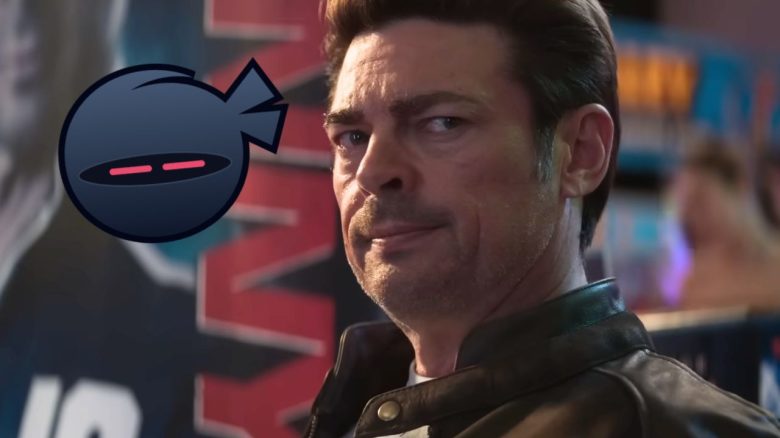
On May 7, 2026, Mortal Kombat 2 was released, the next video game adaptation in the theater, dividing critics and fans. This is no coincidence and will likely continue to happen.
With Mortal Kombat 2, Warner Bros. continued their video game adaptation from 2021 in theaters. Most fans seem to be quite pleased with the film. After all, it has over 5000 user reviews with a rating of 88% on Rotten Tomatoes.
But look, the critics are not so enthusiastic. The critic score only stands at 64%. That is not surprising, as no film can create such a strong discrepancy as a video game adaptation.
Games have a special problem
Looking at the criticisms of Mortal Kombat 2, the story, dialogue, and characters are mainly criticized. These are plausible points that other viewers also recognize and criticize in many series and films.
If you aren’t a fan of the series, you expect something different. However, looking at the associated games, the story was often nonsense, the characters were often caricatures of ’80s clichés, and the dialogue was not particularly clever.
Mortal Kombat is a fighting game series, and Mortal Kombat 2 seems to deliver exactly that for most viewers. There are references to well-known maps, iconic quotes like Get Over Here
, and characters like Noob Saibot, who are not easily forgotten from pop culture. In addition, there are fights and quotes that can be understood even without prior knowledge.
This makes fans feel comfortable in the theater or on the couch. The nostalgia is evoked, and you sit in the hall like the DiCaprio meme from Once Upon a Time in Hollywood.
Of course, one might ask what the actual intention is when it comes to a video game adaptation. You want to deliver a good film, a good series,but should you criticize a bad
story in a film like Mortal Kombat? As an adaptation, it has at least managed to bring the rather simple story to the big screen – and well-known characters are fighting each other.
Here we also come to the big problem that video games have as adaptation material compared to comics, animes, or books: the story is often not the main focus.

The focus of a video game
Movies, series, comics, and books usually have a commonality: they are driven by narrative. There is a story that serves as a guiding thread.
Video games as a medium do not always have that. Games like The Last of Us, Uncharted, or Life is Strange have a targeted story focus, but on the other hand, there are games like The Legend of Zelda, Street Fighter, or Super Mario, where the story is secondary or entirely irrelevant.
Super Mario is also a good keyword, as the last film generated an even greater discrepancy between critics and fans when looking at the Rotten Tomatoes Score.
In this case, the film also focuses on references, gags with old gadgets like R.O.B., or musical pieces that remind viewers of their fondest moments with the plumber.
Is that enough to create a classically good film? No. But it evokes emotions. Is it a bad
adaptation when the core idea of the source material is still well captured, and fans are reminded of exactly that?
Video game adaptations are not JUST meant to stand alone; they are also, harshly put, cross-promotion for the next game. Fox’s guest appearance in the second Mario film is the perfect example. Shortly after the film, a new game was announced.
But: a fan is not just a fan, and this creates an interesting conflict for video game adaptations.

Not every fan views an adaptation the same way
Almost every entertainment product has different levels of fans, and there are also hardcore fans. In video games, they scour the entire lore of a world that a casual gamer
often overlooks.
These hardcore fans, however, also view adaptations differently. In a Reddit post, a fan criticizes the character Sindel in the new film. She has been wasted. She doesn’t utilize all her abilities and has little character.
For someone who only knows the characters by name, that probably doesn’t matter, but for a hardcore fan, this character has been poorly adapted.
Video game adaptations take liberties – who can study thousands of wiki entries to know the lore? – but that can also lead to negative reactions. If you’ve spent years as a fan engaging with a world and then perceive it as wasted
, you can also label a film as a bad
adaptation.
However, focusing too much on lore can alienate other fans and viewers who might not be familiar with all the Easter eggs and references. Such adaptations should also be understandable for non-connoisseurs so they can develop interest and engage further.
Video game adaptations thus face a conflict: How much fan service can be offered without losing other viewers and critics?
So who are video game adaptations for? This cannot be easily answered. Movies like Mario are perfect for families because both adults and children grow up with this character.
Mortal Kombat appeals not only to fans but also to viewers who want to see action and fights in theaters again.
However, one should still weigh what to expect. Those who know Mario or Mortal Kombat probably know that the story will not be a great highlight.
But video game adaptations must also compete with the competition and endure legitimate criticism. They are shown in theaters and on streaming services, and viewers have limited time. But series like Arcane have shown that it is possible to please both sides.
What do you think about this? Would you prefer to have a lot of fan service even if other aspects suffer, or would you gladly forgo fan service if the film can score differently? Please share your opinion in the comments. Earlier this year, MeinMMO editor Nikolas Hernes also had issues with the Fallout series: The Fallout series could be so cool, but it suffers from the same problem as Stranger Things

Your opinion is important to us!
Do you like the article? Then let us know!