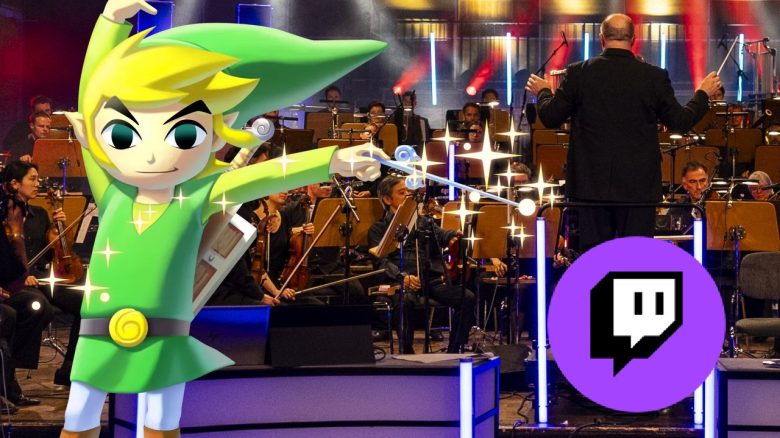
On the Twitch channel of ARD, a gaming concert will take place tonight. MeinMMO spoke with two organizers to get a behind-the-scenes look at the extraordinary concert.
Recently, the number of gaming and anime concerts has been increasing. In various cities in Germany, mash-ups of the best music pieces are taking place as events. Some games even get their own tours, traveling across Europe and other continents.
The BR Munich Radio Orchestra is also an organizer of such a concert. The special thing is: If you can’t be there in person at the concert hall, there is the option to follow the event live on Twitch. The concert takes place tonight at 7:00 PM on the Twitch channel of ARD.
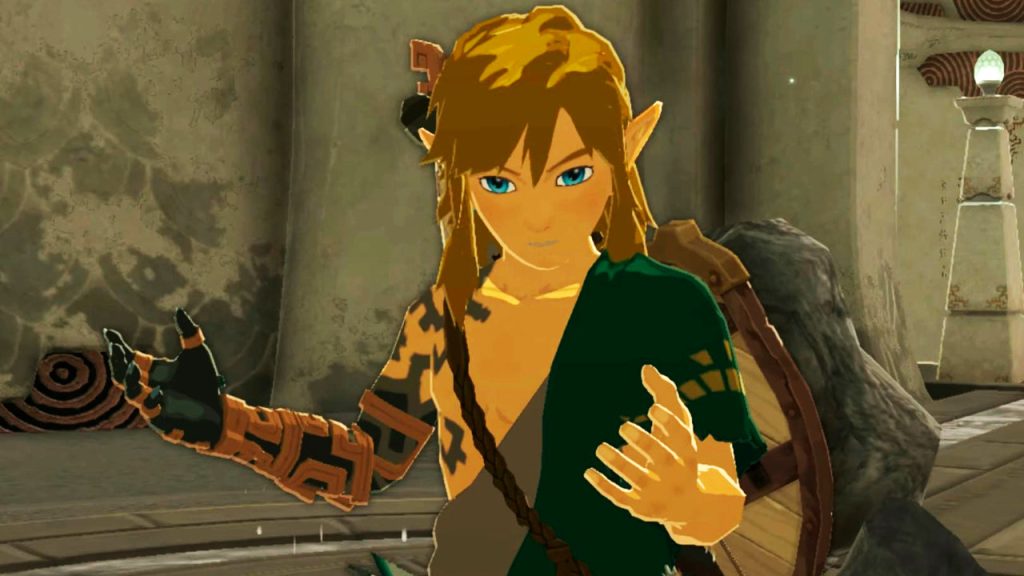
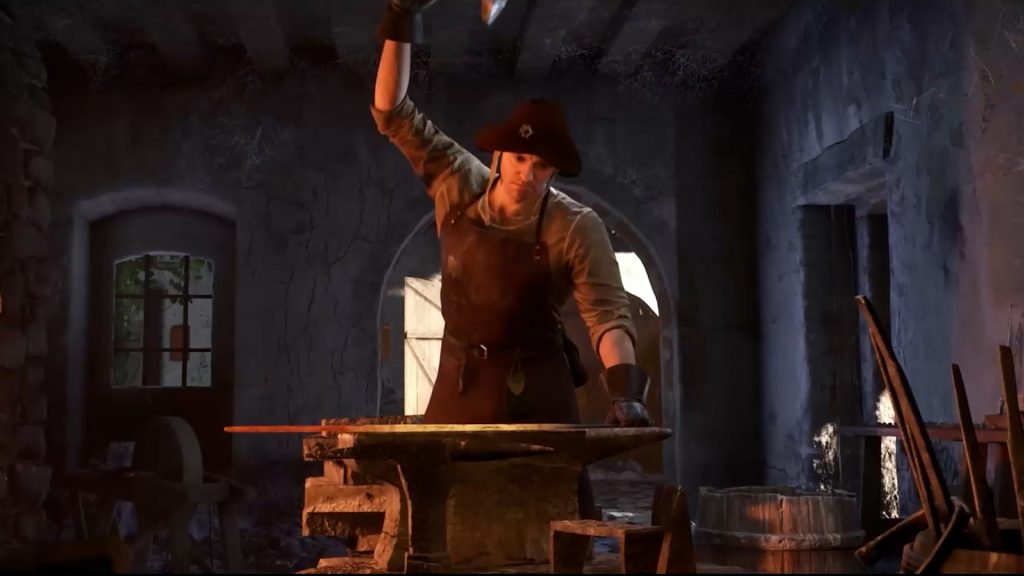
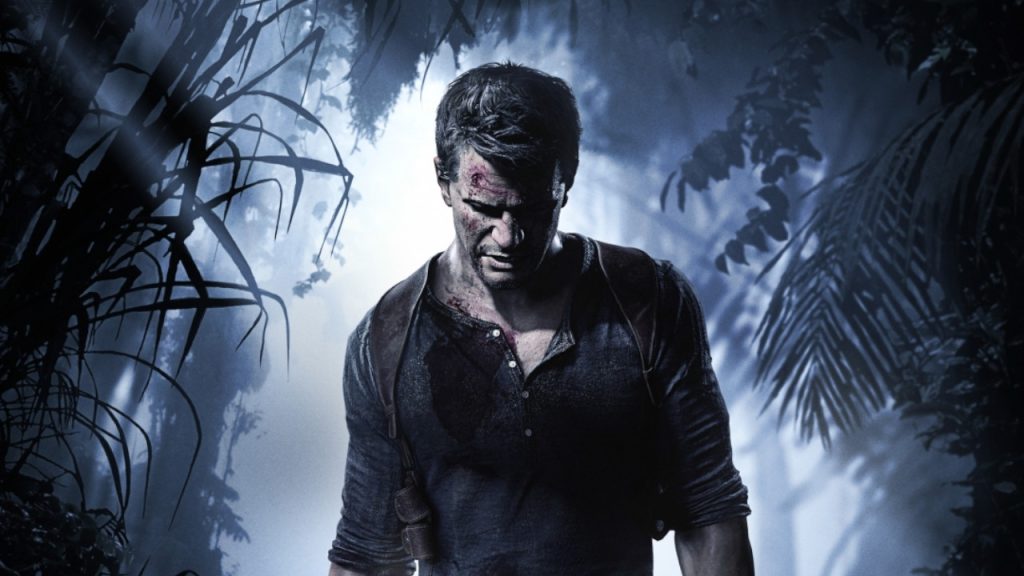
Fans can expect well-known pieces from Kingdom Come Deliverance, The Legend of Zelda, and Uncharted. How such a concert is put together and what viewers can expect on Twitch is revealed in the exclusive interview on MeinMMO. Annekatrin Hentschel (Organizer/Production) and Philipp Potthast (Organizer/Community & Twitch) were available to answer questions from MeinMMO editor Jasmin Beverungen.
The Development of Video Game Music Concerts
Jasmin Beverungen: Currently, there are more and more offerings when it comes to video game concerts. One example is “The Witcher” and I’m going to a concert of “Clair Obscur” next year, as there is a big tour going on. How has this developed in your perception over the past few years, especially as a live event?
Philipp Potthast: I actually feel that there has been a strong shift in recent years and that it is now taken more seriously. Five to ten years ago, many people, especially in the mainstream area, still felt: Video game music is Super Mario, it is 8-bit music, chiptune sound, and so on. This feeling that there are real compositions behind it, large orchestral arrangements, was not there. That has changed significantly in the last five years.
I don’t know how much of a role COVID played, that people started to focus more on their favorite video game soundtracks and that the demand for it has increased. But I believe that this is the timeframe in which it has changed. We totally see that people, even from the professional classical field, no longer hesitate to perform concerts. Everyone is eager to get involved. One could say that it has caught up with film music as a serious subject.
Annekatrin Hentschel: Because the quality is simply so good. There is incredibly good music and I believe a lot has happened. On the composers’ side, a lot has happened, with great people coming and writing incredibly good music that stands on its own, aside from the game. That’s one thing: whether it works in the game or if you can experience it well at the concert. I often have that in the selection – not everything is suitable for concerts. If you focus on a game, you can do that. But if you are looking for music that works independently in a concert… There are incredibly good tracks that can be enjoyed completely detached from the gameplay. Even if you have never seen the game. I think it’s amazing when that works.
Philipp Potthast: That is also related to how video games have their own status in pop culture overall. You can see this with video game adaptations. Fifteen years ago, it was still quite exotic to make a Resident Evil film. Nowadays, with “The Last of Us” – which has been one of the very big pop culture events of the last three years – the music is in the spotlight. Especially with The Last of Us, it is really incredible and atmospheric. It pushes a series forward. That is exactly why the desire for video game music is increasing.
Are Non-Gamers Also a Target Group?
Jasmin Beverungen: You just hinted at it: What do you think, to what extent does the proportion of people who have little to do with video game music or video games in general play a role, but are still interested in such events?
Annekatrin Hentschel: Good question.
Philipp Potthast: The video game concerts I attend are primarily visited by people who have played the game. I was recently – that’s now a year and a half ago – at a Final Fantasy concert in the Olympic Hall in Munich. There’s a real fandom present. People are in cosplay and they’re excited about it. I do believe that the concerts are mainly attended by those who have played the game. But Anne, perhaps it is different in mixed concerts, I don’t know exactly.
Annekatrin Hentschel: Yes, that exists. There’s a series in Düsseldorf that does it quite cleverly and basically addresses a young audience, mixing it with classical music. Sometimes there are classical pieces that have become famous through a game. Pieces that are very old, classics, but also take place within the game and become iconic. They combine that well. They might take Super Mario and combine it with a classical piece that either has a connection to the game or fits musically well into the program. I can imagine that this also appeals to others. I haven’t researched it, but it’s a feeling.
But I want to look at it from another perspective. We felt in the development that the people who play a lot and love their games and the music sometimes don’t even know that such a thing exists and how great that could be. And I feel there’s still a very large number of people who could discover this. Who would experience something like this for the first time with great amazement and did not anticipate how great it could be and how much it would resonate with them. There’s still much potential to bring people into the concert hall. That’s also a great value for the orchestras and the ensembles that play.
Selection of Pieces & Rights Clearance
Jasmin Beverungen: In order to appeal to as many players as possible, especially at concerts that feature mixed music and do not focus on a specific fandom or video game, certain pieces need to be selected. How was it ensured in Game on Symphony that the target audience was as broad as possible? Did you focus on different eras, different genres, or how was the approach?
Annekatrin Hentschel: We are aware that you need big names, that AAA plays a significant role and that there must be something that attracts many people, something as universally appealing as Zelda. That’s something you know will attract a lot of people and put you on the safe side. It is difficult to obtain the music, the score material along with the associated rights. We not only organize a concert, but also need the livestream rights and the on-demand rights for the platforms where it will be available online afterwards – the ARD media library, YouTube, and the ARD classical channel. It is time-consuming and costly.
This can only be done with good partners who have connections to the publishers and those responsible for the music. It’s a huge journey. Of course, the sheet music must exist or must be arranged. Basically, you need the rights and some are inaccessible. Especially when they themselves are on tour, like with The Witcher, it becomes challenging to obtain this music for additional concerts. That will only be possible again when they are no longer on tour.
We have a good partner who is a composer himself and takes care of this. We discuss a lot with him: What makes sense, what sounds good. He has a sense for smaller games where the music is incredibly good. I find the mix good. On top of the big hits, you can also place something small, indie games, or new releases. We also have premieres where the music has never been played in concert before. We have to start very early and it’s a hard struggle. We keep following up. We are looking for direct contact with the publishers and are in touch with the composers. In this case, we spoke directly with Wilbert Roget (composer of Helldivers 2, editor’s note) about how to proceed and how he could support us. We try to tap into different channels because we’re going into a concert series. We are already planning very far in advance.
We are planning a concert in Circus Krone in 2027 with a choir. We are already looking at which games we can get because there are great things like Halo. The earlier you start planning and asking, the more likely it is that you will get the sheet music. We are also trying to plan theme nights. For example, we want to have a strategy evening with the big strategy games, where the new Anno is included. We have set ourselves big themes under which we want to work in the future.
It’s nice when you can plan long-term because the chances of finding the right partners to support you are much greater. But now we have looked to ensure that we have a good mix and that the music is of high quality. It needs to sound good, and work well with an orchestra. And then you have a certain lineup to work with. How many strings, how many brass, how much percussion? You have to hire substitutes. There are many components, and we work with a size with which we have had good experiences to get the pieces played. It’s sometimes bombastic with many brass instruments and that’s something you need to get together. That is a very large ensemble with which we are working.
Planning Duration of a Concert
Jasmin Beverungen: How long does it take from the first idea, saying “Hey, Game on Symphony, we want to do this,” until the very first concert actually takes place?
Annekatrin Hentschel: We have done it once. 2024 was the first test version – we originally only had four months. And that was tight. At times, we didn’t have the scores until the day before the concert. It takes time to get the notes. They arrive and must be prepared for the orchestra.
Everything takes time. Then you have the musicians who need to rehearse before coming to the rehearsal. The conductor has to prepare it. You can’t really imagine from the outside what paths this takes. Now, we sometimes have a year to plan, and that makes everything a bit more relaxed. But we have also managed it in four months. For this concert, we have refined it over six or seven months.
Jasmin Beverungen: An impressive achievement to get all of this together.
Twitch Broadcast & Visual Concept
Jasmin Beverungen: The special thing about this is that the concert will also be streamed live on Twitch. How is it ensured that the viewer from the screen has almost – of course, the acoustics can’t be exactly replicated – but has a similar experience to the visitor sitting in the concert hall?
Philipp Potthast: You mean audio-wise?
Jasmin Beverungen: Everything. For example, visually. There are also screens that simultaneously show game scenes. How does the viewer on Twitch experience this?
Philipp Potthast: I believe, audio-wise we have to face it: The live experience cannot be completely reproduced.
Annekatrin Hentschel: But we give it our all.
Philipp Potthast: Exactly. We have a very good team of people who have great experience in recording orchestras and are able to do this very well in a live broadcast. I believe that it probably cannot get better than this on Twitch. Everything gets a bit compressed; otherwise, it won’t get through the line.
In terms of implementation: We do not have game scenes because we said that people watching on site are really excited about the orchestra. Of course, you can support it with game scenes, but especially our concert is mixed. It’s not like you completely immerse yourself atmospherically in a journey through the game, but rather that you are back in a new world. The concert experience takes center stage.
On Twitch, we’ve had the experience – we conducted user testings – that many people consume the whole thing on the side. That many people switch on a stream while not really watching. That’s why we said we want to focus on the acoustics. Nevertheless, we have many cameras and an elaborate live directing. It’s a high orchestra live broadcasting standard with which we are presenting it in TV quality on Twitch. We want to emulate the concert experience as closely as possible on screen.
Annekatrin Hentschel: We have around 10 cameras. And we also try to create a visual concept that is somewhat more modern than what is typically done in classical music. That is also important. There has been a standard for many years, but we are trying to create much more intimacy because Twitch is so emotional. This music is so emotional.
The orchestra was celebrated so much during the initial tests we did – we also did something with film music, with the Downton Abbey soundtrack and so on – that the orchestra deserves to be shown. I was totally surprised by how the Twitch community reacts to these musicians. How great they find a cello and how excited they can get about it. And we want to create this intimacy visually.
We are also working with graphics. We have a graphic designer who creates overlays in the style of the game; so, based on mood boards, she develops extra graphics. There are some effects we utilize in Twitch that also fit the games. For every game, there are info panels where you can read more about the game, also about the music, about the composers, if there are any interesting facts.
And then on the orchestra stage, we have a screen where the host is transmitted while he speaks to the audience on stream. There are also flashbacks, images that correspond to the game world, which we have all created ourselves because this is also a rights issue. And partly also made with AI. This is all done by a young graphic designer we have. And that already provides a very nice graphic level with which we work. But not directly from the game.


Interaction & Event Programming for Viewers
Philipp Potthast: Additionally, we do a half-hour stream before and another half-hour stream after. We refer to it internally as Pre- and Aftershow. There we also have the conductor who joins in and has the opportunity to interact with the chat. The composer Wilbert Roget will also be connected. We also want to focus more on the people from the orchestra so that they can be engaged with.
Annekatrin Hentschel: And there’s also a streamer involved, KaddiTV, who will be a guest throughout the evening. There are various components. And of course, the host who guides the evening.
Jasmin Beverungen: Will the chat be moderated throughout the evening?
Annekatrin Hentschel: We have three people moderating the chat, who are currently preparing a lot. There will also be quizzes… all those functions that Twitch also offers. As a public broadcaster, we cannot utilize everything because we do not have a commercialized channel, but there are tier lists and quizzes. You can vote on which piece can be played as an encores.
We will likely try out this heatmap. We are working with Easter eggs, hiding something from the games somewhere in the orchestra. After the initial tests, we have thought a lot about how interactive we can make this. And this is now also an ongoing process to continuously develop this format. We are taking a step further now than in the first test versions. It’s still about optimization.
But as Philipp said, in these user testings we also found that music is really the core, and sometimes you shouldn’t do too much. Where we really hit a wall, to be honest: We tried a react stream where the host and a guest also talked about the music. The big realization was that this was very poorly received. People were really upset in the chat when they talked about the music and disrupted the music experience.
We took that very seriously, that this can’t happen again. And you really have to give music its space. That should be the case, and I think it’s great that it’s desired like that. It shouldn’t be “too much.” I believe we need a good balance. That’s the experience from the first rounds.
Philipp Potthast: You can have it just playing in the background while you perhaps play something yourself, or you can actively watch because there is visually enough to engage with the orchestra. And if you want to interact in the chat, that’s also there. You can engage as much as you want without being disturbed if you don’t want to engage too much.
Jasmin Beverungen: Yes, that sounds like a good middle ground. That the audience can interact a bit, but still enjoy the music.
To experience the best sound possible from such a concert, good headphones or speaker boxes are essential. An audio expert reviewed several headphones on YouTube and gave them a blunt verdict: Audio expert evaluates gaming headphones on YouTube – “I’ve heard many, they are all terrible”