


General Combat Tips and Breaking Enemies’ Posture
These are the Basics of the Combat System in Elden Ring: You need to consider various factors in Elden Ring if you want to survive. Here are the absolute basics:

The most important factors in combat are your HP, FP, and stamina. The HP is the red bar, the FP is the blue bar, and stamina is the green bar, located at the top left of your HUD.
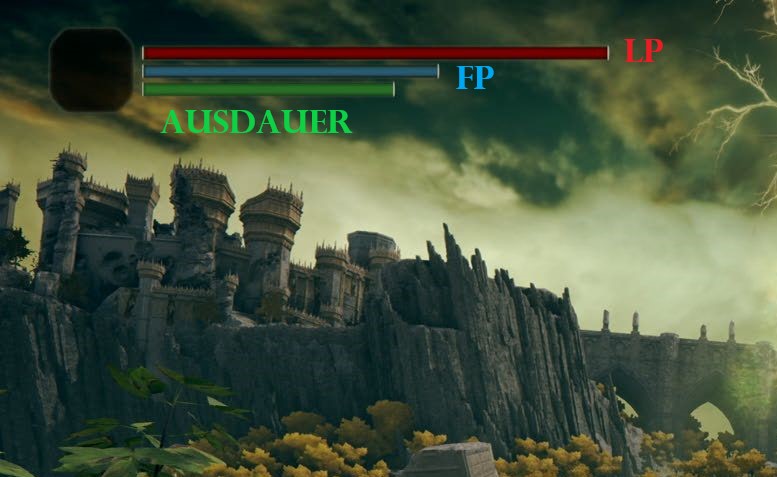
Your stamina is particularly decisive in combat. Each strike and each dodge roll consumes stamina in combat. To refresh it, you must not run or perform any other actions.
You need to time your attacks well and always keep an eye on your stamina to succeed in combat. Otherwise, it will be empty, and you cannot block attacks, dodge, or attack yourself.
How you can dodge and block is shown here again in the general controls:
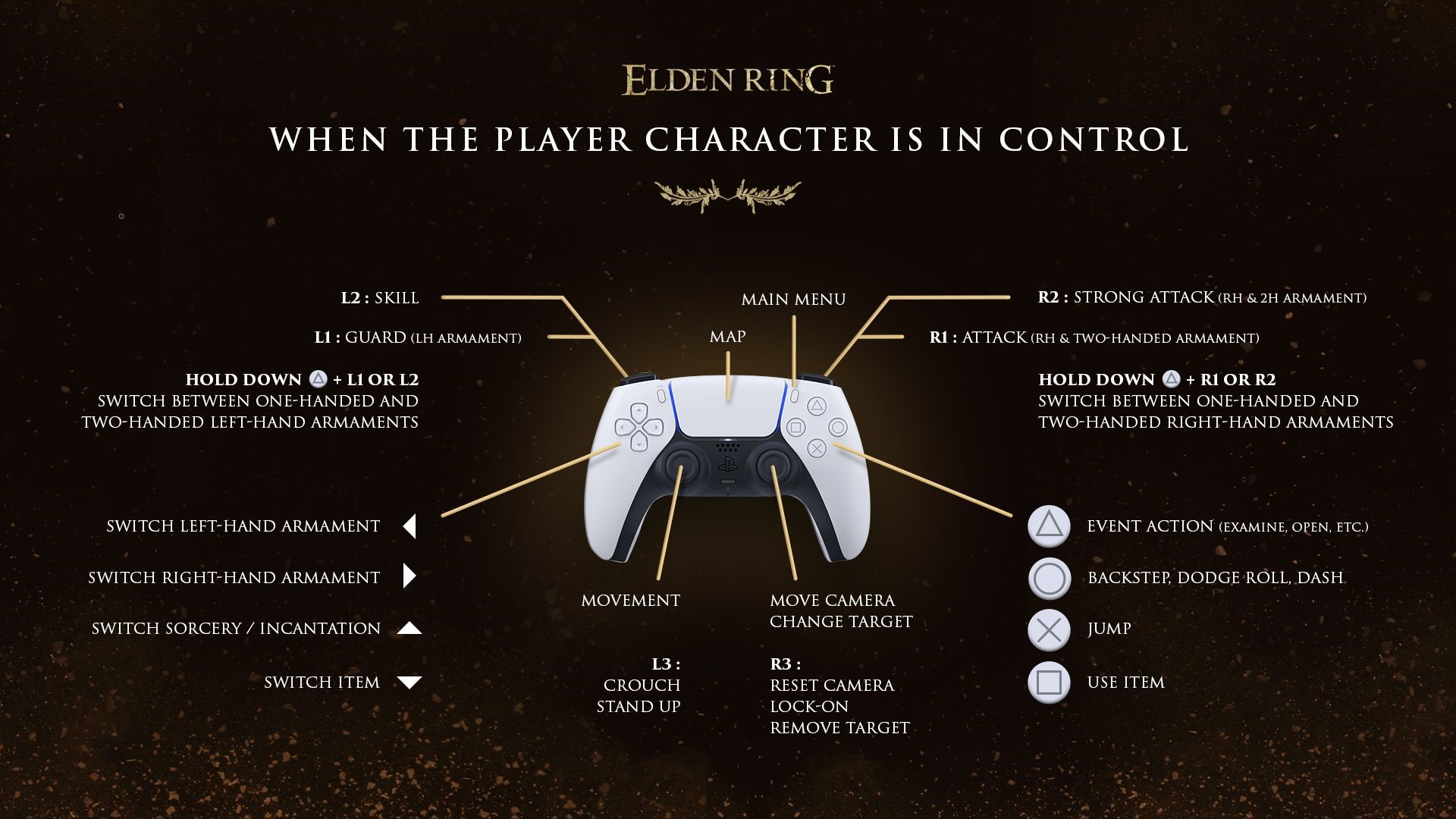
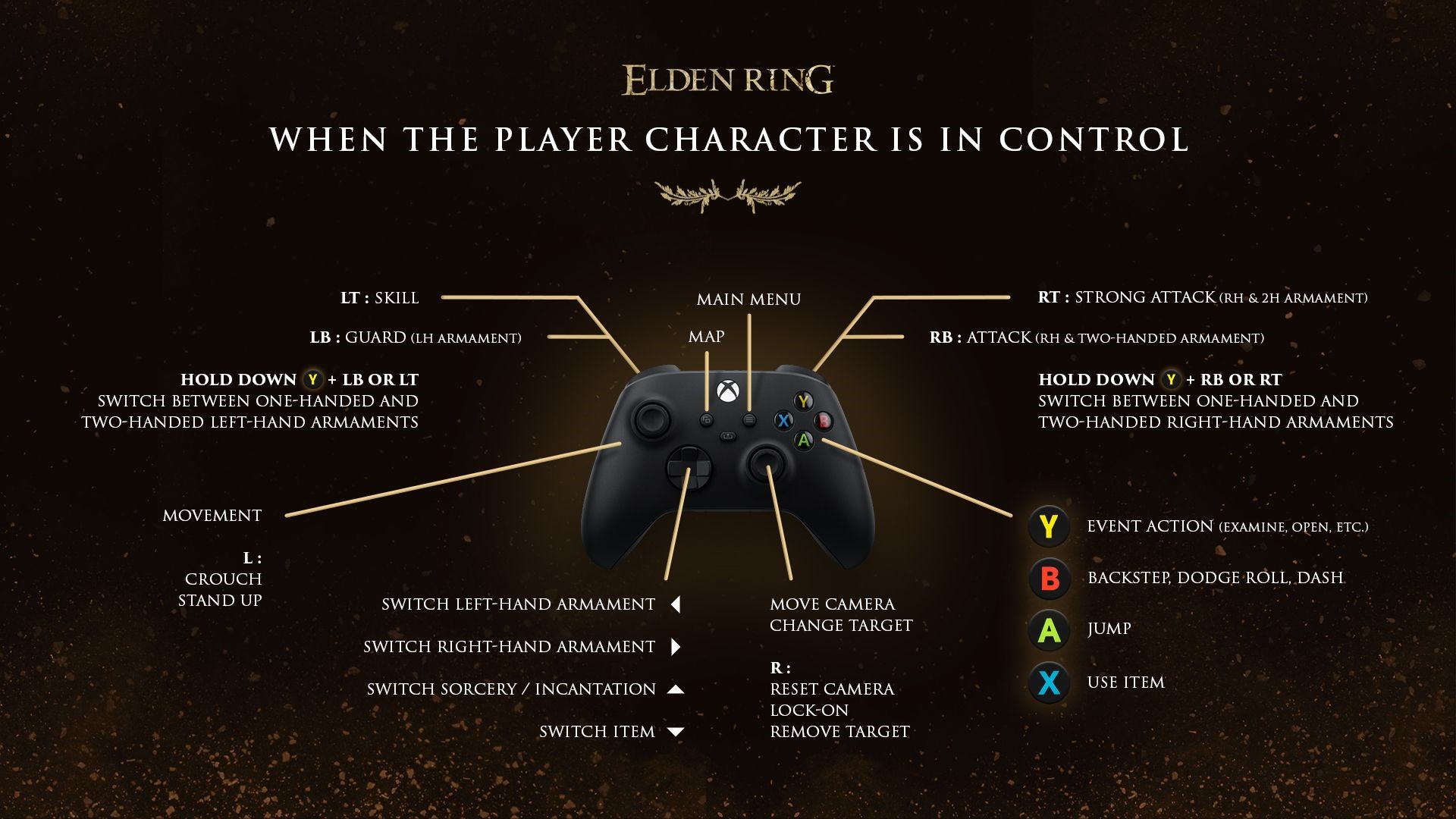
This is what you need to keep in mind: At the beginning, the combat system can quickly overwhelm newcomers. Therefore, we provide you with some tips that can help you get started in combat.
Patience Pays Off
Don’t just charge in blindly: If you rush in aggressively, the game will quickly put you in your place. Observe your opponents closely and watch their movements.
Avoid spamming attacks: The reflex is there, and one quickly resorts to it, but one should avoid the spam of attacks. Typically, this only makes you vulnerable to attacks. It is often better to make isolated fast attacks in safe moments rather than going all-in with a risky combo.
Wait for an opportunity: By observing the enemy, you will always find small, but fine windows of time where you can deal damage. Make use of those key seconds. Depending on the enemy, they are longer or shorter and thus harder to utilize. However, do not underestimate how effective a tactic with many small “needle pricks” in a battle can be – the vulnerable phases of enemies do not need to last forever to be exploitable.
Stay Flexible
Try everything that is possible: Especially at the beginning, you should test every weapon you get your hands on. The important thing is first to find your playstyle. So don’t lock yourself into a longsword right away and try everything out first.
Use different tactics: There are enemies that are particularly vulnerable to attacks from the side or behind, while others are particularly vulnerable to counters or easier to defeat from your horse’s back.
Sometimes you can become frustrated with an enemy who suddenly becomes much easier with a simple change in tactics.
It can be worthwhile to simply forgo a shield and wield weapons with both hands:

Blocking is Useful, but Not a Full Protection
Dodging is better than blocking: Generally, it is more economical for your stamina to dodge rather than block attacks with your shield. Moreover, you can reposition yourself and do not need to block the next hit directly. The learning curve is significantly higher here, but the reward is also greater.
Only block fast attacks: Your shield should only be used for attacks that you cannot dodge in time.
Use counterattacks: If you block a hit, you can initiate a counterattack using R2/RT. This is particularly useful when fighting individual enemies but requires some practice at first since the timing isn’t always straightforward.
Here you can find an overview of the 3 best shields in the game:

Use Heavy Attacks and Break Your Enemies’ Posture
This is how you break posture and what it brings you: Some of you may already know the system from Sekiro.
Posture is a kind of invisible health bar for your enemies that you reduce gradually with attacks. With charged heavy attacks and jumping attacks, you can break your opponents’ posture significantly faster than with light strikes.
If the invisible bar reaches 0, your enemies’ posture is broken. They will then be unable to move for a few seconds and expose their weak point.
With an attack at this moment, you can deal massive damage. This can save you from precarious situations in difficult fights. Here you must weigh the risk against safety, as the offensive gameplay with heavy attacks can sometimes be dangerous.
With large enemies, you can recognize the weak points by the orange glow.
Attributes and Class Choice Determine Your Playstyle
These are the attributes: There are a total of 8 attributes that influence different properties and can be increased through level-ups. These are:
- Vigor: Vitality influences your health points and affects fire resistance and poison immunity.
- Mind: Intelligence influences FP (Mana) and focus-related resistance. Important for magic and spell builds and if you want to use war ash talents.
- Endurance: Increases your character’s stamina and also increases physical defense. Particularly important for melee fighters as stamina enables dodging and blocking.
- Strength: Is required to wield heavy weapons. It also increases the attack power of weapons that scale with strength.
- Dexterity: Is required to wield fast, light weapons. It also increases the attack power of weapons that scale with agility. It shortens the casting time of spells, mitigates fall damage, and makes it harder to fall off a horse.
- Intelligence: Increases the spell power of intelligence-scaling spells and improves magic resistance. It also increases how often you can use spells.
- Faith: Is required for performing summons. It also enhances summons that scale with faith.
- Arcane: Affects death resistance and certain spells and summons. It also increases your item discovery rate.
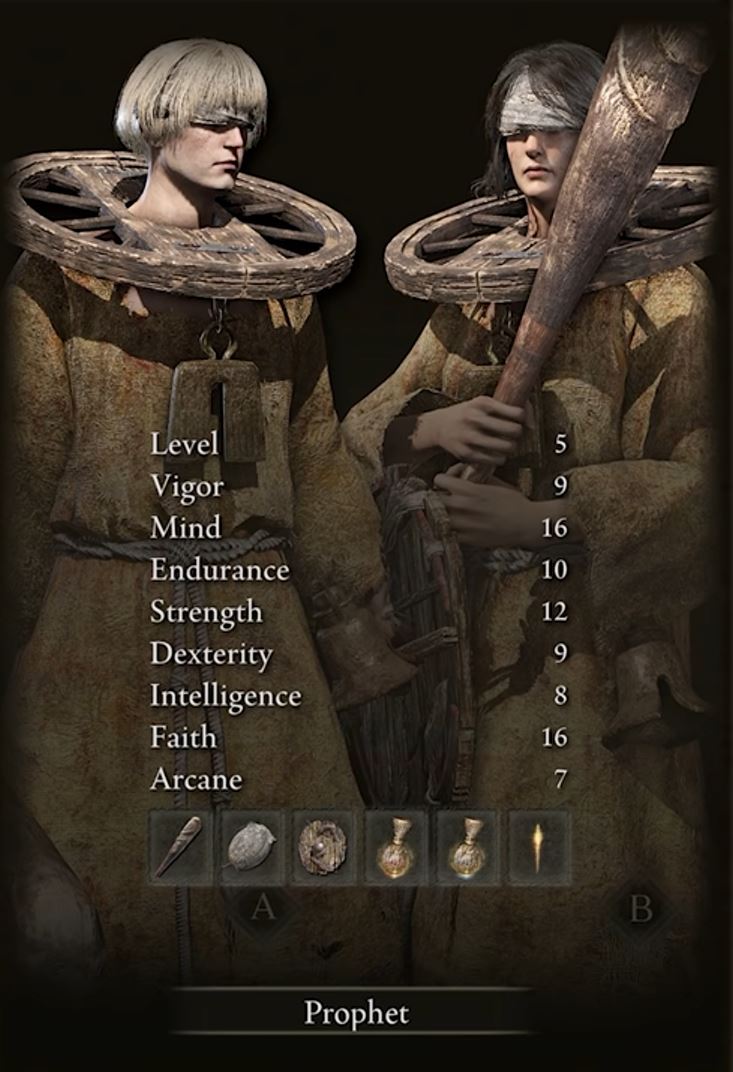
This is how classes work: The 10 classes of Elden Ring differ in their skill distribution among the various attributes and in their equipment. Each class offers a mix of various aspects that make them either flexible or very specialized.
For beginners, the flexible classes are especially recommended, as they allow for a lot of room for experimentation. You can find more about this in our detailed guide.


Your opinion is important to us!
Do you like the article? Then let us know!