


“Multiclassing” in Baldur’s Gate 3 gives your characters that certain something to be even more effective in battles. However, with some combinations, you will become downright overpowered. Which multiclass builds those are is introduced to you by MeinMMO editor and D&D expert Sophia Weiß.
With 12 classes and a total of 46 subclasses, which will soon be expanded by 12 additional subclasses with the announced Patch 8, Baldur’s Gate 3 already gives you a lot of room for personalization in your game. By mixing and matching the different classes, every character build and every run becomes unique.
The principles of multiclassing are presented to you in our special about it. Here, however, you can read everything about our three absolute multiclassing favorites!
Ranger, but really good!
In our class tier list, the ranger currently ranks last. But for all Legolas fans, there is good news: A ranger with the subclass “Stealth in the Darkness” is predestined for one of the most powerful builds out there.
With a multiclassing in rogue and fighter, you turn the simple archer into a true master of initiative and surprise kills.
Which classes and levels should you take? The build consists of five levels each in ranger and rogue and two for fighter. So you need a bit of patience to achieve full utility, but you will be rewarded for it.
For your ranger, choose the subclass “Stealth in the Darkness”. This gives you +3 initiative with the Talent of Terror. Faster attacks are always a huge advantage.
Additionally, with the skill in every first round, you get an increased movement radius and an additional attack that deals a W8 damage. At level five, there is then one more attack on top.

With the rogue subclass “Assassin,” you gain the ability to make assassinations at level three. This means each hit on a surprised opponent is automatically critical, and you have advantage against creatures that haven’t attacked in the current round.
With the sneak attack, you also deal additional damage. If you start your fights hidden, you can substantially trim down enemy hordes already in the first round. At level five, you also learn “Incredible Evasion,” which allows you to dodge like a weasel without provoking an attack of opportunity.
The two levels in fighter give you the abilities “Catching Your Breath” and “Action Surge.” With “Catching Your Breath,” you regain a W10 of hit points once per short rest. “Action Surge” allows you to take an additional action.
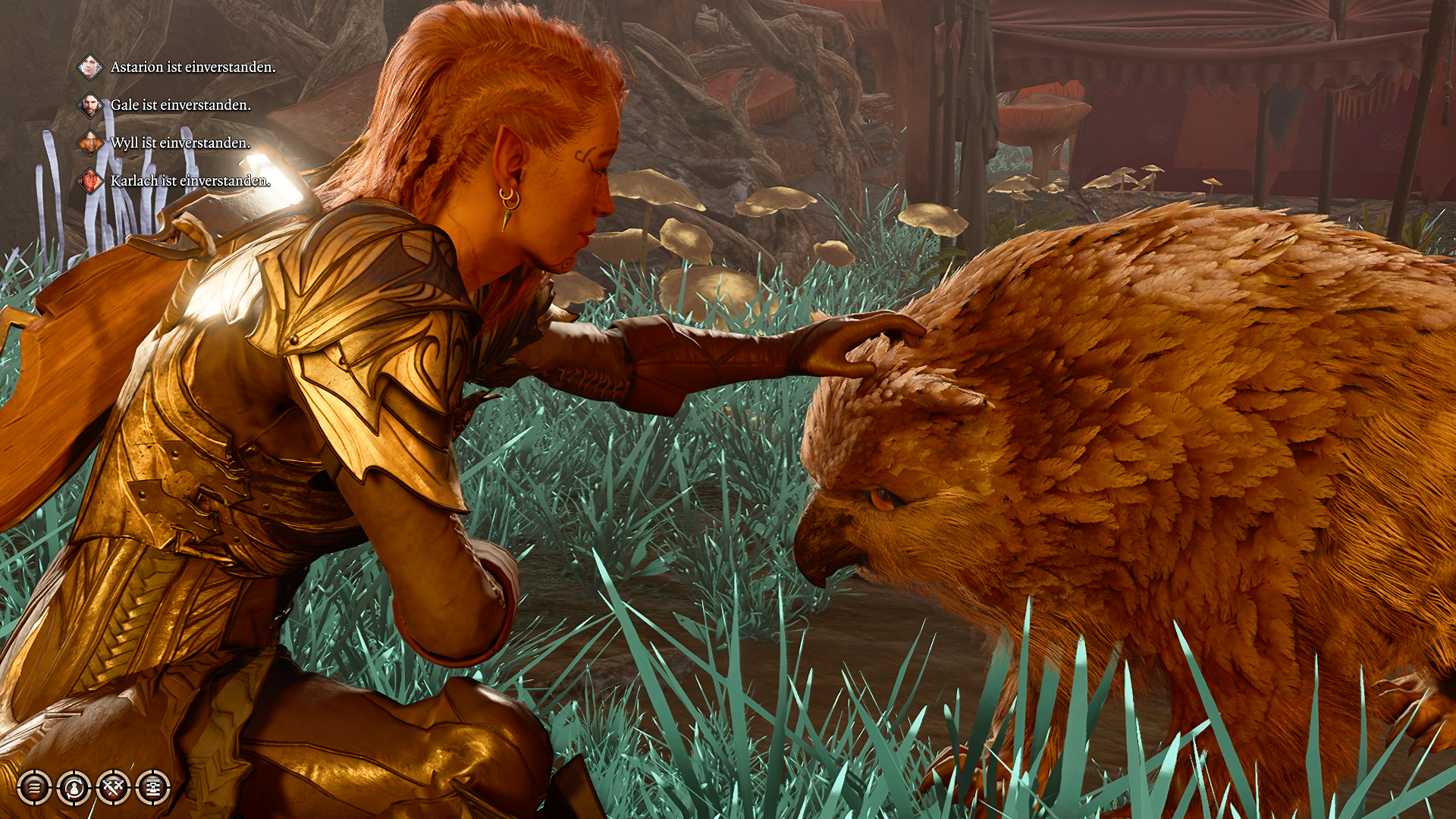
Who is the build for? The ranger-rogue-fighter is for those who like to sneak and want to “backstab” their enemies. For example, if you want to explore the enemy camp with Astarion first, this build can also eliminate the enemy ranks right away – on the side.
However, the build’s potential unfolds rather slowly. If you have a long breath, you can start with your desired class. If you want quick results, level the rogue first, then the ranger, and finally the fighter.
The Rabid Bear: When Druid Meets Barbarian
How powerful a druid of the Circle of the Moon is can be read in our build guide for the class: Baldur’s Gate 3: Druid Build (Circle of the Moon) – All about attribute points, talents, and spells
However, if you want to give your character a bit more punch, you should consider multiclassing into a few levels of barbarian. Because:
If you encounter a bear in the woods, you’ll prefer to turn around quickly. But if you encounter a “Bearbarian” in the woods, you run for your life!



Which classes and levels should you take? You start with a druid, assigning it to the Circle of the Moon at level two. How you proceed from there is up to you – but feel free to follow our guide. The only important thing is to invest a maximum of three to four levels in the barbarian and the rest in your druid.
Barbarians give you their most important features at level one: the Frenzy and the unarmored defense.
The latter allows you to set your armor class based on your constitution modifier instead of having to wear chain mail and plate armor. The Frenzy, on the other hand, gives you advantage on strength checks, increases your damage on strength-based attack rolls, and grants resistance against slashing, piercing, and bludgeoning damage.
At level two, you gain the reckless attack ability. This grants the character advantage on attack rolls- but the opponents do too. In addition, you unlock danger sense at this level, giving you advantage on saving throws against traps, spells, and surfaces like acid and fire.
At level three, you eventually choose your primal path: “Berserker” for even stronger and more attacks, “Wildheart” for utility, or “Wild Magic” for a touch of wizard. We recommend the “Berserker” or “Wildheart” for this build.

Level four gives you an ability score increase and no specific ability. However, we would recommend taking this level in barbarian:
With four levels of barbarian, you still have eight levels as a druid. A ninth level in druid gives you no new ability or new animals to transform into, but “only” a new spell slot. A level in barbarian gives you more hit points, which can be crucial in tight situations.
For your eight to nine levels as a druid of the moon, we recommend you to follow the guide linked above.
In general, it doesn’t matter when you level which class how. Just keep in mind that barbarians, as mentioned, generally get more hit points upon level-up. However, the druid, with its transformations, spells, and so on, is the Swiss Army knife among the classes.
In the end, you must decide how you want to play and start accordingly with one class or the other.
Who is the build for? The “Bearbarian” is the perfect combo of tank, damage dealer, and support. With the druid’s transformations, you can visit the smallest holes in the rock, while the barbarian enables you to make powerful attacks. With this build, you will be the perfect all-rounder.

Paladin Meets Fighter – Swiftly Upholding Holy Principles
Paladins are the classic guardians of law and order – at least when they haven’t broken their oath. But even then, they sweep across the battlefield with a mix of strong attacks and even more powerful spells.
With a pinch of fighter, you turn the shining knight into a true attack machine: Multiple attacks per round, more power behind each strike. Fighter and paladin may sound simple, but they are highly effective.
Which classes and levels should you take? For effective multiclassing, three levels in fighter are already sufficient. As with our first build for the ranger, you will learn “Catching Your Breath” and “Action Surge” with the first two levels of fighter.
Level three gives you your fighter archetype. As a “Champion,” you focus your character’s abilities on physical damage, the “Eldritch Knight” emphasizes magic, and the “Battle Master” studies all facets of fighting.
For maximum damage on the opponent, we recommend the “Battle Master.” This allows you to learn three different maneuvers. Choose what fits best for your play style. You can execute these during short and long rests up to four times with your “Superiority Dice.”
The remaining nine levels in paladin are entirely up to you. The class is an absolute all-rounder: High burst damage, high hit points, and powerful spells like “Smite,” which greatly enhance your attacks.
The only catch is that you are forced to adhere to your oath. Or break it. How that works and how to best skill your character for it, you can read here:
Baldur’s Gate 3: Oathbreaker Build – All about attribute points, talents, and spells
Who is the build for? If you want to play paladin but wish for a bit more “punch,” you’ll be very satisfied with multiclassing into fighter.
If you want to specifically focus on damage, the oathbreaker is the best choice. For “utility builds” with support function, any oath will do.

Multiclassing – An Art in Itself
Finding the perfect class mix for your play in Baldur’s Gate 3 is as individual as each playthrough. With the newly announced subclasses, your multiclassing options will greatly expand. We are excited to see which new combinations will be the most powerful, exciting, or funny. Here we have presented our three favorites.
Which combinations have you already tried? What have you enjoyed the most so far? Please feel free to let us know in the comments! If you want to get a more detailed impression of the class combinations or test your own builds, we also have the perfect tool for you: Baldur’s Gate 3 Character Planner: We show you the perfect tool to create your class and builds

Your opinion is important to us!
Do you like the article? Then let us know!