

Online role-playing games that have received a sequel are relatively rare. For the MMORPG Theme Week 2025, MeinMMO looks at some of the attempts and explores why there has never been a World of Warcraft 2, for example.
When looking at future release lists, the same picture has emerged for many years: sequels to well-known franchises, as far as the eye can see! This includes many franchises that have meanwhile transformed into services. Such as FIF … pardon … EA Sports FC, for example. The NBA2K series. Call of Duty.
However, there is a genre that has only occasionally played the seemingly safe sequel card since its inception: the genre of MMORPGs. And when someone has tried to give an online role-playing game a second part, it mostly backfired.
Or they pulled the handbrake early and stopped the attempt – as with EverQuest Next or Landmark or Ultima Online 2 and Ultima X: Odyssey (via Wikipedia).
For the MMORPG Theme Week, we illuminate some of these cases and analyze why it is so difficult to develop a sequel for a game like World of Warcraft. You can jump to the sections that interest you the most via the summary.
EverQuest versus EverQuest II
EverQuest II was certainly not the first sequel in MMORPG history (for that title, Astonia III, the sequel to Mercenaries of Astonia from 1998, and The Legend of Mir 2, both released in 2001, might compete), but it was the first for one of the most important genre milestones.
There were only five and a half years between EverQuest and EverQuest II. According to the developers at the time, the sequel was not supposed to replace the first game but complement it, as they wanted to target a different audience with part 2.
Internally, however, they likely expected that all players from EverQuest would switch to EverQuest II, as Executive Producer Jenn Chan reveals in a video interview on the YouTube channel MinnMax from November 19, 2024:
“EverQuest II was a curse for EverQuest. Because we thought that everyone would leave EverQuest and switch to EverQuest II. But that did not happen” – via YouTube. Instead, the two games cannibalized each other. A mistake they do not want to repeat with the new EverQuest MMORPG.
Guild Wars versus Guild Wars 2
The ArenaNet team did a somewhat better job with the sequel to Guild Wars. There are more than 7 years between Part 1 and Part 2. Additionally, both games differ significantly in areas such as the structure of the game world (instance-based gameplay vs. open world).
And perhaps most importantly: The first Guild Wars was not a service game in the modern sense. After the three campaigns Prophecies, Factions, and Nightfall, only the expansion Eye of the North was released. After 2007, the first Guild Wars was practically finished. There were only a few bonus missions and story content such as “War in Kryta” to prepare for the transition to the second part.
Guild Wars 2 continues to receive regular expansions and updates – here is the trailer for the latest content patch Remorse:
However, the developers shelved a planned fourth campaign for Guild Wars called Utopia in 2007 to focus entirely on the production of its successor. The fact that they are looking for a sandbox expert for the now announced third part could mean that the series wants to reinvent itself again.
Guild Wars and Guild Wars 2 never got in each other’s way because the first game, as planned by the developers, had transitioned into pure operation mode when the sequel went live. That part 1 still has many fans was demonstrated this Easter at its 20th anniversary.
In this week, you can expect exciting articles every day about the topic MMORPG. Included: a journey through the history of online role-playing games, as well as nostalgic retrospectives, streaming evenings, interviews, columns, and analyses.
Here is the program for the big MMORPG Theme Week 2025 by MeinMMO
Final Fantasy XI versus Final Fantasy XIV
Similar to Guild Wars and Guild Wars 2, Final Fantasy XI and Final Fantasy XIV can coexist quite well to this day. The simple reason for this is that there are more than 8 years between the two MMORPGs from Square Enix, in which the genre has developed significantly.
The trailer for the original version of Final Fantasy XIV:
Additionally, Final Fantasy XI has only served a relatively small niche outside of Japan. The later releases on PC and Xbox 360 did not change that. Certainly, Square saw a lot of untapped potential after the success of WoW, considering the prominence of the “Final Fantasy” franchise.
Almost the attempt at a sequel almost fell flat. The original Final Fantasy XIV from 2010 was a technical and content disaster. Only through enormous effort and a historically unique restart in 2013 were the developers able to make the second Final Fantasy MMORPG a worldwide success.
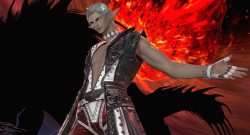
By that time, Final Fantasy XI was already 11 years old and had become quite rusty in gameplay. The more modern Final Fantasy XIV, on the other hand, was more oriented towards the colorful theme park that EverQuest II, WoW, and Co. had set. In the end, success proved Square right: By January 2024, over 30 million players are expected to have played FFXIV.
On the next page, we continue with another negative example, the lessons from the past, WoW 2, and already announced MMORPG sequels.

Your opinion is important to us!
Do you like the article? Then let us know!