All information about the Dark Zone in The Division 2 can be found here. These are the 8 biggest changes and new features.
Update: You can read our Dark Zone guide for The Division 2 with all information and tips here.
What is the Dark Zone? As in The Division 1, the Dark Zone is also one of the most important parts of the endgame in the second part. In this area, PvP and PvE elements are mixed, players can fight NPC enemies and search for gear, or hunt other players and steal their finds.
For The Division 2, developer Massive has made several changes aimed at making the Dark Zone interesting and fair for as many players as possible. This includes new rules and features that we will introduce to you.
1. There are now 3 Dark Zones on the map
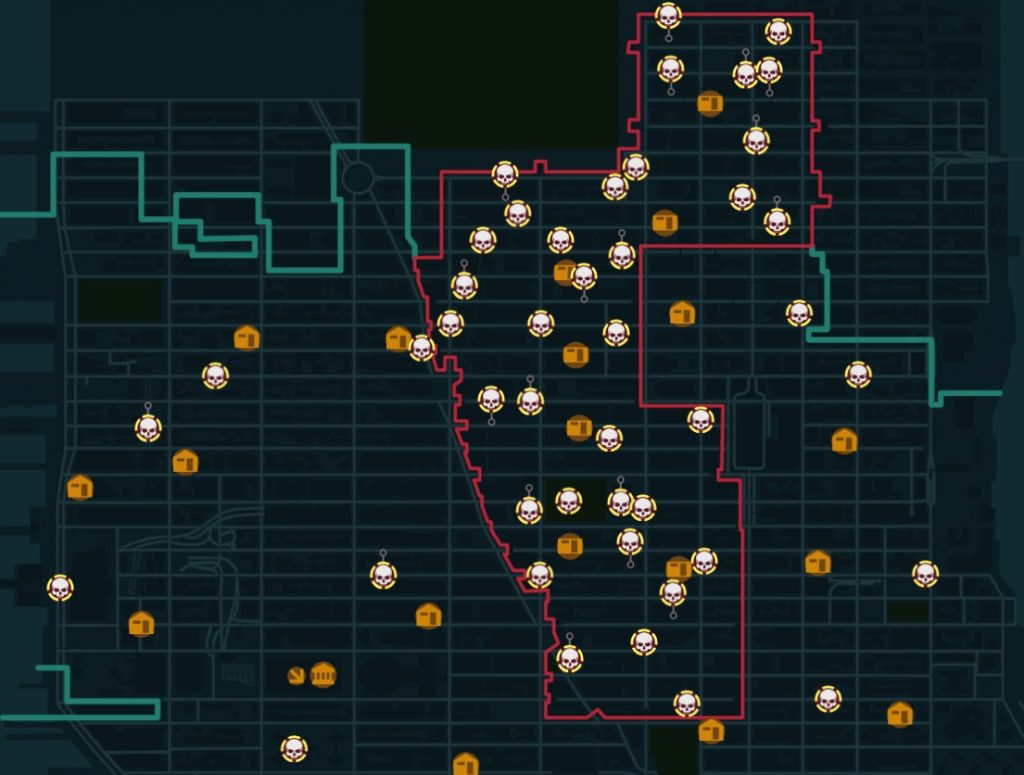
Unlike its predecessor, The Division 2 now has three different Dark Zones scattered throughout Washington D.C.
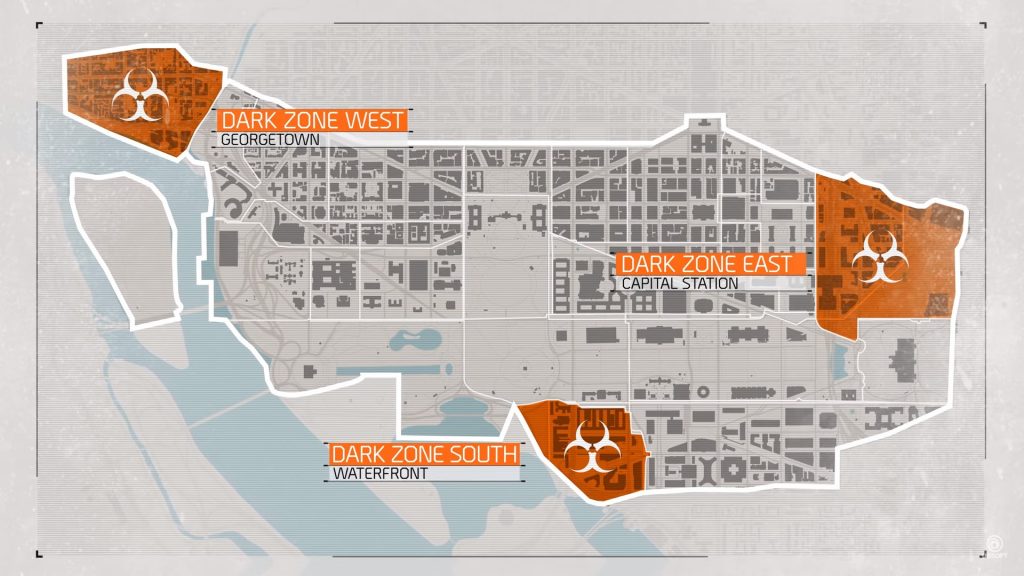
These are the 3 Dark Zones in The Division 2:
- Dark Zone West – Georgetown
- Dark Zone South – Waterfront
- Dark Zone East – Capital Station
How big are the Dark Zones in comparison? There are no exact data on this. There are speculations that the three zones combined are nearly as big as the Dark Zone from the first part.
Each of these Dark Zones has features that distinguish it from the others. For example, the Dark Zone South is the smallest and narrowest of the three, while the Dark Zone East is the largest and most expansive.
So it was in The Division 1: The Dark Zone was a large, contiguous area divided into several “brackets”. It spans from south to north in the center of Manhattan, bordering Central Park.
2. Normalization of Equipment
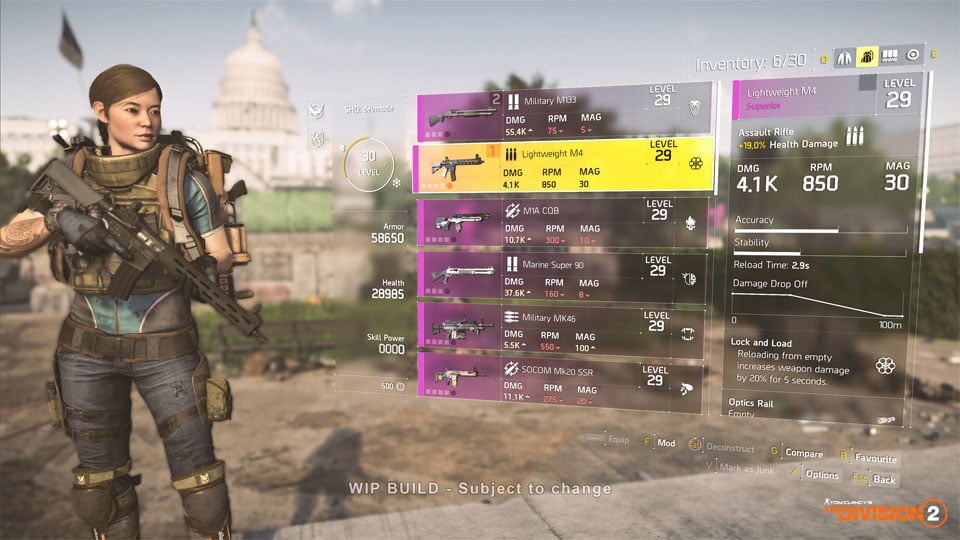
The balancing of player equipment in PvP was one of the biggest problems in The Division 1. Players equipped with the best sets and weapons were perceived by parts of the community to have an advantage. This is intended to change in The Division 2.
How normalization works: All values of gear pieces are set to the maximum. This also affects your weapons and mods. For example, if you have a weapon equipped whose base damage is not at the cap, it will be raised to the maximum value. This only applies to your time in the Dark Zone.
Players do not have to grind forever or improve stats to keep up with more advanced players. Builds will still work normally.
So it was in The Division 1: Except for the Striker Set, which was slightly weakened in the Dark Zone, all gear in The Division 1 functioned normally.
3. Fewer Players per Server
This is how many players can be in a server: In total, The Division 2 has room for three teams in a Dark Zone. That makes a maximum of 12 players per instance.
So it was in The Division 1: In the Dark Zone of the first part, there were 24 players, double the number of teams. Due to the smaller size of each Dark Zone, the player count had to be adjusted. This aims to make encounters with other players more interesting.
4. New Perk System
Through its own ranking system, certain perks can now be unlocked in The Division 2. However, these perks only remain if you can maintain your rank.
This is how perks work in the Dark Zone: In addition to the player level, there is a separate progression system in the Dark Zone. Every five levels allows you to unlock another perk. In your Operations base, you can influence which bonuses will be useful to you. This way, you can optimize your playstyle in the Dark Zone.
These include bonuses such as
- Extra space for contaminated items
- increased rewards for rogue agents
- additional ways to obtain equipment
You can also drop in rank if you die too often as a rogue agent. Therefore, you can lose the perks as well.
So it was in The Division 1: While there was already a separate progression system for the Dark Zone, a high level had no advantages. It simply indicated that one had spent a lot of time in the Dark Zone.
5. Changes to Loot
This is changing about the loot: Gear is subject to a few new rules in The Division 2. Only rare gear is contaminated. This means that not everything needs to be extracted. The rest goes directly into the inventory.
Weapons and gear correspond to the level of the player who extracted the items. The values are determined after the gear has been recovered. This way, even stolen loot adapts to your level.
So it was in The Division 1: All gear found in the Dark Zone was contaminated. Therefore, you had to take it to the extraction zones and extract it. The only exception was the loot obtained from supply drops.
Level and values of the gear were also determined directly with the find.
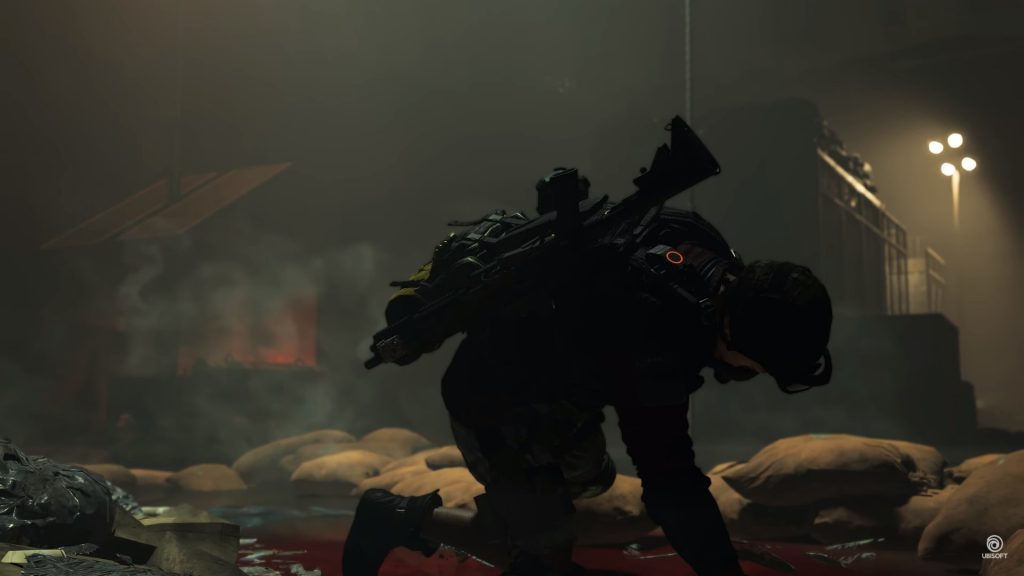
6. Matchmaking
This is how matchmaking works in the Dark Zones: Matchmaking works in The Division 2 through two methods. Level ranges and world ranks, which also return.
There are three level “buckets”:
- Level 1-10
- Level 11-20
- Level 21-30
Once you have unlocked one of the world ranks, you will now be assigned based on your Gear Score.
Solo players will be happy: If you prefer to go solo, you can probably breathe a sigh of relief. The matchmaking in the Dark Zone has been adjusted so that solo players are more likely to be placed in instances where other lone wolves are present.
So it was in The Division 1: In total, there are no major differences in matchmaking. However, solo players were not previously prioritized to be matched with other lone wolves.
7. Going Rogue in The Division 2
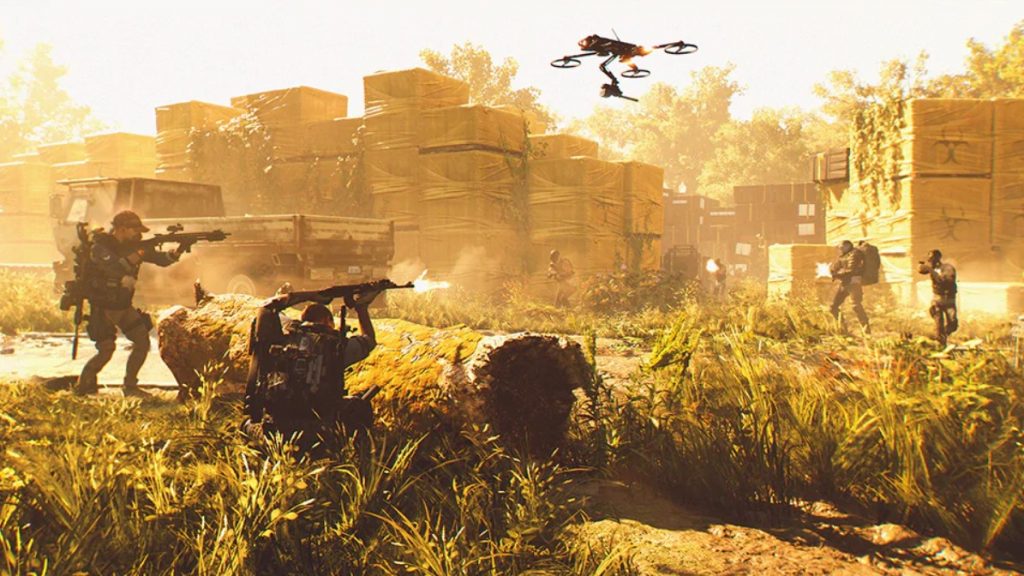
As in the first part, you can become a rogue agent in the Dark Zones by taking out other players. With each kill, you rise in the Rogue level until you activate the manhunt. You are now visible to all other players on the map.
The innovations for rogues: Rogue agents can now crack locks on Dark Zone caches and hack new SHD terminals to receive rewards.
Furthermore, you do not have to end your manhunt immediately but can deactivate each terminal individually until you have the last one. This increases your reward but also the risk of being caught before you can end the manhunt.
In total, there are now three variants for an agent’s status in the Dark Zone:
- Rogue
- Disavowed Rogue
- Manhunt Status
If you’re “only” rogue, you will be shown as “suspicious” to other players. As long as you don’t kill a player, they can’t attack you. However, as a disavowed rogue, you become a target.
The safehouse camping that was often abused in The Division 1 is likely to be a thing of the past. Turrets now guard the exits of the Dark Zone and attack any rogue agents and hostile NPCs.
So it was in The Division 1: For rogue agents, there were only the Rogue and Manhunt statuses. Rogue agents had hardly any benefits or options to benefit from their status.
8. Occupied Dark Zone
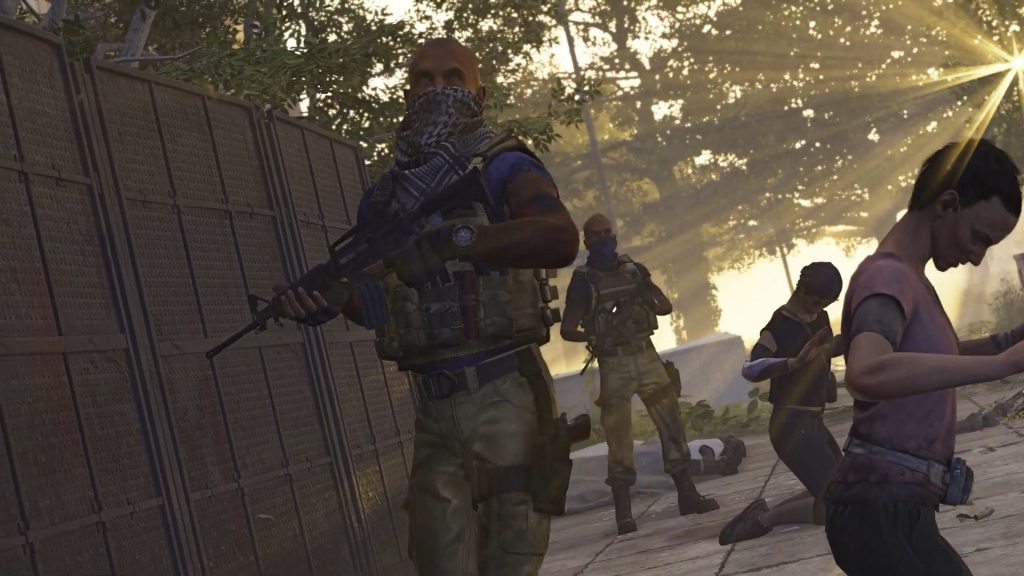
This is how the Occupied Dark Zone works: During this event, all rules are thrown out the window. There is no separation between Division and rogue agents.
Thus, in the occupied Dark Zone
- there is no rogue status
- a limited notification system
- active friendly fire
- no equipment normalization
This event is supposed to be active in only one of the three Dark Zones at a time, allowing for enough variety. How often such an event will be active is currently unknown.
So it was in The Division 1: The Dark Zone in the first part was relatively free of rules for rogue agents for a long time. With Patch 1.8, Rogue 2.0 then changed many things, which should overall ensure more fairness.
- Friendly fire was removed
- The rogue status must be activated manually
This was different for a long time. One could accidentally go rogue if other players ran into the line of fire. The manhunt could be ended if one survived long enough. Not every fan was satisfied with Rogue 2.0 and wished for the return of the old, freer system.
Thus, the goal of the Occupied Dark Zone is to provide fans with a harder variant of the Dark Zone.
The Division YouTuber MarcoStyle shows a lot of material and comments extensively on the innovations.
What do you think of the information? It’s best to head into the Dark Zone with your clan: