


Action-RPG Elden Ring is gathering extremely good ratings on Metacritic and particularly shines with its difficulty and open world. For MeinMMO author Irina Moritz, however, a small new feature was the highlight.

February 2022 is a nasty month, with a whole series of major releases like Lost Ark, Horizon Forbidden West, and Destiny 2 Witch Queen. But for me, the month is mainly dominated by Elden Ring.
- The action RPG from FromSoftware is currently receiving bombastic ratings on Metacritic
- My colleague Tarek Zehrer is completely enthusiastic about it.
- If you’re looking for detailed reviews of Elden Ring, check out our colleagues at GamePro
But while he raves about the open world in his report on the game, my attention was more on the dungeons during testing.
Because for me, they decide whether Elden Ring can properly convey the feeling of the SoulsBorne games. The claustrophobic nature of the narrow corridors and dark vaults, the winding and nested level design, crammed with traps, hidden passages, and shortcuts.
It is this clever way of designing levels that I appreciate most about the FromSoftware games. You must keep your eyes open and pay close attention to navigate without a map and discover all the secrets.
Accordingly, I was both excited and worried when an open world was announced for Elden Ring. Would this harm the level design if the developers focused more on the open world? Would the “SoulsBorne” feeling be lost?
Fortunately, that is not the case. And amusingly, it was a small and somewhat inconspicuous feature that became the highlight for me in Elden Ring. It changed my entire perspective on the dungeons in the game.
Jumping is my highlight. Seriously.
I never thought I would say this without laughing, but jumping is a game changer. The gameplay mechanic, which is completely normal and obvious for 99% of other action games, has a major impact on the level design in Elden Ring compared to previous SoulsBorne games.
While there used to be a certain way to “jump” with the dodge button, it was more of a poor attempt. You had to make a run-up and hit the perfect angle and timing. It often just didn’t feel good.
Elden Ring, on the other hand, has given players a proper jump function, which in itself wouldn’t have been extraordinary had the developers not directly woven it into their level design. The areas are now designed for characters to jump properly, even if not very high.
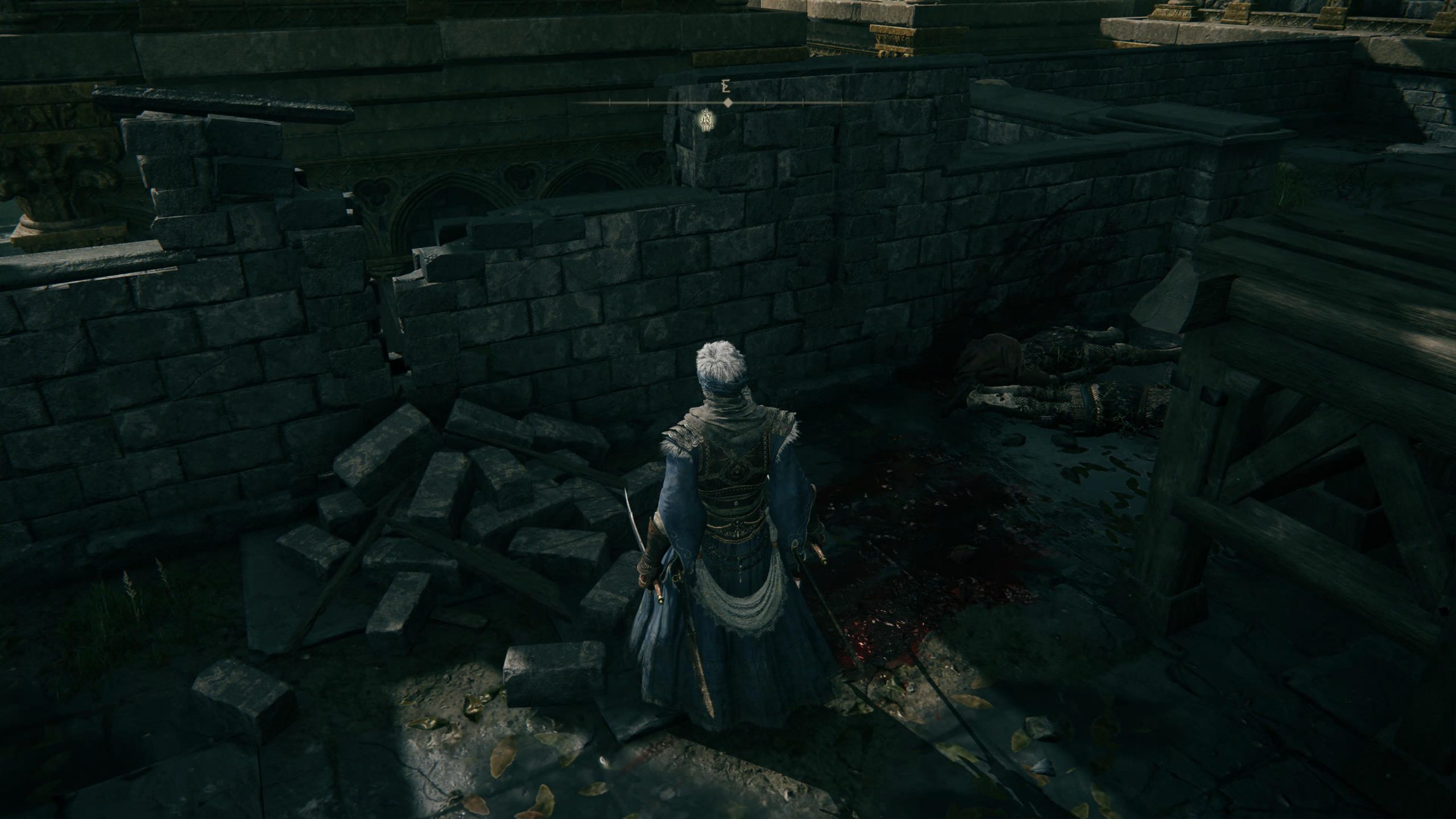
For me as a player, it meant that I now had to look for new visual signals when I wanted to discover all the secrets and paths in the dungeons. I had to adjust my entire perception of the levels to incorporate the fact that jumping is now an important factor.
In the past, signals for hidden paths, for example, were crumbled battlements on a castle wall. An experienced player would instantly know: “Aha, there’s probably a ledge I can fall onto.”
Now there is the additional question: “Can I jump on that?” Here’s an example: Unless you’ve decided to run straight to the other end of the world or to Narnia right after starting the game and follow the prescribed path, the first major mandatory dungeon is Stormveil Castle.
It is a huge castle through which you must carve your way to the first main boss. However, it’s not just one path, but feels like several dozen. Because thanks to the jumping option and adapted level design, there are multiple different ways leading to the same goal.
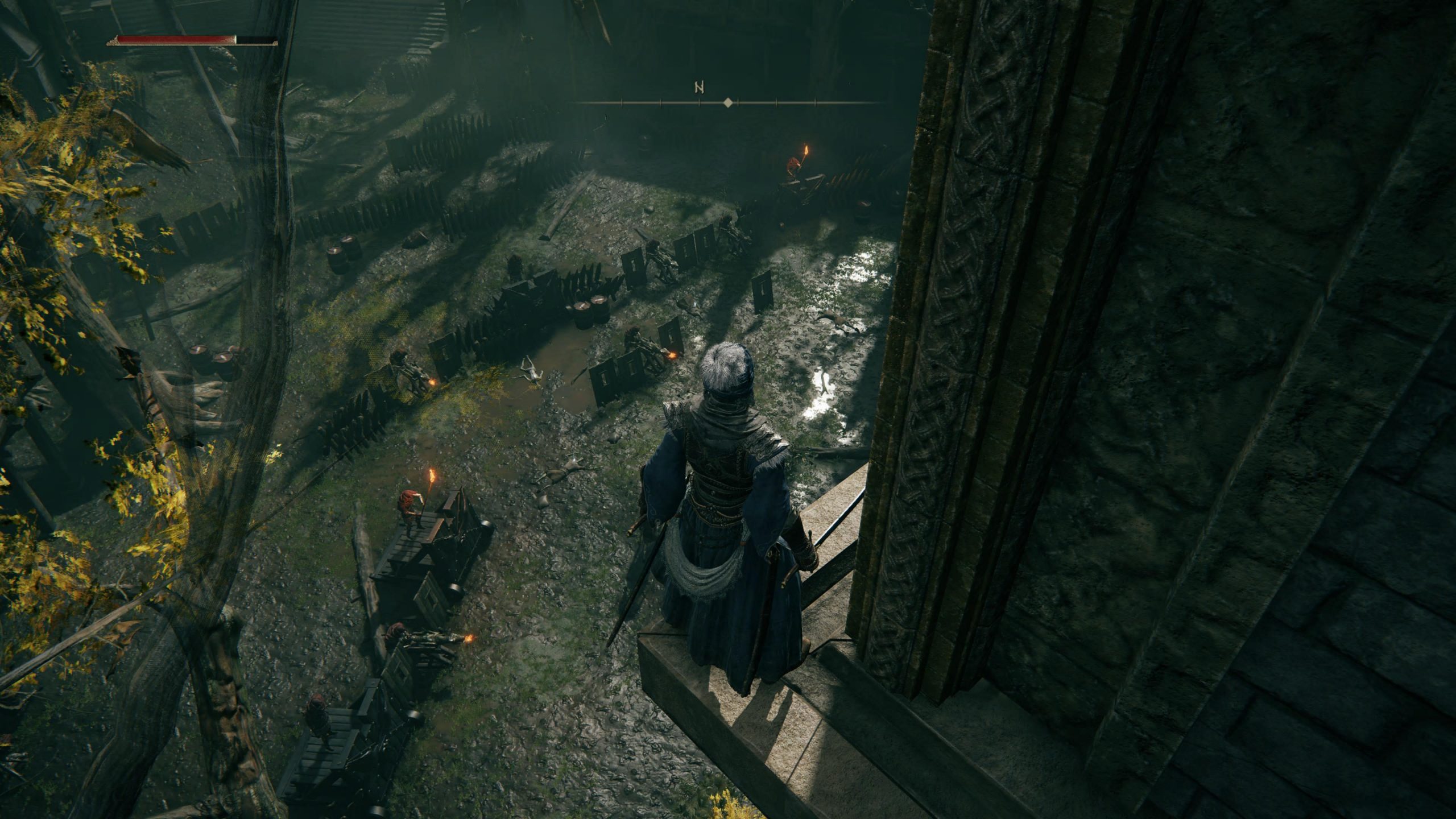
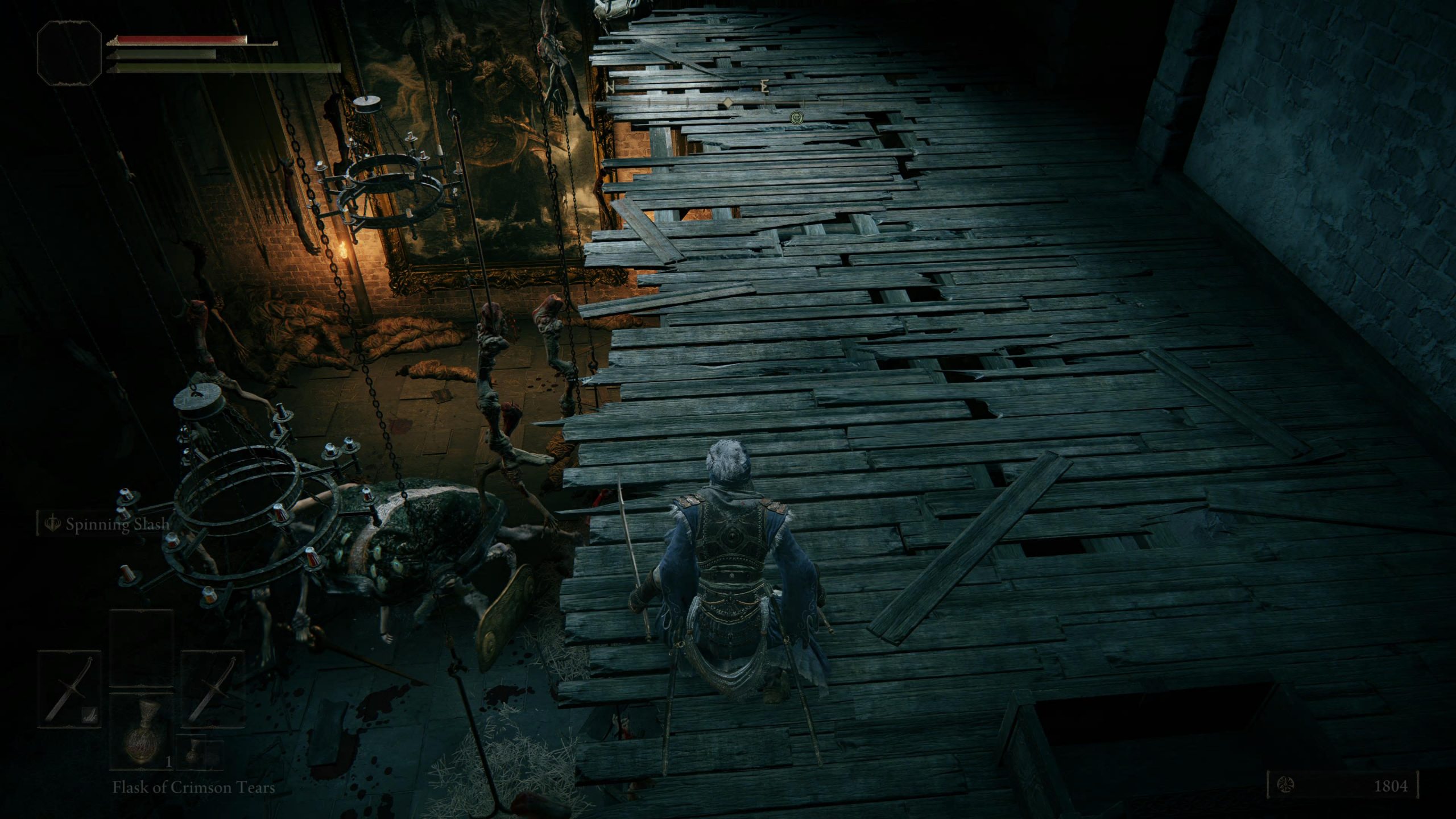
- I could jump on the battlements and walk along the outer walls from there
- Jump over the wooden beams in collapsed sections
- Jump on windowsills to discover hidden paths behind them
- Jump from one roof to another to avoid large groups of enemies, and much more.
I literally spent 5 or 6 hours just sneaking around the castle, searching for things I could jump on that might open up a new path.
It took a few attempts (and embarrassing deaths) before I got a feel for how high and far I could jump. After that, however, I was able to climb and explore every narrow ledge. And it was great.
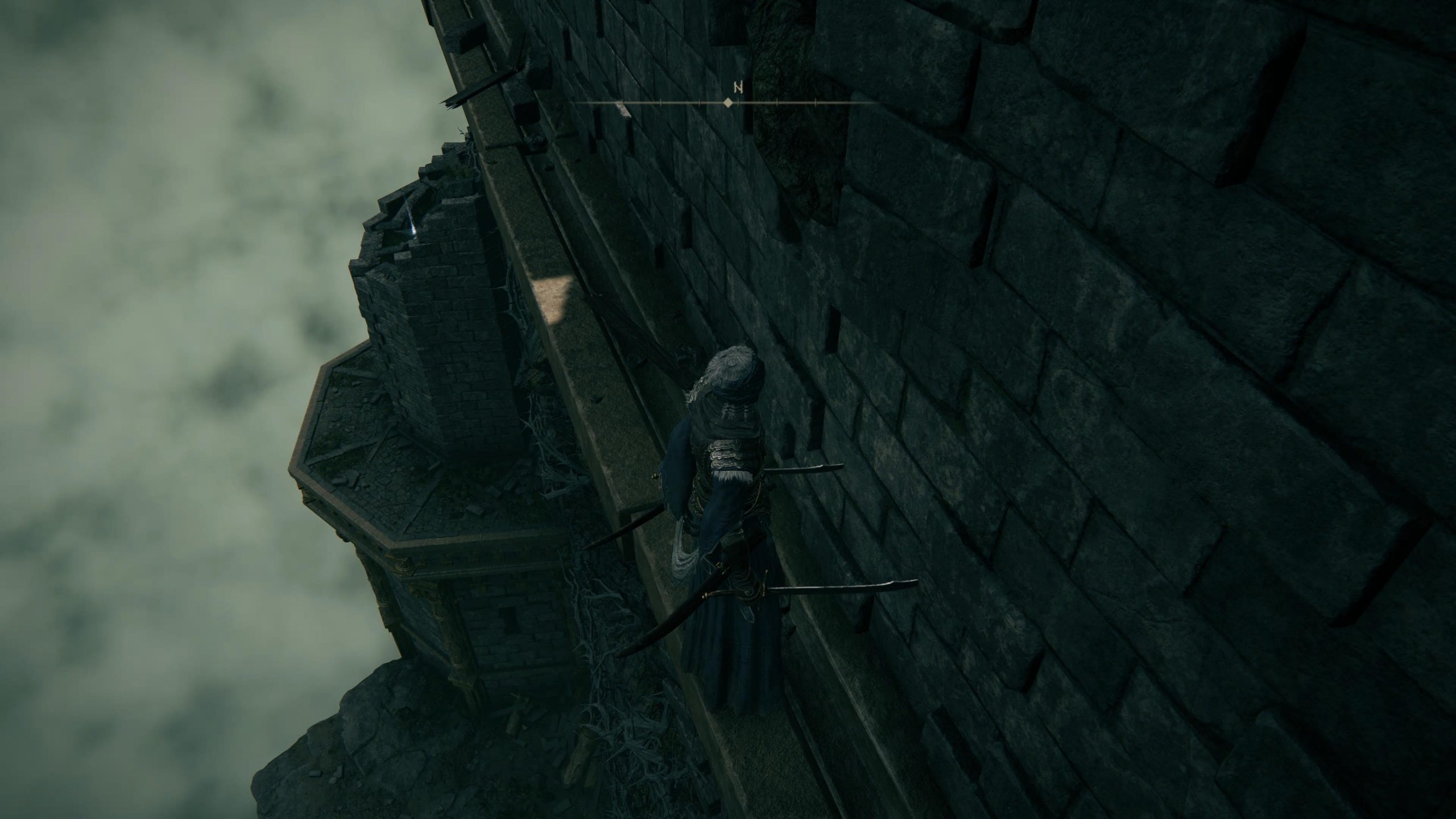
In many cases, these attempts and explorations were rewarded with new hidden paths or loot. Additionally, it gave the cool feeling of being a real ninja. Because thanks to the side paths and hidden corridors, I could often simply bypass large groups of enemies and attack from behind.
The level design of the dungeons geared toward jumping thus offers an additional strategic component that is even more pronounced than in previous SoulsBorne games.
Do I want to attack the enemies head-on, just because I can? Or would I rather jump through the window or hole in the wall onto a narrow pathway and turn the tables?
Of course, I’ve also enjoyed other areas:
- The open world conveys a true sense of discovery
- The boss battles are tough and challenging
- The new crafting system for abilities allows for more build variety
- You feel right at home as a Souls fan
But none of the aspects forced me to completely rethink my entire approach and mindset while playing like jumping has done.
I really didn’t expect something so banal to have such a major impact on my perception of the level layout, simply because the developers implemented it cleverly.
50 hours and so far just scratched the surface
And that is by no means the end. Elden Ring is absolutely gigantic in scale, and I say that right after previously playing Horizon Forbidden West.
While you can complete the story in about 30 hours, there are enormous amounts of diverse side content both in the open world and in dungeons.
Whenever you think “Okay, I’m done with the area / the dungeon,” new paths open up or you discover something new. But as much as I’d like to talk about it, everything I could say would be a spoiler.
There are countless other examples of the use of the jump mechanic in the level design of the dungeons, but it’s nicer if you discover them yourself.
If you’re still unsure whether Elden Ring is for you, then check out our checklist:
Elden Ring in a brief check – Who is it worth it for?

Your opinion is important to us!
Do you like the article? Then let us know!