
On the last day of the game, we go to school alone again. The light is still off at Sayori’s – not surprising. She probably doesn’t want to go to school after the excitement, so we let her be.
Upon arriving at the club, Monika is already waiting for us, not too thrilled that we showed up without Sayori. After all, we need all members to be prepared for the festival. Moreover, it was somewhat mean of us, wasn’t it? Monika puts it bluntly:
“You pretty much left Sayori hanging this morning, didn’t you?”
With a sinking feeling in your stomach, you return once more and enter Sayori’s room.
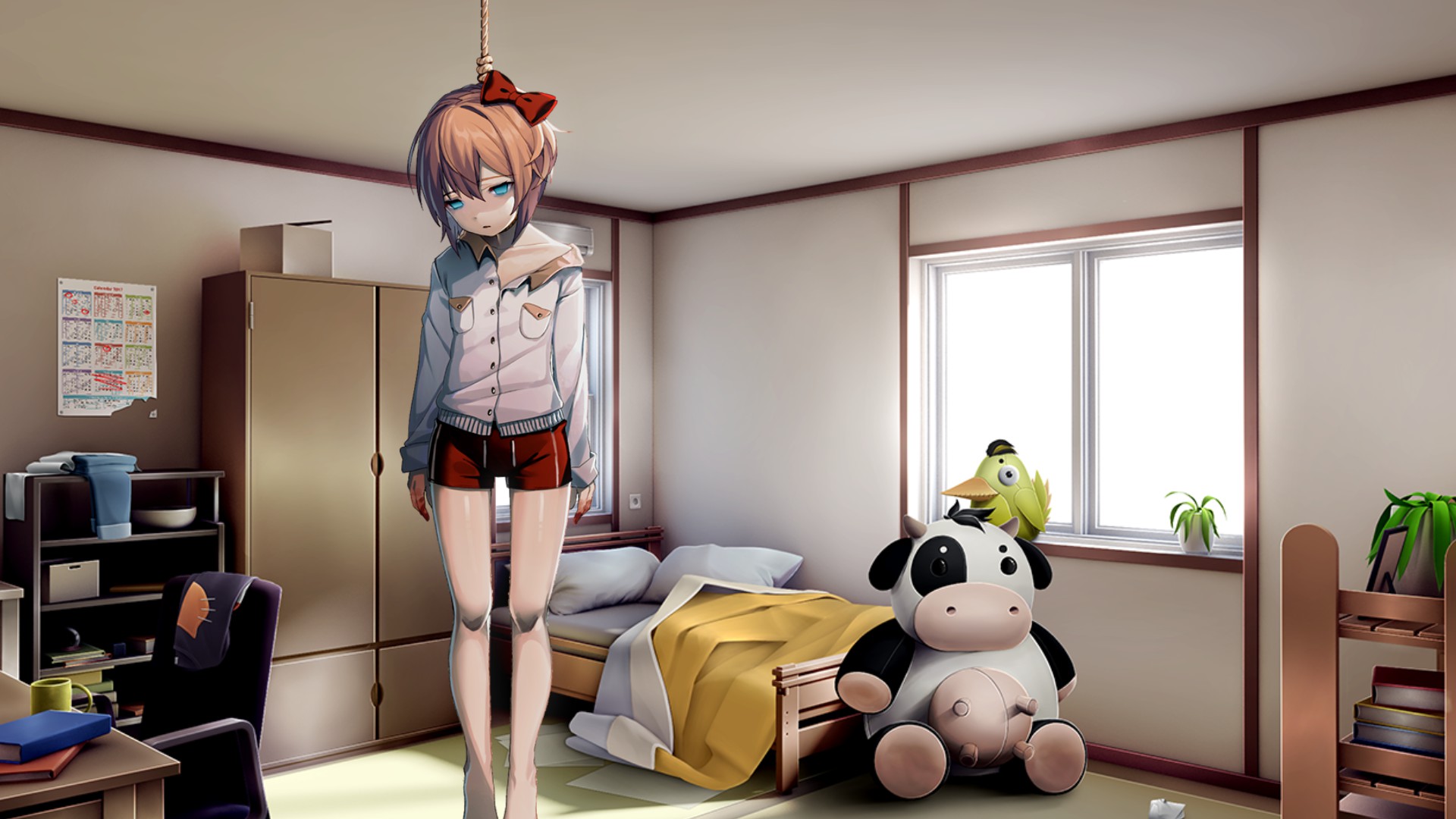
But Sayori is dead. She has hanged herself and her body is dangling from the ceiling of the room. Accompanying this is one of the most memorable pieces of music I’ve heard in recent months.
Our character also breaks down and realizes that he can never make Sayori happy. Never. Never. Never.
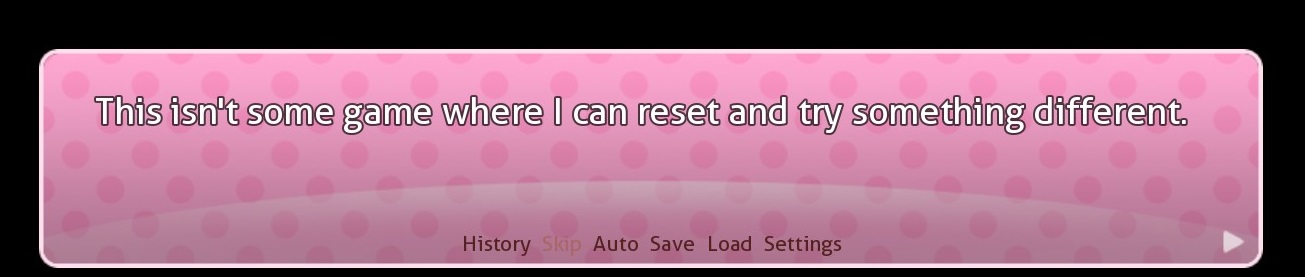
“This is not a game where I can restart and do something differently.”
And then the game ends with an “END” on the screen. I was confused and shocked. Had I done something wrong? Should I have confessed my love to Sayori to prevent this? Were there hints I overlooked beforehand? I could simply reload and make different choices…
In the closing graphic, I notice an error code. Specific hints regarding the error would be found in a text file named “Traceback.txt.” So I minimized the game and sought out the Doki Doki Literature Club folder. One file immediately catches my eye: “hxppy thxoughts.png” Just looking at it is already creepy:
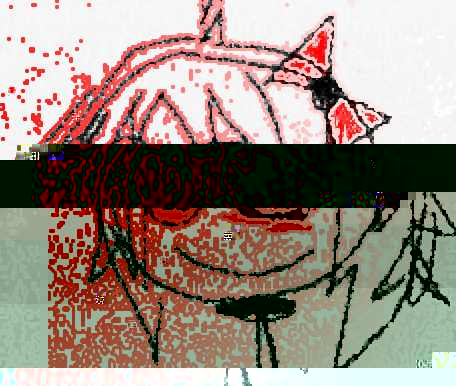
But the “Traceback.txt” is also eerie. It’s a long log detailing how the game deletes files from itself. However, among it is the line:
“Oh no, I hope I didn’t break anything! One moment, I can definitely fix this… Oh, you know what? It would probably be much easier if I just deleted her. She’s the one making this so hard. Ahaha! Here we go!”
I tab back into the game. The game returns to the title screen and seems “glitched”. Sayori is nowhere to be found on the title screen; instead, there’s a wild mix of pixels resembling an ugly graphics card error.
But shortly thereafter comes the second shock: All save files are deleted!
The button for “New Game” is also barely legible. Is this still part of the game?
The true story of Doki Doki Literature Club
Apparently, it is. Because when you start a “new game” now, the start is different than before. Disturbance noises play and the storyline changes. There is no Sayori to greet you on the first day of school. The club now consists of only three members, and everything is as if Sayori was never part of the game.
You push this shock aside after a while and repeat the game. You again write poems, but disturbing noises persist and strange “bonus poems” create the impression that it’s not the story we are experiencing – but the game wanting to influence us as players.
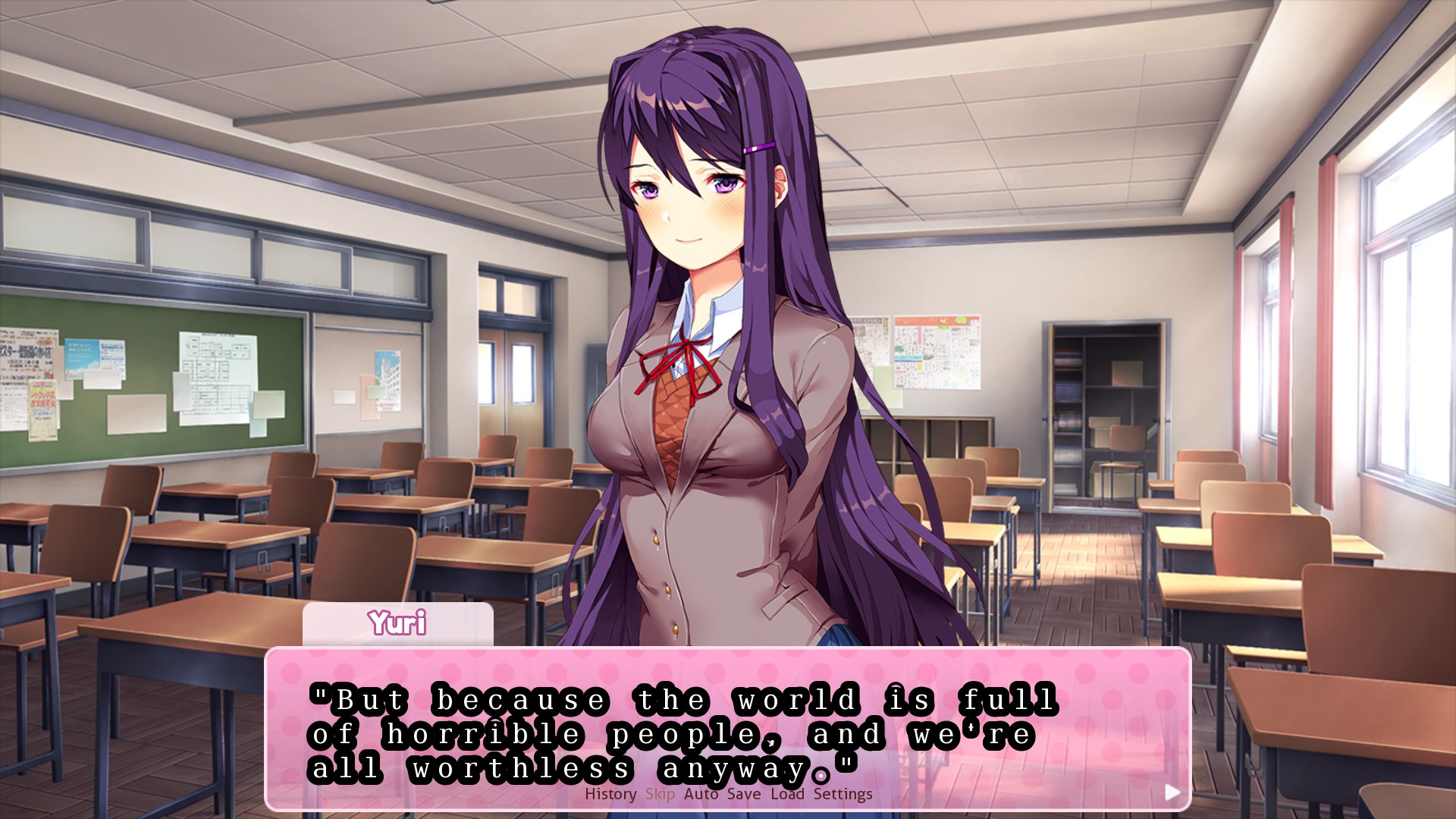
Here, my narration should also end. Doki Doki Literature Club is a haunting experience that takes on very dark themes. Despite this text and the spoilers, I still believe that the game remains a very valuable experience, even if one has read this far. There is so much more than I can express in these lines.
In conclusion, I can only say that Doki Doki Literature Club was a psychological horror experience that I probably won’t encounter a second time anytime soon. A game that, when viewed from a distance, seems terribly superficial and then proves to be multilayered and incredibly creepy, even incorporating a sort of “meta-game” where you have to investigate the game’s folders for files, is simply a brilliant idea.
I want more of this. Even though I think something like this will remain unique.
Those seeking a nice game for Halloween that evokes fear in a very different way should check out Doki Doki Literature Club today. It is indeed free.
- 1
- 2