Archaeologists unearthed a treasure 60 years ago. Meanwhile, we now know that humans must have already used iron from a meteorite thousands of years ago, and this was significantly before the actual Iron Age.
In 1663, archaeologists discovered the treasure of Villena: This is one of the largest hoard finds of gold objects that had been excavated from the ground. The collection consists of 59 artifacts that were unearthed near Alicante in Spain.
However, what is special about the treasure are two small objects made of gold and oxidized iron: a hollow hemisphere and a bracelet. Three thousand years ago – which is the estimated date of the treasure – iron was not yet widely used. Instead, iron was regarded as a precious metal and not yet as a material for weapons or tools.
Humans used metal from meteorites for their jewelry
What is special about the metal? In 2007, the treasure was re-examined, and microscopic samples were taken from the objects in the form of rust flakes. However, the investigations did not yield any new insights.
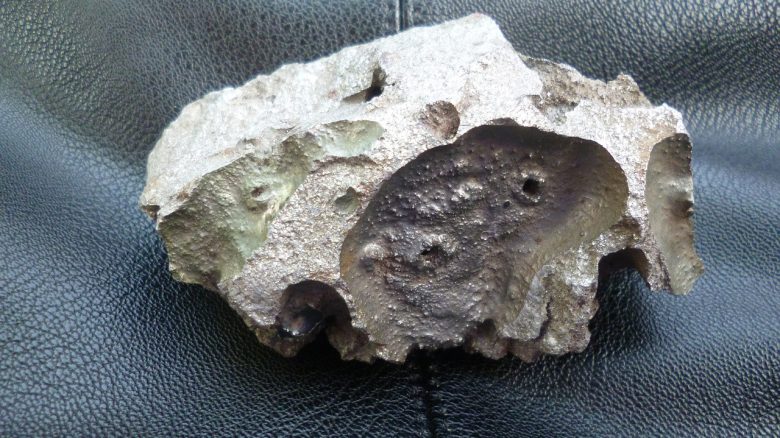
At the end of 2023, German and Spanish researchers investigated the metal again; this is reported by the magazine Greekreporter.com. Here, it was found that apart from iron, a high nickel content is also detectable in the jewelry pieces. And this precisely indicates that the pieces were made from extraterrestrial iron:
Meteorite iron occurs in certain types of aeolites, which, because they come from outer space, consist of an iron-nickel alloy with a variable nickel composition of more than 5 weight percent.
They also contain other chemical trace and minor elements, of which cobalt is one of the most important. However, the nickel content in terrestrial iron is generally low or very low and often undetectable in analysis.
What does the discovery mean? This discovery allows researchers to date the treasure significantly later. Currently, it is suspected that the objects must originate from the end of the Bronze Age. A time when no large amounts of iron were produced or used on Earth yet. This did not happen until 400 years later.
The study led by the Spanish National Archaeological Museum suggests that the inhabitants of the Iberian Peninsula possessed more advanced metalworking techniques than previously assumed.


More archaeological finds: The chip manufacturer Intel has now also made acquaintance with archaeologists. In Magdeburg, they wanted to build a new factory, but then several problems intervened: Intel wanted to build a huge factory for processors in Germany, but now the ground and the Stone Age are causing problems