
While the responsible parties at Amazon only began their major assault on the gaming industry around 2014, they had intended to be much more than “just” a major developer and publisher of AAA service games for years prior.
Since the announcement of the end of New World and the reorientation at Amazon Games, it is clear that Amazon’s major assault on the gaming industry (for the time being?!) has failed. Instead of developing AAA service games themselves, they want to focus more on the role of publisher, the cloud gaming service Luna, and the development of casual/AI-focused games in the future.
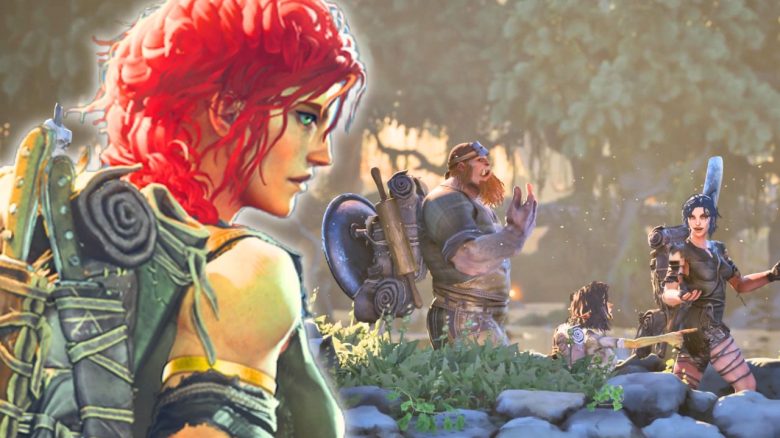
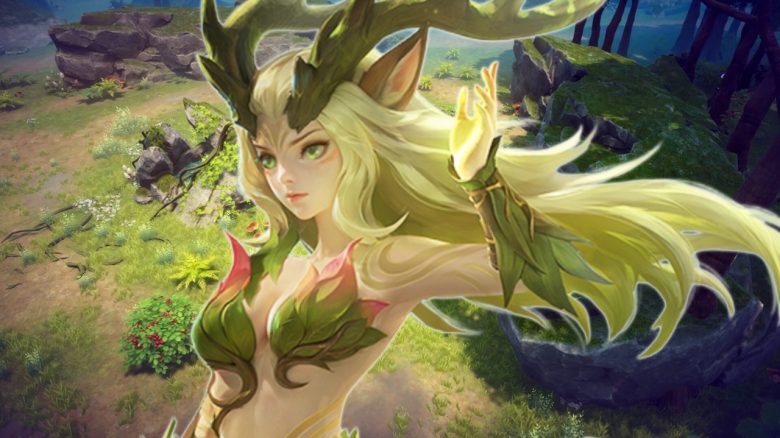
If you think back to the beginning of the major assault, you probably remember TwitchCon 2016. Because here, Amazon Games presented three ambitious projects: New World, the sports brawler Breakaway, and the hero shooter Crucible, all of which were clearly different from the mobile and social games they had previously made.
But you may also recall the time starting in 2014 when the tech giant acquired the studio
Double Helix Games to form Amazon Game Studios Orange County (which later worked on New World and the Lord of the Rings MMO, among others).
During this time, they also hired many veteran developers, such as Kim Swift (Portal, Left4Dead) and Clint Hocking (Far Cry 2), who were reportedly paid significantly better than at the competition. And then, in August 2014, there was also the acquisition of Twitch for $970 million as well as the licensing of the Lumberyard engine in 2015. Amazon Games clearly had a plan.
From the very beginning, Amazon aimed for the throne
But did you know that Amazon set the plan for world domination in gaming years prior and aimed to topple the king of kings from the throne? Yes, they had their sights set on Steam and thus the currently most successful PC platform for games, which has truly been unavoidable for many, many years.
Ethan Evans, the former Vice President of Prime Gaming, looks back on this time at linkedin.com.
As Vice President of Prime Gaming at Amazon, I can tell you that we tried multiple times to displace the gaming platform Steam, but we failed. We were at least 250 times bigger and tried everything. But in the end, Goliath lost.
The more than 15-year-long attempt to challenge Steam began well before I became Vice President of Prime Gaming, but we never cracked the code. Neither under my leadership nor under the leadership of anyone else.
What attempts did Amazon make to achieve its goal? According to Evans, the undertaking began with the acquisition of Reflexive Entertainment in October 2008, which not only developed games but also had its own store. They wanted to expand this to compete with Steam long-term. Evans: “That led to nothing.”
Amazon also had high hopes for acquiring Twitch. The thought behind it: If the streaming platform is linked to an Amazon store, all the players are sure to buy their games there after watching gameplay on Twitch. The former Vice President: “That was wrong.”
In the third step, Amazon developed the streaming service Luna, which allows you to play games even if you don’t have a high-end PC at home. Google tried something similar with Stadia almost simultaneously. However, both tech giants had to concede defeat to Steam. Stadia did not survive this battle. At least Luna has.

What makes Steam so unassailable?
Ethan Evans attributes Amazon’s failure to the fact that they simply underestimated and did not fully understand Steam.
The mistake was that we underestimated why consumers used Steam. It was a store, a social network, a library, and a trophy collection in one. And it worked well.
At Amazon, we assumed that size and visibility would be enough to attract customers, but we underestimated the power of existing user habits. We never validated our core assumptions before massively investing in solutions.
The truth is that gamers already had solutions to their problems and would not simply switch to a new platform just because there was a new one.
Ethan Evans admits in his long post that they burned an incredible amount of money trying to displace Steam without properly and sufficiently addressing the target audience and market conditions beforehand.
Interest in games? No, but in money!
How does MeinMMO editor Karsten Scholz assess this? When I read through Ethan Evans’s remarks and look back at the entire track record of Amazon Games, it seems quite certain to me that the top decision-makers never truly had an interest in developing good games and achieving financial success in this way.
The focus has always been on synergies: Twitch turns spectators into players, who then obtain new games in the Amazon shop and finally play them on a platform or through a service from Amazon. An ecosystem that no one ever has to leave. A brave new world.

The games produced as developers and those managed as a publisher are merely a means to an end: They should ideally be so closely linked with their own platforms and services that they lure players into the aforementioned ecosystem. And since Amazon Games has been chasing the currently trendy service genres right from the get-go, there might be a need to respect the Amazon Games team for managing to develop a game like New World that could build a loyal fan base and even excite players for a time.
Microsoft has been doing something similar for many years as well. However, the tech giant under Satya Nadella has spent significantly more money than Amazon to establish itself as a console provider alongside Sony and Nintendo and gather countless new first-party studios within the Xbox family.

Microsoft’s top goal: to continuously feed the Xbox Game Pass with its own games so that as many gamers as possible sign up for a subscription. Due to the enormous investments, the many experienced studios, a broad portfolio of brands, and a certain freedom of action for the various teams, Microsoft’s balance sheet is significantly more positive than that of Amazon Games. But that took many years … and Steam could not be displaced even by Game Pass.