

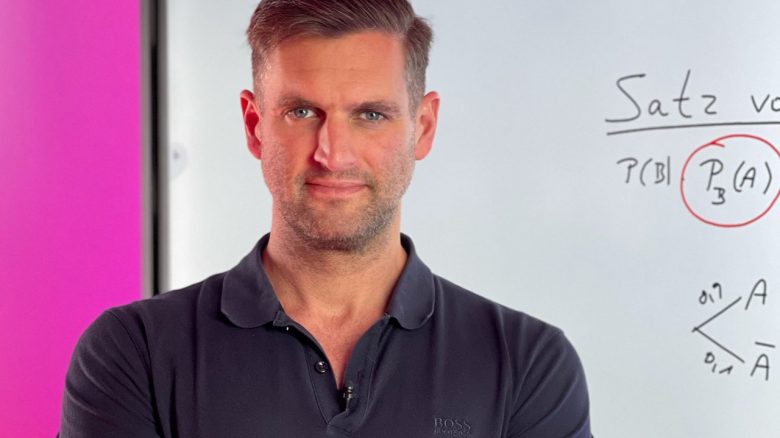
The YouTuber and entrepreneur Daniel Jung explains to his viewers on his channel not the best gaming builds and does not make reaction videos, but rather math. In an interview, he tells us how he came up with the idea and how he views the digitalization in Germany.
Since 2011, the YouTuber and entrepreneur Daniel Jung has been steadily uploading videos on his channel that introduce various areas of mathematics to his viewers. Whether students or scholars, everyone can find videos that help them with math.
By now, the channel has over 850,000 subscribers and many grateful viewers, but how does one come up with the idea to start such a channel?
Together with Daniel, we from MeinMMO took an excursion into the realm of YouTube and Twitch, an area many of you might not be aware of.
“In the USA, renowned universities have already filmed their lectures since the early 2000s”
MeinMMO: Hello Daniel! Would you like to briefly introduce yourself to our readers?
Daniel: Hi! My name is Daniel Jung and I studied mathematics and sports to become a teacher. However, I decided to use the internet to bring people closer to mathematics, especially through educational videos on YouTube.
MeinMMO: In 2011, YouTube was slowly moving away from cat videos and entering the mainstream. What motivated you to create a channel?
Daniel: I founded my first company parallel to my studies. It was a classic tutoring service, but very local, from my hometown. We helped connect tennis coaches.
These were students who mostly studied sports and another subject. That was quite classic, and that was in the late 2000s. The first of them said: “We discovered videos on the internet that were not just cat videos, but also displayed educational content.”
He thought: “Oh, that’s interesting feedback.” Then I began researching and was amazed that in the USA, actually all or many renowned universities had already filmed their lectures as early as the 2000s. They were first posted on their own learning platforms before YouTube started, and were also uploaded there in 2005.
So, that means there was something there already. It just wasn’t found because there were so many cat videos. And then I said: “I find that interesting.” Only these videos were too long for me. It was a classic lecture.
Then I said from experience, I would much prefer to have shorter segments. I now have a question: “What is an exponent?” or “What is a derivative?” I want that explained in five minutes.
I thought there was a market to understand things in short segments via video. This was before TikTok, before Instagram – fast, fast, fast – 30, 90 seconds. And I didn’t want it in 30 or 90 seconds, but really relaxed in three to five minutes. That’s how the idea began. That was the start.
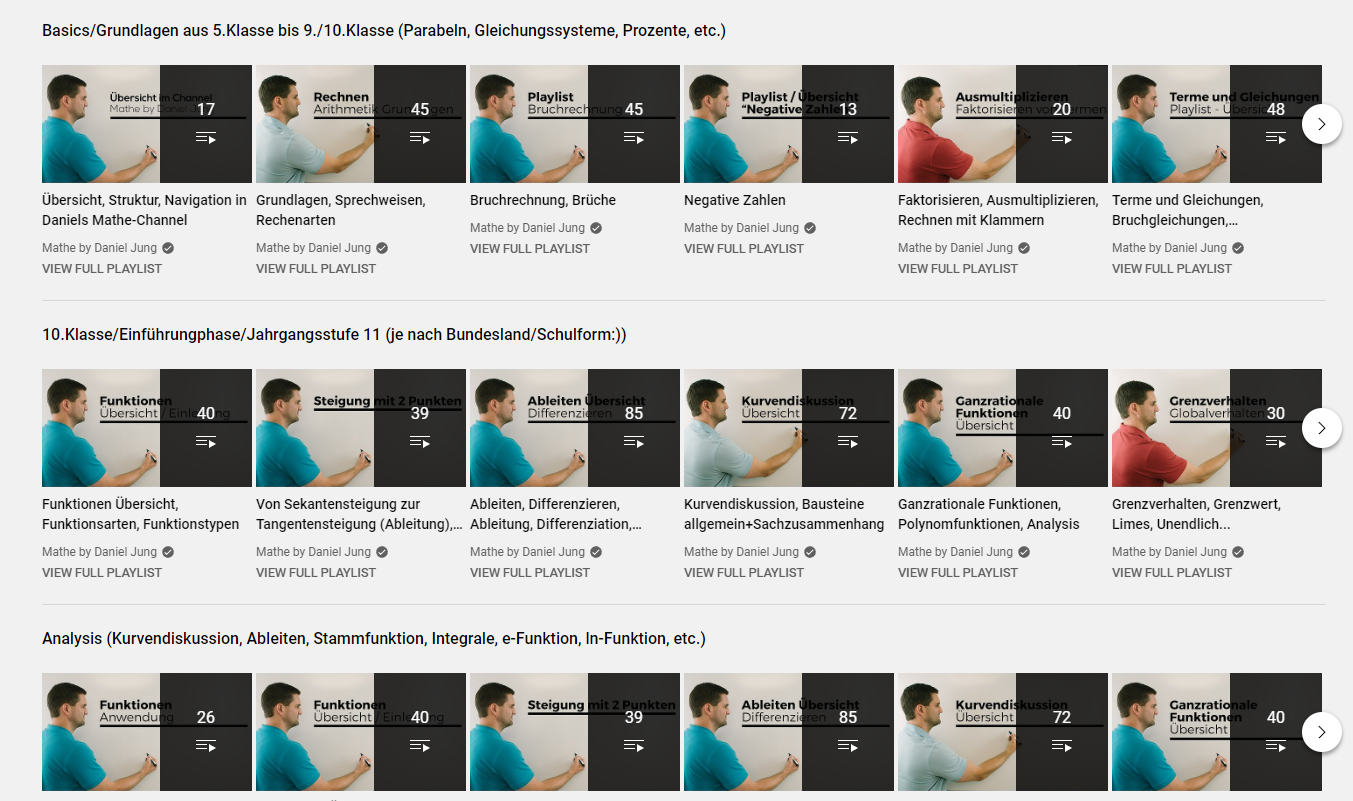
MeinMMO: You are now an entrepreneur who has founded several companies. But tell us about the beginnings of your YouTube channel. What did you struggle with the most at the beginning?
Daniel: I actually didn’t struggle at all because I saw it simply as a vehicle to test how you can bring digitalization into education.
One option was: I make a livestream, but that was still very difficult in 2011-12. Just terrible connections; the streams weren’t stable. What I had done classically analog was hard.
But producing a video I found more interesting than just uploading a document online that you have to read through yourself. I wanted to pack the explanatory format of a classic analog lecture into a 5-minute video and make it available via a platform which was the only video platform in 2011.
I simply worked with the feedback. So, how can you optimize yourself? What fits, what doesn’t fit? In the beginning, I still went to the board in a tennis shirt with poor lighting and spoke too quickly [He laughs].
I found it interesting from the beginning. I didn’t want to become an influencer or anything like that. For me, it was a vehicle to test things since my first company was classic analog tutoring. And that was really a test.
I had no revenue at the beginning and had to look at:
- How do you monetize YouTube?
- What options are there?
- Is advertising an option when learning?
- Does it perhaps annoy people?
Up to the present point, where people say: “For you, I turn off the ad blocker because the content is so high quality that I would rather endure the advertising.” The feedback is really fantastic.
From the very beginning, it was only interesting to work with the feedback in this testing playground.
Away from cat videos, towards educational content
MeinMMO: Your channel has now been around for over 10 years and targets young people as an audience. How has viewer behavior changed during this time? Does the “youth of today” differ from the “youth of yesterday”?
Daniel: I always try to identify differences, but fundamentally there are no generational differences in learning. Everyone has to learn somehow. Math is everywhere; everyone has to learn math.
Today, however, people are more accustomed to dealing with media. In 2011 it was still the beginning. Back then, people said about YouTube and such that it was for cat videos. So they wouldn’t go there to learn.
Today, the difference is that you know: If I need help again, then I know there are educational videos on social networks, especially organized on the YouTube platform.
Nowadays, people actively go on YouTube. Earlier, you used to google: “Help, I have a question in math, topic derivative.” Today you “youtube” so to speak, doing your search on a video platform.
This means today it’s really become a law and standard. The youth knows there are learning videos not only for math but also for other subjects. People are definitely used to taking this as an addition to learning.
MeinMMO: That’s true. I graduated in 2010 and it wouldn’t have occurred to me to search for educational videos on YouTube. We had the classic graduation books for preparation.
Daniel: Exactly. In Germany, definitely not, because it just wasn’t on the radar. Although all of that, at least in English, had already been there. Everything, every topic, just not in German. And then around 2011-13, the early adopters like me started. There were a few who said: Yes, it could also work in Germany.
MeinMMO: YouTube as a platform is also constantly changing. What specific wishes would you have as an operator of an educational channel for YouTube?
Daniel: I have countless! And I’ve been shouting them out for years. I’ve been everywhere. I was in London with YouTube; I have pitched all over.
I’ll start right at the top: A new monetization concept for educational content creators. This means that the advertising is currently not personalized enough for educational creators. They should actually receive support from all kinds of larger companies focused on advancing education.
So – they could perhaps be bundled in some way to financially support all the Daniel Jungs and Lehrer Schmidts out there so that high-quality knowledge can be provided for free. That’s point 1.
Point 2 would actually be a feature. A video eventually fails, and a livestream is eventually over. And what if you have a specific question then?
Then there would be a community effect, I’ll call it collective intelligence, in case the educational creator is offline. The comment section is only there for “Hey, you are great, you are terrible, nice weather today”.
These are just classic comment mechanisms and not an exchange for specific questions. And if you have a specific question and I am not live, my video doesn’t help, you could connect with a swarm of people and someone among them would pop in and answer it.
That would naturally be easier if there was such a mechanism directly under the video on YouTube.
Point 3 is of course the algorithm. At the moment it does eventually lead you back to the cat video. You really need a creator hub where all educational channels are. It would be possible for YouTube to carry you forward by algorithm: “You were just searching for math and statistics. You might also find this psychology video interesting.” I find that very interesting.
A look into the future: Livestreaming school with a timetable?
MeinMMO: During our email exchange, a new format of yours was teased that is being developed in collaboration with other educational channels. Can you tell us more about it?
Daniel: Yes, the initial spark was the teacher Mr. Gerold, with whom you spoke in another interview. He is at a vocational school and talks about final exams.
He made a livestream on Twitch and suddenly had a few hundred people watching. I thought: “Wow, I find that totally interesting”. I hadn’t actually been on Twitch before.
Then, based on this article, I approached him and invited him to us. He then explained what mechanisms exist on Twitch when you speak in a livestream about educational content. I said, let’s see if we can bundle teachers in a live format.
However, there are also many real teachers, encouraged by Corona, who say: “I am going into this digital world, and also in a livestream format.”
I thought: “If you can bundle these people into a livestream format.” I find that exciting. I’m not writing a media plan for the next ten years; instead, I say: “Let’s bring together those who are currently active on Twitch and let’s first chat live.”
Maybe we will build an online livestream school. On Mondays, we can have math, physics, chemistry. On Tuesdays, there can be biology – or every day there’s something, additionally helping people who might still have problems.
We are now regularly discussing this in a group and are looking at what comes of it.
MeinMMO: Given that technology has evolved since 2011 and, moreover, that Corona has highlighted many deficits in the digital sphere over the past years, do you think there has been a transformation within the education system? Is it moving more towards digital?
Daniel: Unfortunately, it’s dead in the water. A few failures, and a lot of money that evaporates because they fail in Germany due to application processes. If you want to change something from within the existing system, you struggle against the mechanisms of application procedures.
But with YouTube, TikTok, Twitch, etc., I don’t have to write a media plan. That means the digital revolution will come from outside, with experts from within the system, namely the teachers who have enthusiasm.
And this has been positively fueled by Corona, where many who were still skeptical then said: “Let’s make a video or a livestream.”
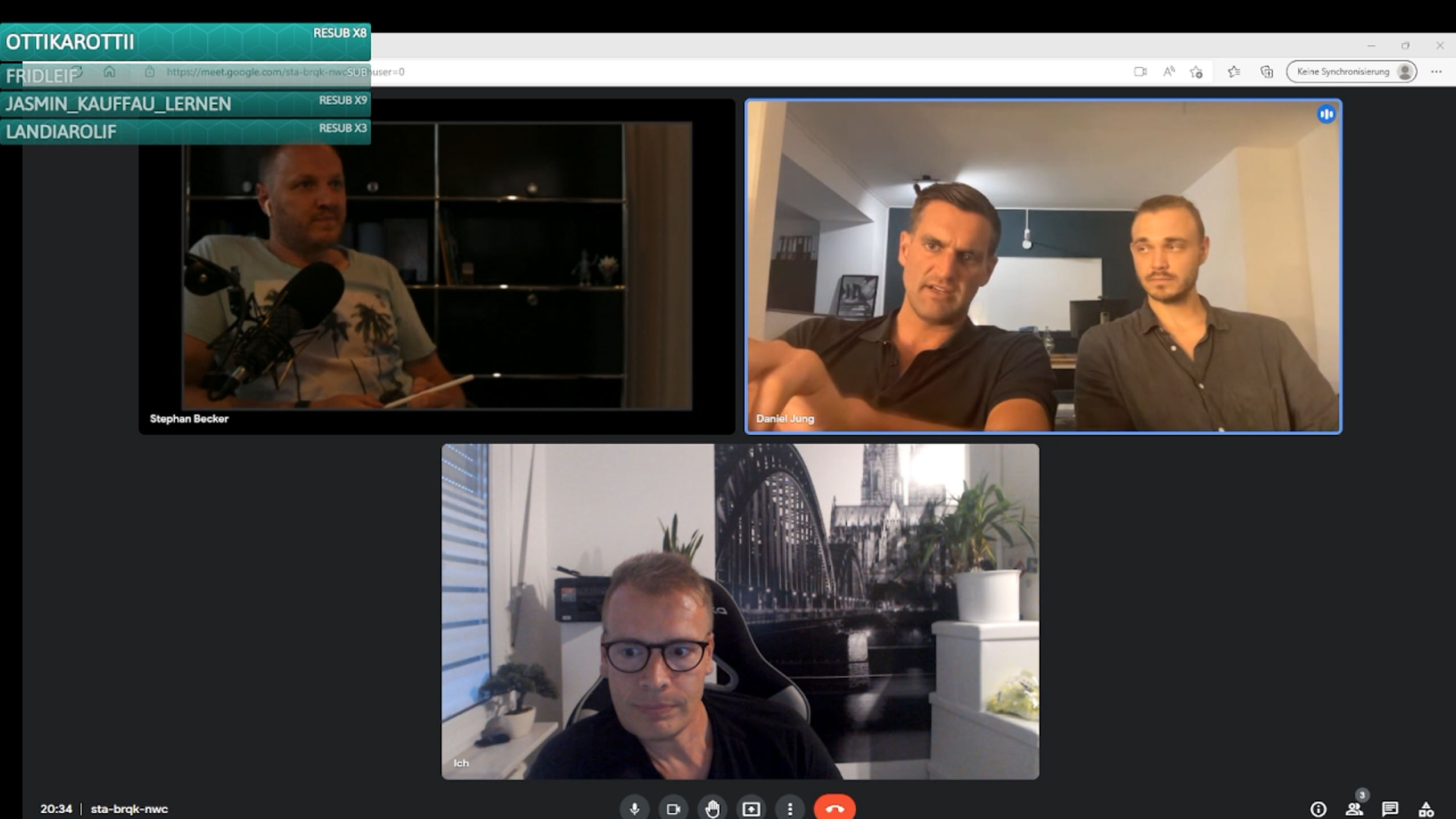
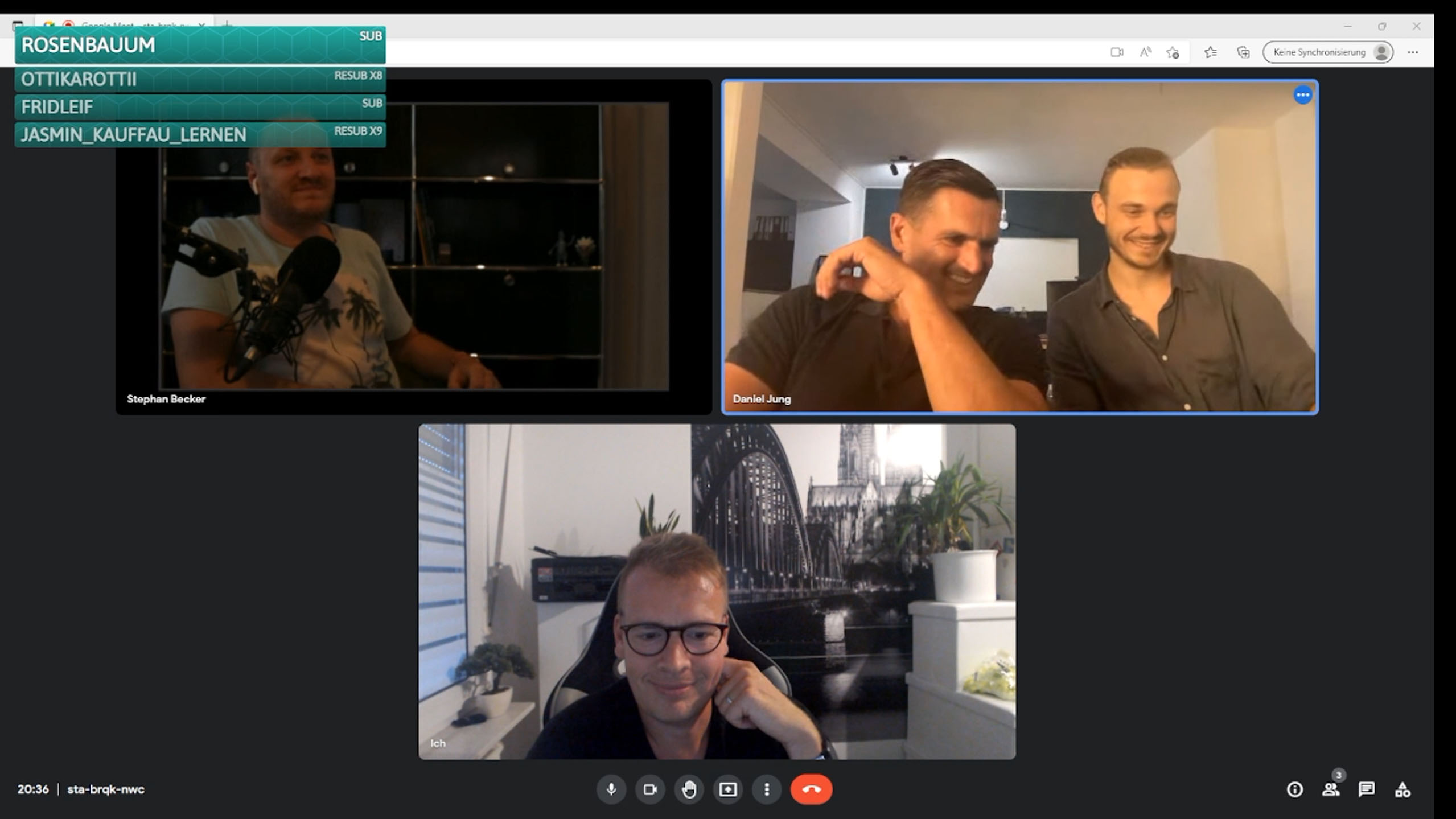
There are limits where you say: We will continue to meet in person. But the great thing is, we no longer have to come together in person to hear a standard one-and-a-half-hour lecture. Instead, we can do cool things together onsite.
I believe that the education system in Germany, with our federalism and so on, is very difficult to crack. But there are more and more teachers who are eager to explore the digital landscape and inspire people with knowledge in the form of livestreams, etc.
If you bundle them, they have the leverage to really ignite the digital education revolution; otherwise, everything in Germany will likely just stagnate again.
MeinMMO: Do you have any final words for our readers?
Daniel: Everyone who knows and can support educational creators: Please support them. Do shoutouts or invite them into your streams.
I find the combination of gaming and education super interesting. In Finland, Minecraft is already a subject in schools. Why can’t we achieve such a combination? You wouldn’t even think of it.
If you’re in the gaming world, you don’t think about the fact that you can also educate someone at the same time. That’s what I am fighting for. Education can really be sexy, thanks to digitalization.
What do you think of educational formats on YouTube, like those of Daniel? Have you used them yourself, or do you prefer classical methods? How would you feel about an online livestream tutoring school? Let us know in the comments.
We asked a drag queen on Twitch about her biggest problems and wishes when streaming.

Your opinion is important to us!
Do you like the article? Then let us know!