

World of Warcraft is full of parasitic game systems. This makes the MMORPG worse in the long run – and it needs change, says Cortyn from MeinMMO.

Live games and MMORPGs are in constant flux. There are constantly new systems, while others are neglected or completely removed. Yet only a few game systems manage to truly be an enrichment in the long term. They have a short lifespan and are essentially added on top, without genuinely enriching the game.
Often, these systems only exist for a certain time and are then simply forgotten or not continued. They do not provide anything lasting to the game; they draw from other systems and only work because the developers compulsively build everything around them to make them work.
These are parasitic systems. And they make our favorite games worse.
I particularly recommend a video from YouTuber Josh Strife Hayes – I can recommend him to you anyway, as his MMORPG analyses are often accurate and well-argued:
Parasitic systems are being added but remain isolated
What are parasitic systems? Parasitic systems in games can be identified by several indicators. Not all of these need to be present, but if a majority of them are, it is reasonable to conclude that it is a parasitic system. The indicators are:
- The system was added to the game later.
- The system is not “backward compatible” with older existing systems.
- The system exists in its own, closed framework.
- The system requires the core systems of the game to exist but has little interaction with the core systems.
- Nothing within the parasitic system is relevant outside of that system or outside a very specific timeframe.
- The system can be removed without much change to the game as a whole.
WoW is full of parasitic systems
I want to be completely honest with you: Until a few days ago, I wasn’t aware of the term parasitic game design or parasitic systems in gaming at all. But now that I know it, I notice it in almost every major game, especially in World of Warcraft. Because World of Warcraft is full of parasitic systems.
It really started with the garrison in Warlords of Draenor. Here you had to invest a lot of time and resources to build the garrison, recruit new followers, or build structures. As soon as WoD was over, the garrison faded into forgetfulness.
It was similar in Legion with the artifact weapon. The entire expansion revolved around improving the weapon and investing time to refine it – before it was simply abolished.
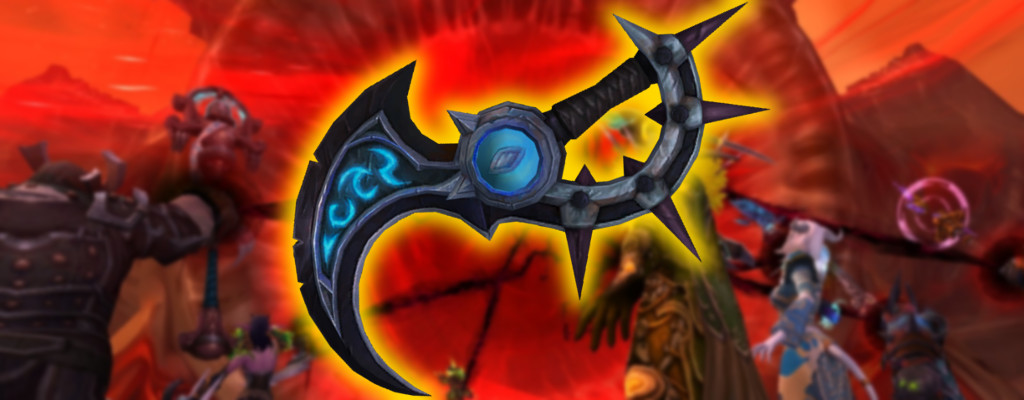
The same was true for the Heart of Azeroth. The necklace was introduced at the beginning of the expansion and almost everything revolved around making this necklace stronger. Visits to dungeons, raids – even loot became tied to Azerite abilities on the necklace, before with the start of Shadowlands the necklace lost all its utility.
With these three systems, one could clearly answer the question, “Would completely removing this feature change the fundamental experience of World of Warcraft?” with a “No.” The game would still play identically. So these were parasitic systems.
In contrast to these parasitic systems are the core systems. One of them is, for example, the hunt for ever better loot. This is the foundation of World of Warcraft and a driving factor in the game. Therefore, it is not “parasitic” if equipment loses value over time, such as through a new expansion or a new patch. The search for ever better items to improve the character is a fundamental principle of the game.
The classification is less clear with another category of systems that can best be described as “minigames.” A good example here is the “Pet Battles” in WoW. At first glance, one might classify them as parasitic, but I would rather classify them as a minigame. Because pet battles are so detached from the whole rest of the gaming experience and only need the attention of players who really like this content, that this system can exist on its own.
Sure, there are small overlaps here and there, as pets drop from raid bosses or are available as reputation rewards, but that alone does not make the system parasitic.
Parasitic systems cause confusion, as their effect fades
However, it is still true that not every parasitic system has to be fundamentally bad, even if this is the case in many instances.
One of the most significant negative aspects is the confusion for new players or those who do not gather information outside of the game.
Anyone starting with World of Warcraft today who proudly builds their garrison in Draenor has absolutely no idea that in about 10 hours of gameplay, it will have no relevance whatsoever.

Whoever gets the “Heart of Azeroth” in Battle for Azeroth and passionately levels it up to make it stronger, has no idea that it will have no use in Shadowlands and will even lose all the powers gained.
The same will likely also be the case in Shadowlands, as it is already evident that Blizzard probably will not carry over the covenants in 10.0 and the covenant abilities will simply be removed.
An even younger example is the domination sockets from patch 9.1. These are special sockets that can only be on specific items and only specific domination shards fit into them. The shards can be upgraded and grant set bonuses, but only in specific locations. However, the game does not explain this anywhere and it is not intuitive.
Worse still: Because domination sockets exist, other established systems are degraded, as the weekly reward cache for “Mythic+” can contain items that overlap with a slot for the domination socket. This is a parasitic system that provides little benefit and also makes other mechanics worse.
There are also positive examples
However, not all systems of recent times are parasitic in World of Warcraft. Even if not every player likes it, the “Mythic+” system is a good example of something that has become more and more an integral part of the game. What started simply as a “hard mode” has now become a core endgame feature that survives expansions, through scalability, achievements, item upgrade possibilities, and the weekly reward cache. A system that has integrated well into the loot structure of World of Warcraft.
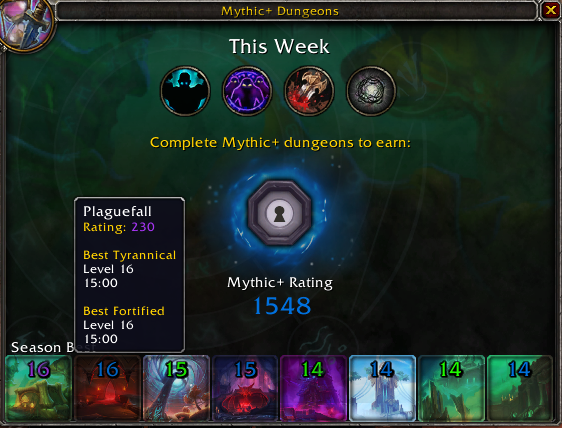
However, it took many years for it to be so well and firmly integrated, and the “Mythic+” dungeons were often revised. It indeed takes a lot of time and endurance to create a new core system because it holds true:
- It is easy to develop parasitic systems that are forgotten at the end of an addon.
- It is difficult to develop core systems retroactively.
To conclude, I would like to return to a quote from the video shown above:
It’s like making a pizza. You start with the dough as a base, then comes the sauce, then the cheese, and then the rest of the toppings. You take a step back, look at the whole thing, and say: “It’s complete.”
If someone comes to you and says: “Hey, I ate the whole pizza. Make it differently.” Then you could go back and remake the base, remake the sauce, or remake the cheese. But that would be complicated. It’s easier to just add more toppings without stopping to think: Does this topping actually make the pizza better? Or am I just adding it because people demand that I add SOMETHING?
This is a question that not only developers, but also we as players should ask and answer honestly. I’m sure it would lead to better games for everyone.

Your opinion is important to us!
Do you like the article? Then let us know!