

Baldur’s Gate 3 offers a fantastic feature that allows you to give your character a profile. However, you might want to avoid using it, at least as a beginner. MeinMMO editor and D&D expert Sophia Weiß explains why.

Baldur’s Gate 3 allows your creativity to flow when it comes to your player character: whether it’s the selection of 11 races and 12 different classes, some of which even offer multiple subclasses. Our overview Baldur’s Gate 3: All 12 Classes and 11 Races at a Glance – Which One Suits You? provides you with a comprehensive overview of all character options.
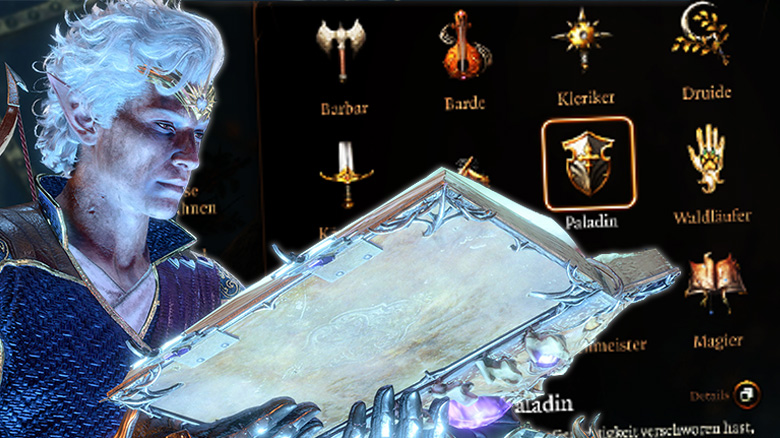
If that’s not enough, you also have the option to “multiclass” your character. What this is, how it works, and whether it’s really a good idea for every player in their first run, we will reveal here.
What is Multiclassing?
Multiclassing refers to when a player gives their character levels not just in one class, but in two or even more.
This could be a rogue like Astarion, who later “multiclasses” into a paladin and a druid. Depending on how many levels the character gains in each class, they can acquire more or fewer features from each class.
A Thought Experiment: If the player gives the companion Astarion, one of the playable characters, a new rogue level at each level-up for five levels, the character will have all rogue abilities up to level five.
However, if another class is chosen at the next level-up, Astarion will now have access to the abilities of the new class at level one.
In the mentioned example, this means that Astarion has received

Your opinion is important to us!
Do you like the article? Then let us know!