

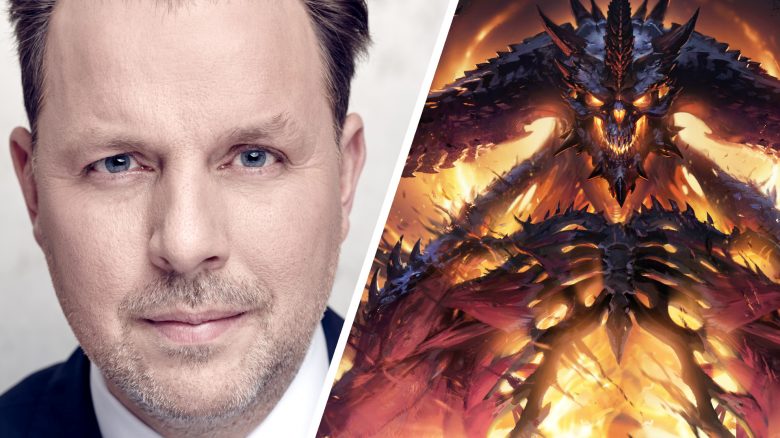
Diablo Immortal has been heavily criticized for Pay2Win since its release. Important items can easily be purchased, and those who pay often win more frequently in PvP. Many fans are wondering: Why isn’t something like this banned? MeinMMO asked a lawyer.
This is happening in Diablo Immortal:
- Since its release, there have been discussions about how “extremely Pay2Win” Diablo Immortal is.
- However, the paid content is not always obvious. Some of the mechanics can only be seen after one has already paid.
- There are fans who mock the Pay2Win discussion, as the “Pay2Win” aspect is not relevant for everyone. Nevertheless, the discussion about the corresponding content is substantial.
Diablo Immortal was not released in Belgium and the Netherlands due to its monetization, just like Lost Ark before it. At that time, we asked the lawyer Christian Solmecke whether Lost Ark could also be banned in Germany, and now we followed up for Diablo Immortal.
Who is Christian Solmecke? Solmecke is a specialist in internet and media law and works as a lawyer and partner at the Cologne law firm Wilde Beuger Solmecke, short WBS. Previously, he worked as a journalist, including at Westdeutscher Rundfunk. His portfolio also includes:
- Several books on online law. Most recently, “The Pocket Lawyer“
- The founding of IT startups
- Solmecke is also the managing director of the German Institute for Communication and Law in the Internet (“DIKRI”) and the cloud-based law practice software Legalvisio.de.
Solmecke became known as the “internet lawyer” with his YouTube channel. He frequently addresses current topics in the areas of internet and gaming and answers questions in his videos. We were also able to ask him some questions on the topic.
The biggest criticism point regarding Pay2Win are the legendary gems in Diablo Immortal. In the video, we reveal how exactly they work:
“Players would have no monetary value in the real world”
MeinMMO: According to some players, Diablo Immortal is “predatory” when it comes to microtransactions and “Pay2Win”. Why is something like this allowed in Germany?
Solmecke: There has been a long-standing discussion about so-called “loot boxes”. Even with Diablo Immortal, it ultimately comes down to the same problem – you pay real money for a chance to receive virtual gameplay advantages that depend on luck. The question is being debated whether such things should be classified as gambling and banned or not. Anyone who organizes or participates in gambling without government approval is committing an offense.
Gambling means that you acquire a chance to win by risking money, and the winnings depend largely on chance and not on the skill of the player. Some jurists see it this way, but the majority of jurists argue particularly with the following argument against it: Players would have no monetary value in the real world, which is why it does not qualify as gambling. Until now, there have also been no known verdicts against game manufacturers in Germany, and the German authorities and lawmakers have so far held back and focused more on protecting young people from excessive influence.
Different in other countries, where at least loot boxes have been banned as illegal gambling for a longer time – e.g. the Netherlands and Belgium. In addition, currently (June 2022), 20 European consumer protection organizations, including the Federal Association of Consumer Centers (vzbv), have called for regulation of loot boxes – for example, through more transparency of the algorithms and better youth protection.

MeinMMO: After deeper immersion in the game, several players have reversed their transactions, for instance, through Google. Is such a thing always possible without issues?
Solmecke: According to the Google Play refund policies, it is possible to reverse some in-app purchases within 48 hours, sometimes even longer.
Whether this always works is unclear, because Google writes here little transparently: “Depending on the details of the purchase, you may be able to receive a refund” and then provides instructions for a “request” for a refund.
In the MeinMMO podcast, we talk about crime in online gaming:
MeinMMO: How far can a game or a company go before a product is banned in Germany due to monetization?
Solmecke: So far, there have been no bans in Germany. The youth protection laws are likely to be the most problematic here. The goal of the relevant provisions of the Youth Media Protection State Treaty is to prevent unsuitable or harmful offers from negatively influencing minors.
Generally, “descriptors” are sufficient here, meaning indications of such elements. Only in exceptional cases may it be that corresponding games are approved by the USK only from 12, 16, or even 18 years of age. The evaluation depends on the individual case.
MeinMMO: Have there already been cases where companies had to pay fines in Germany or the EU for exploiting customers?
Solmecke: No, I am not aware of this. Due to the high gambling factor, Belgium and the Netherlands have, however, banned the release of Diablo Immortal citing their loot box laws.
MeinMMO: Thank you for the answers!
Despite the ongoing discussion about Pay2Win and whether Diablo Immortal should be banned, Blizzard’s new MMO is extremely successful. After some delay, it was also released in China and can report strong numbers:

Your opinion is important to us!
Do you like the article? Then let us know!