

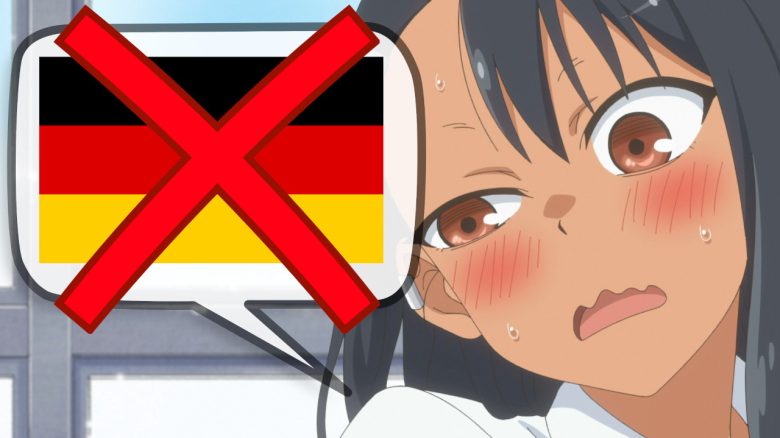
German dubs of anime have a bad reputation. They are often considered poorly done – but why is that actually so?
If you ask the full-fledged weeb in your friend circle how to best consume anime, they will probably give you a pretty clear answer: Japanese with subtitles. For many, that is the only true way to watch anime series.
And once you get used to the unfamiliar language and reading subtitles, many will certainly agree.
After that, it is often difficult to watch the German versions of anime. It can be so uncomfortable that you might even cringe a little.
But why are German dubs of anime actually so bad?
The answer will disappoint some, but: German dubs are generally quite good. They are among the best and most elaborate in the world.
And yes, each of you is probably thinking of three or four examples where the dubbing was really poor. That happens, and with thousands of dubbed episodes per year, it is unavoidable. Not everything can be a masterpiece.
Nonetheless, Germany has a fairly developed dubbing culture that people from many other countries envy us for. While in Germany attention is paid to matching voices and lip synchronization, that is often not the case in other countries. Many countries have only a handful of voice actors – in a series, you always hear the same 5-10 people distributed across all roles. And that in every series.
In some countries, it was the case in the recent past that the volume on movies and series is simply turned down and a single voice actor translates all characters – in a monotonous manner.
In the German-speaking world, we are actually quite pampered when it comes to dubbing and have it better than a large part of the world, which is already happy if there is at least an English version.
But why do anime dubs often feel so “wrong”?
The “problem” is that anime, much like many TV series from Asia, operate on theater rules. This means that characters speak in a very exaggerated dramatic manner. Reactions are often accompanied by sound effects, and generally, speaking in most scenes conveys much more emotion solely through the voice than one is used to from everyday life.



Exactly this difference between many “western” and Asian productions presents German studios with quite a problem when dubbing anime, leaving them with only two options:
- Should they stay as true to the original as possible and convey particularly many emotions with a tendency towards melodrama through the voices, which Germans find rather unfamiliar?
- Should they “Germanize” the version and depict the characters as speaking more calmly and less theatrically, as German viewers are more used to?
In addition, there are further questions, such as:
Should names retain their Japanese sound, or should they be made to sound “more German” so that they match the rest of the spoken content?
The “wrong” answer then leads to memes that remain in the memory for decades, like this Naruto classic:
Such and other incidents have burned themselves into the memories of anime fans and often made them blind to newer dubbings that they hardly give a chance.
Finding the right answer is difficult, especially because the Japanese language sounds so different from German.
It took quite a while to find a good middle ground here that on one hand preserves the theatrical exaggerated nature of anime and at the same time sounds so that German viewers do not roll their eyes in shock-stared at the screen.
Ninotaku has also published a good video on this:
Of course, it also comes to the fact that Japanese voice actors usually have an incredibly high level and that this kind of theatrical, anime-tailored voices has been perfected over decades – long before anime arrived in the mainstream here.
There is the superficial stereotype that anime are just full of “overly screaming big-eyed girls” – but if we are honest, they have perfected exactly this emotional over-the-top style.
The old prejudice that anime in German are simply bad is definitely outdated and does not correspond anymore – subjectively or objectively – to the truth.
If you want to give German-dubbed anime a chance, just try the German version of “Violet Evergarden” or the movies “Your Name.” or “A Silent Voice.” You might be pleasantly surprised.
More background knowledge about anime: Why are there annoying recap episodes in anime?

Your opinion is important to us!
Do you like the article? Then let us know!