

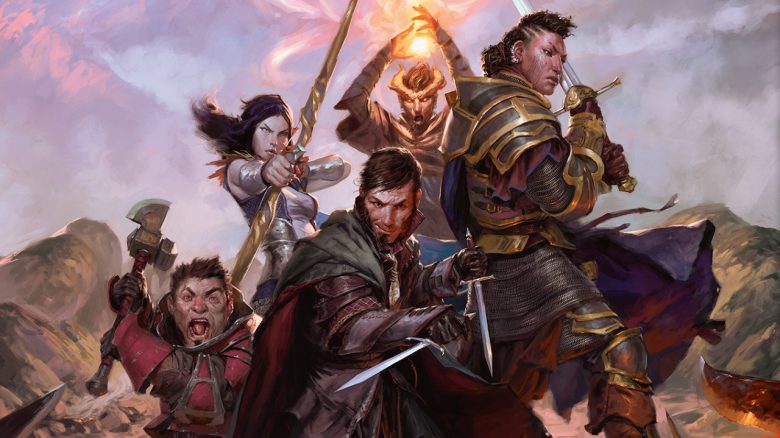
In MMORPGs, players often take on three roles: Damage Dealer, Tank, and Healer. This is referred to as the “Holy Trinity.” Where does this come from, and is it still relevant today?
What exactly is the “Holy Trinity”? Basically, the classes in an MMORPG are divided into three areas. These include Damage Dealers (those who deal a lot of damage), Healers, who heal and buff the group, and Tanks, who draw damage onto themselves and protect others.
- Damage Dealers are usually wizards or assassins, but generally have little self-protection.
- Healers are typically clerics, who also should not fight on the front lines.
- Tanks are often warriors who attract enemies with strong armor and lots of hit points.

A well-established system
Where do these roles come from? Even in the early days of tabletop role-playing games, players created their heroes from different classes.
In the original Dungeons & Dragons from 1974, there were initially only 3 classes:
- The Cleric
- the Fighting Man
- the Magic-User
Only with an expansion did the Thief become the fourth class. Later, various subclasses followed, such as paladins, which mixed roles like warriors and clerics.
From the three main classes, the roles emerged that players took in the adventures. The cleric was there to heal and support others, the fighter protected the group and drew the monsters’ attention, while the magic users dealt damage from the rear ranks with fireballs or lightning.
And this is exactly how the Holy Trinity system of MMORPGs evolved.
Why do these roles exist? Role-playing games have always been very tactical. This was evident even in the first Dungeons & Dragons. Fights were usually fought on game boards similar to strategic board games.
The position of heroes and enemies played an important role. For example, in the distance between figures – or when a character or an enemy could be attacked from behind, which granted damage bonuses.
Therefore, the player group had to think of good tactics. And that’s where the classes, or roles, came into play.
- Fighters on the front lines
- Mages in the back
- Clerics flexibly healing
Each player chose the role they enjoyed the most and which suited them well. Thus, the classes were played out. Everyone was in their role – a role-playing game indeed.
This system has proven itself and is still often used in modern tabletop RPGs. Computer games have adopted this too. In single-player RPGs with a party, it is essential to assign roles to characters and play them tactically. In MMORPGs, players take on the individual parts.
Times are changing
Is the system still modern today? Not every MMORPG relies on the Holy Trinity system. Even Ultima Online demonstrated in 1997 as essentially the first MMORPG ever that there are other possibilities. For example, developing one’s hero freely based on skills, allowing for more flexibility regarding their role.
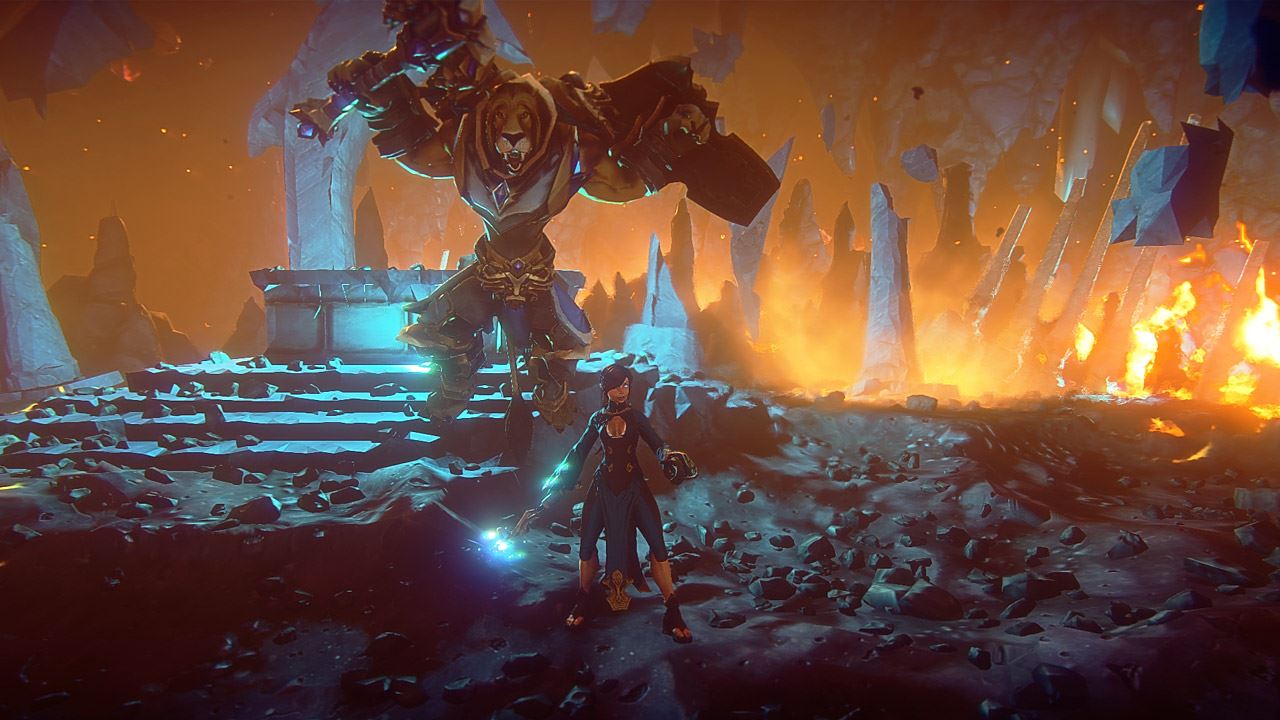
Sony Online Entertainment (SOE) aimed to move away from this rigid role system with the never-released Everquest Next. While Everquest 1 adopted the classic system and offered the Holy Trinity roles, Everquest Next was supposed to introduce something new. This was partly because the developers wanted to improve the AI of opponents so much that a Tank would no longer make sense. The monsters would not be distracted or drawn to him.
SOE wanted to create a more flexible, exciting system where players wouldn’t just become heal-bots or damage absorbers or wizards who mindlessly performed their skill rotation until the battle was finally over. The fights were intended to be more dynamic with enemies that behaved more intelligently. However, this did not come to fruition. SOE halted the development of Everquest Next in 2016.
This demonstrates that there are other ways to play a character in an MMORPG without being forced into rigid roles. These rigid roles can sometimes lead to a character not being developed or expressed in the way one had initially envisioned.
Sometimes, one of the three roles might not fit one’s playstyle at all, or as a solo player, it can be extremely difficult to portray a cleric. On the other hand, as a Tank, it is much easier to progress alone.
The Holy Trinity system thus has its disadvantages and is not perfectly suited for every game and play style.
Classic remains popular
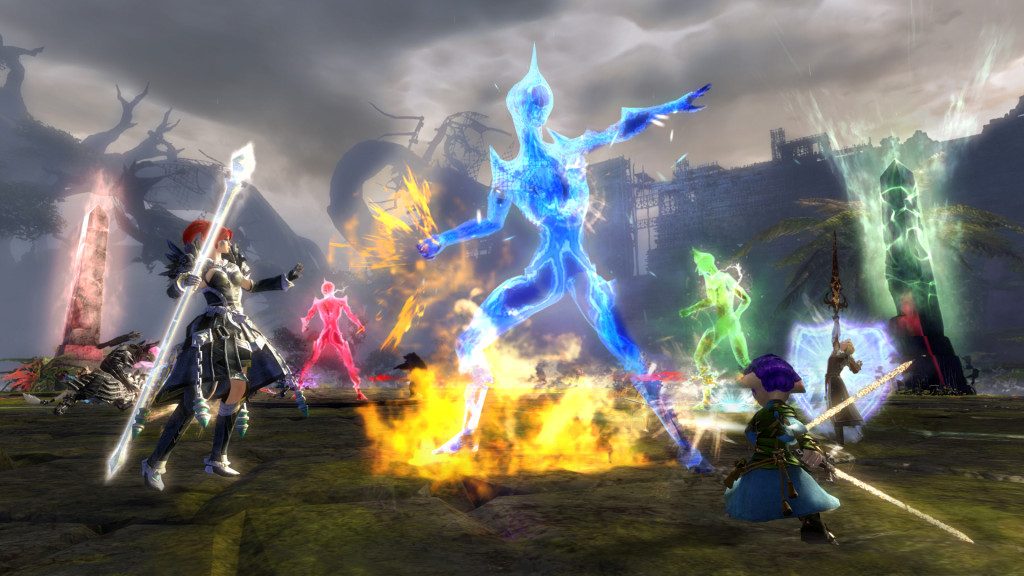
Still, the system remains popular. Guild Wars 2, for example, initially also did not want to have a Holy Trinity but has since effectively adopted it. The soft-trinity system of GW2 allows you to choose exciting professions, but they ultimately fall into the same patterns. Essentially, any class can be a healer, tank, or DD. However, this is not overtly presented.
Especially those who play MMORPGs very ambitiously and want to proceed as efficiently as possible see advantages in the Holy Trinity system:
- Roles are defined, everyone knows what to do.
- Leaders can rely on individual players to develop their classes effectively.
- It is possible to plan tactics well.
- It is a tested and reliable system.
These points ensure that a player group can very effectively complete a raid, for example.
Even game developers benefit from the Holy Trinity system: Game developers have the opportunity to design their MMORPGs much more easily, especially regarding battles. These are designed with the Holy Trinity in mind. There are specific locations on the battlefield during a boss fight where the DDs can stand and deal damage. Bosses can be temporarily distracted by Tanks.
Moreover, this system increases replayability. Those who have played a Tank for a long time may want to start anew as a healer or damage dealer and see how the MMORPG feels then.
The Holy Trinity system thus has a long tradition. And even if it doesn’t fit every game, it still has advantages that players and developers appreciate today.
What do you think? Do you like the Holy Trinity system, or do you think it’s now outdated?
As mentioned, not every MMORPG needs to offer these three classic roles. We present you 5 good MMORPGs without the classic Holy Trinity of Tank, Healer, and DD.

Your opinion is important to us!
Do you like the article? Then let us know!