

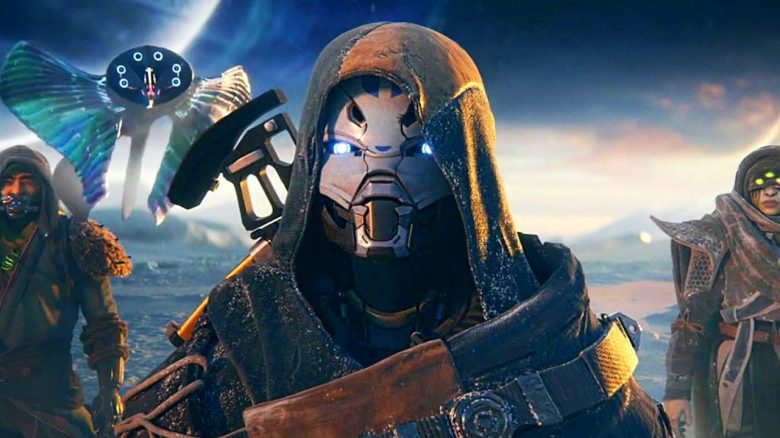
Destiny 2 and part 1 do not offer an open world where many players gather like in an MMORPG. Instead, there are hubs. There, everyone meets to form groups for mission areas. This is very well received – but not in all online games.
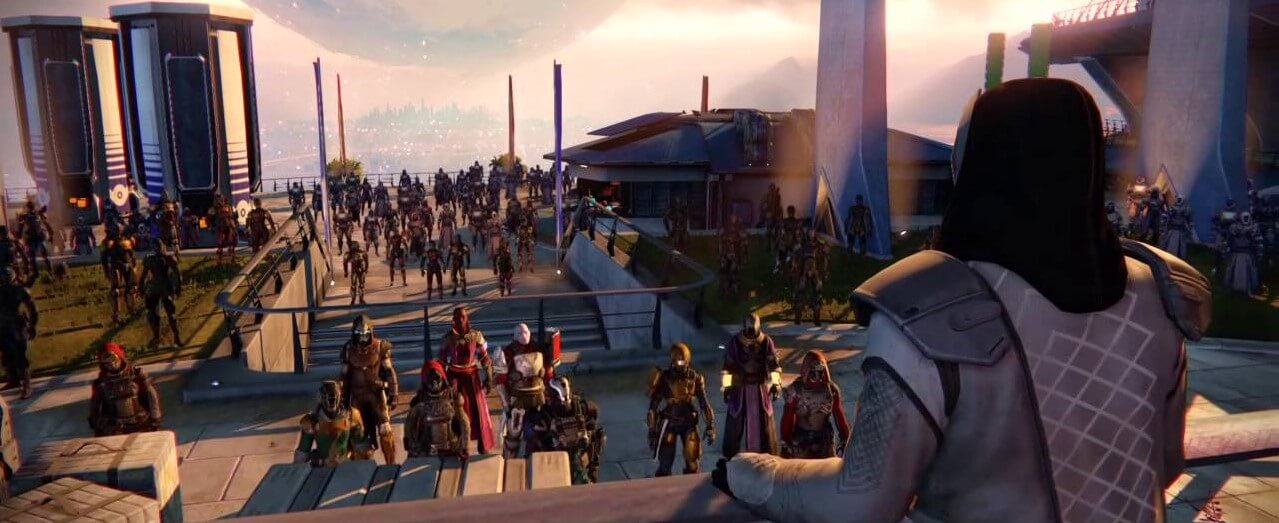
How does Destiny work? Players meet in a social hub, such as the Tower. There, it is possible to join groups or just hang out together.
Subsequently, these player groups set off to complete missions. These take place in so-called instances, therefore in private areas. There you won’t encounter other players except for those in the group.
Although there are areas in Destiny where you can meet random players, the missions are mostly instanced.
This game principle is very well received in Destiny 1 and 2 and has ensured great success for the loot shooter series alongside other elements like excellent gunplay, the loot system, and the console release.
What is the problem? Instances, however, are not well received in all online games. In MMORPGs, they are even considered by old-school players as the feature that has supposedly “broken” the genre.
The fact that only a few players are alone in instanced areas goes against some people’s idea of what an MMO should be. Namely, encountering players who are not part of the party. Instances go against the social aspect in massively multiplayer online games. Meetings in dungeons or camping to defeat bosses are eliminated.
Objectively speaking, instances have actually benefited the genre. They have ensured that even those who just want to quietly complete their quests and enjoy a story want to play. Either with a small group of friends or even alone. These players feel disturbed or even annoyed by others in MMOs without instances, which can ruin their enjoyment of the game.
Where do instances actually come from?
Is this really so new? Destiny is not the first game to offer this kind of online gameplay with hubs and instances. The first MMORPG that introduced something like this was The Realm Online from 1996.
In this game, battles take place not in the open world, but in private zones.
The MMORPG classic Tibia also offers instances and has been doing so since around 2001. This was during the then most difficult task, the Annihilator Quest (via Tibia History). During this quest, it was possible to obtain the strongest weapons through the tough boss fight. Even today, this mission is still one of the most popular boss quests.
The still successful RuneScape, which was released in 2001, allows quests to take place in areas separated from the actual game world. This was introduced so that players could be by themselves during boss fights.
Guild Wars from 2005 also offers instanced gameplay. Up to 100 players meet in towns and then form groups of 2 to 12 members. They then set off together to experience quests in instances.
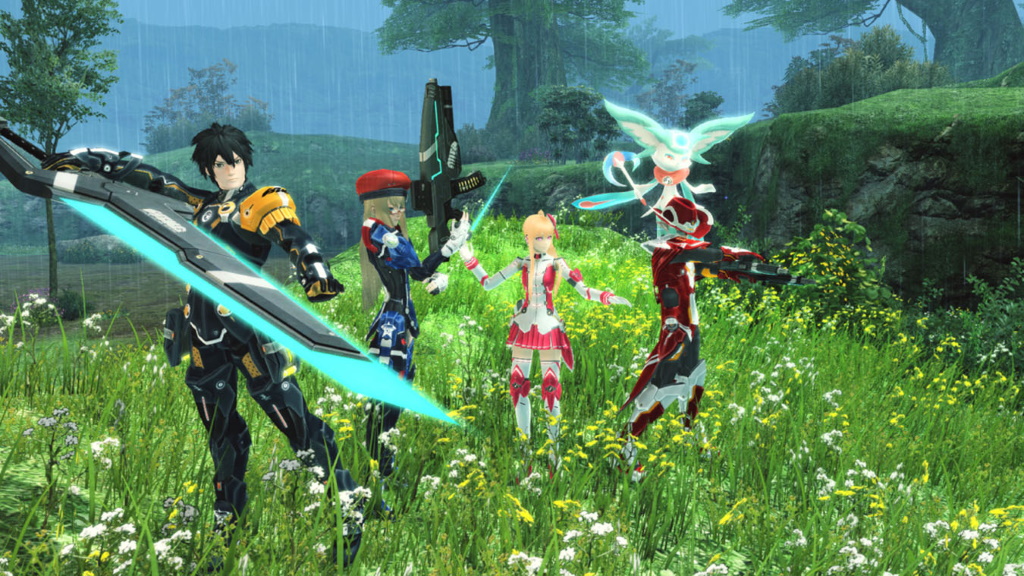
Especially Phantasy Star Online from 2000 and its successor Phantasy Star Online 2 from 2012 have become very well-known and successful in Asia due to this feature. Here too, there are large hubs where players meet. They form groups and then experience their personal adventures in mission areas that no other players can access.
Ironically, PSO did not achieve the success in this country that the game enjoys in Asia. One could say that instances in this country found real acceptance only with Destiny among the wider mass of players. PSO was evidently ahead of its time.
What does the future look like? Since instances are not well-received by everyone, there are now projects that want to return to the roots in the MMORPG sector. This includes Pantheon: Rise of the Fallen. The online role-playing game sees itself as a spiritual successor to Everquest 1 and focuses on group play. There are not supposed to be any instances. You will meet players everywhere in the game – even in dungeons.
However, this does not mean that we will have to do without games that use instances in the future. This feature will remain with us. It is basically indispensable from the genre of online games. Therefore, it will be very interesting to see how a title like Pantheon will be received, which does not offer instances.
What do you think about instances? Do they already belong to MMOs for you, or would you prefer if there were none?
You want to know more interesting facts about MMORPGs? We reveal to you what the first MMORPG actually was.

Your opinion is important to us!
Do you like the article? Then let us know!