

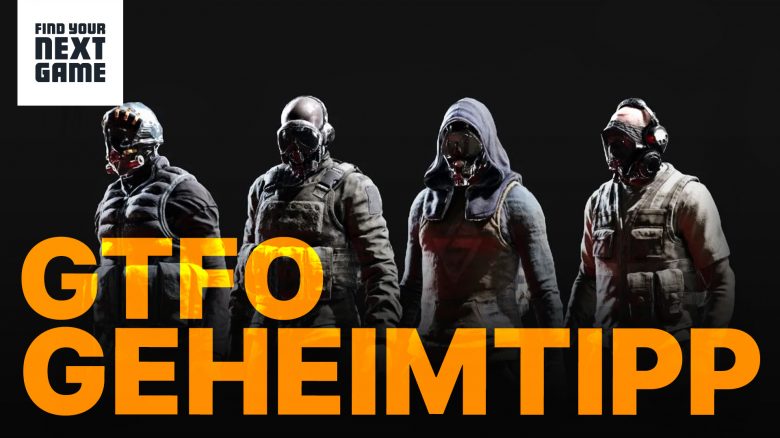
In December 2021, the shooter secret tip GTFO left Early Access. The next big update will be released on April 13. As part of FYNG, MeinMMO author Marko Jevtic exclusively played the latest levels with the developers and discussed the past, present, and unique position of the horror co-op shooter.
The biggest fans of co-op games and horror shooters should have long heard of GTFO (short for: “Get The F**k Out”). This secret tip from Swedish studio 10 Chambers was in Early Access for exactly 2 years, before the full release in December 2021.
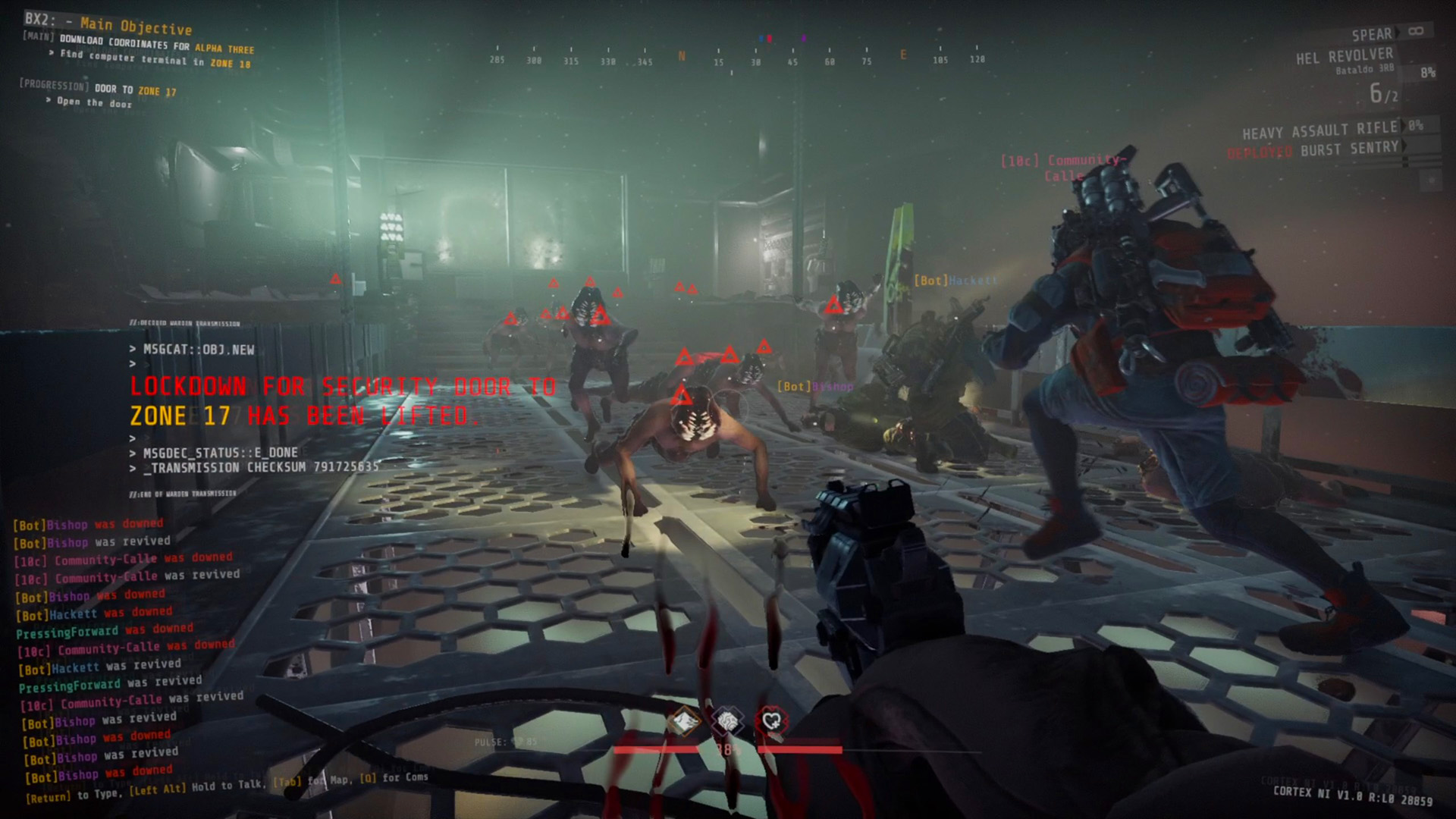
GTFO is a co-op shooter with a hardcore difficulty level, where you fight as 4 unfortunate guinea pigs through underground laboratories overrun by all sorts of monsters. The gameplay can roughly be divided into two phases that could not be more different:
- Slow stealth phases where you try to sneak up on sleeping monsters and silently take them out with melee weapons.
- Hectic combat phases when cover is blown or a security door needs to be opened. Here, often several dozen enemies rush at you in waves, and survival becomes a mad struggle.
All of this is garnished with a brutally hard difficulty level and rare supply resources, meaning every bullet in the pistol feels like a valuable treasure.
This combination is well-received by players: Of nearly 27,000 reviews on Steam, 87% are positive. Shortly after the Early Access launch, over 57,000 people watched GTFO streams on Twitch. The fact that the game is still a hidden gem is partly due to player count. Currently, about 800 people play the co-op shooter daily, but there are always brief bursts of renewed interest.
Here you can see the release trailer for GTFO:
These fluctuations and the niche existence are part of the plan: GTFO intentionally targets an absolute hardcore community, explicitly rejecting repetitive gameplay in loops and starting completely anew with each major update.
In the run-up to the next major update on April 13 and as part of “Find Your Next Game”, I played with the developers. I was also allowed to take an exclusive look at Rundown 6.5. I asked them why they make such unconventional design decisions, such as radically deleting and completely replacing all existing levels in the game with each major update.
Comparisons to Elden Ring? “It’s not that absurd”
Full transparency: You are the only person outside the team who has ever played this.
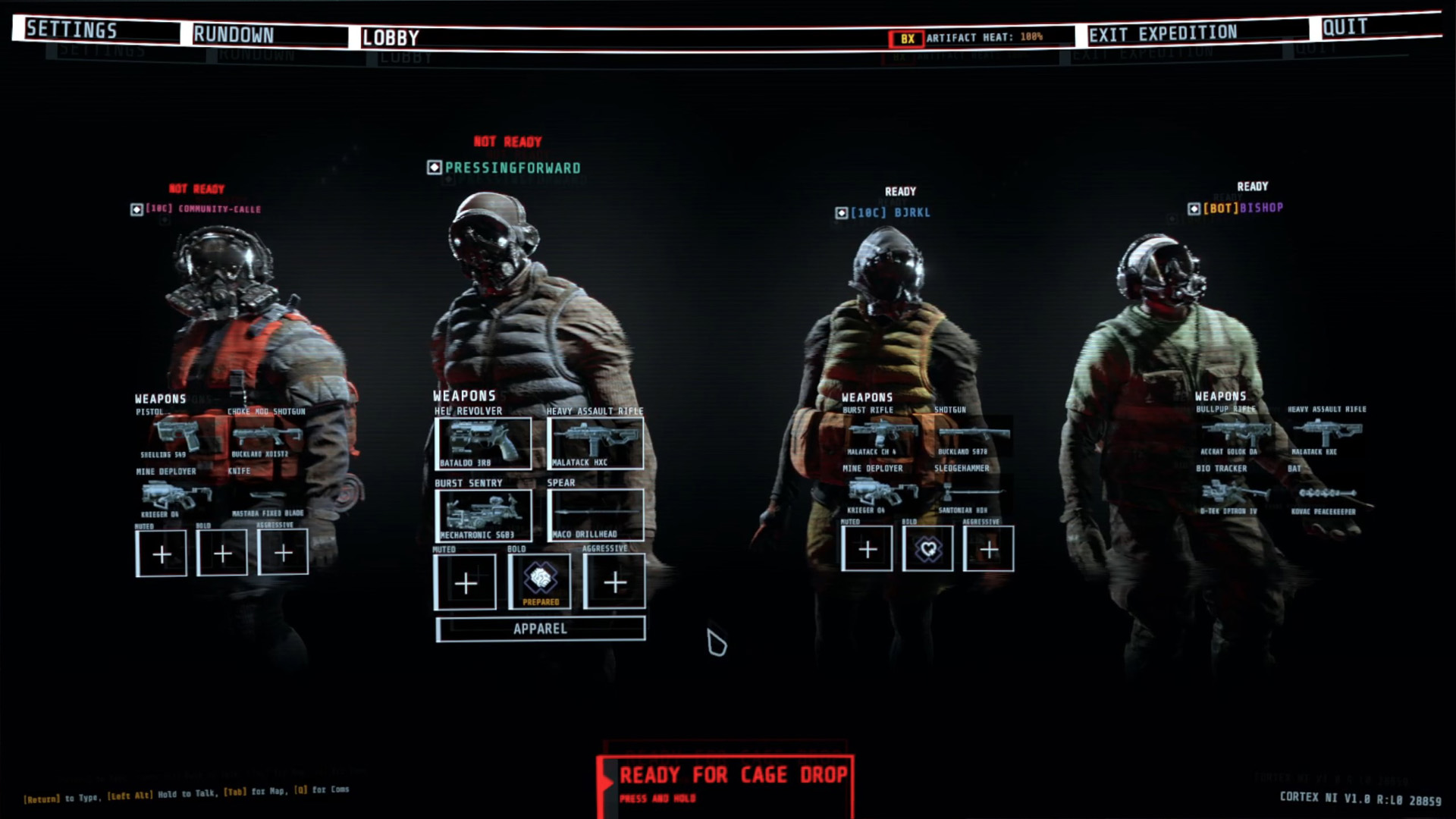
This sentence came up during my approximately 90-minute play session with Calle Johansson-Sundelius, the Community Manager at 10 Chambers, and Robin Björkell, the Communications Director.
We played the first level of Rundown 6.5, which the upcoming patch will reinvent GTFO. These Rundowns are one of the many special features of the shooter.
A Rundown is like its own ‘instance’ of GTFO that has an expiration date. Each Rundown consists of a variable number of levels and challenges that are available to all players for a certain amount of time.
Some Rundowns last months, others only a few weeks, but the duration is communicated in advance. Once a Rundown is over, it disappears from the game forever. With the next instance, completely new levels will come that challenge in new ways and continue the story.
They are most comparable to the “Elusive Targets” from the latest Hitman games: time-limited, unique content. The big difference is that in GTFO every level in the game is affected, and all others are lost forever.
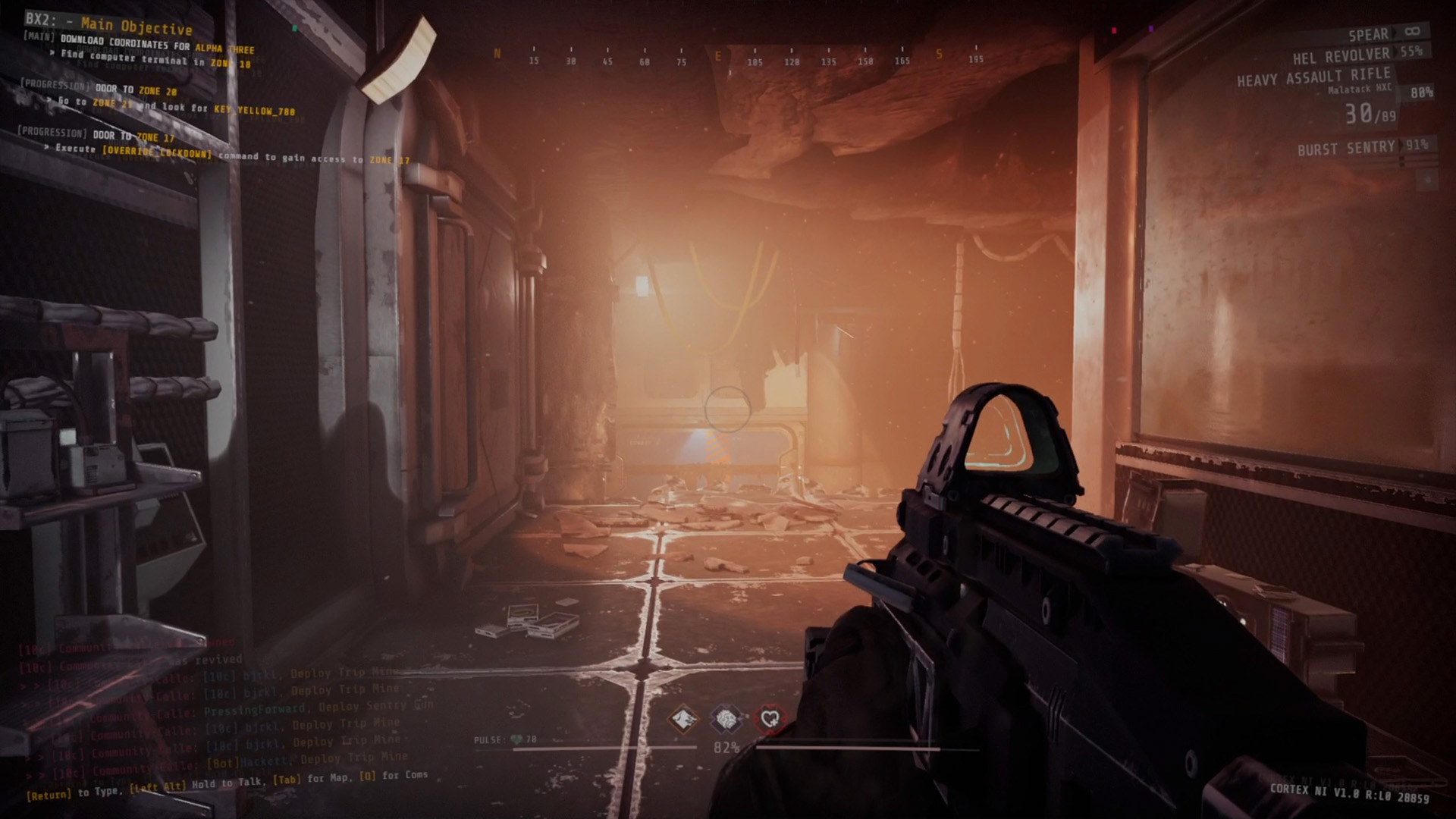
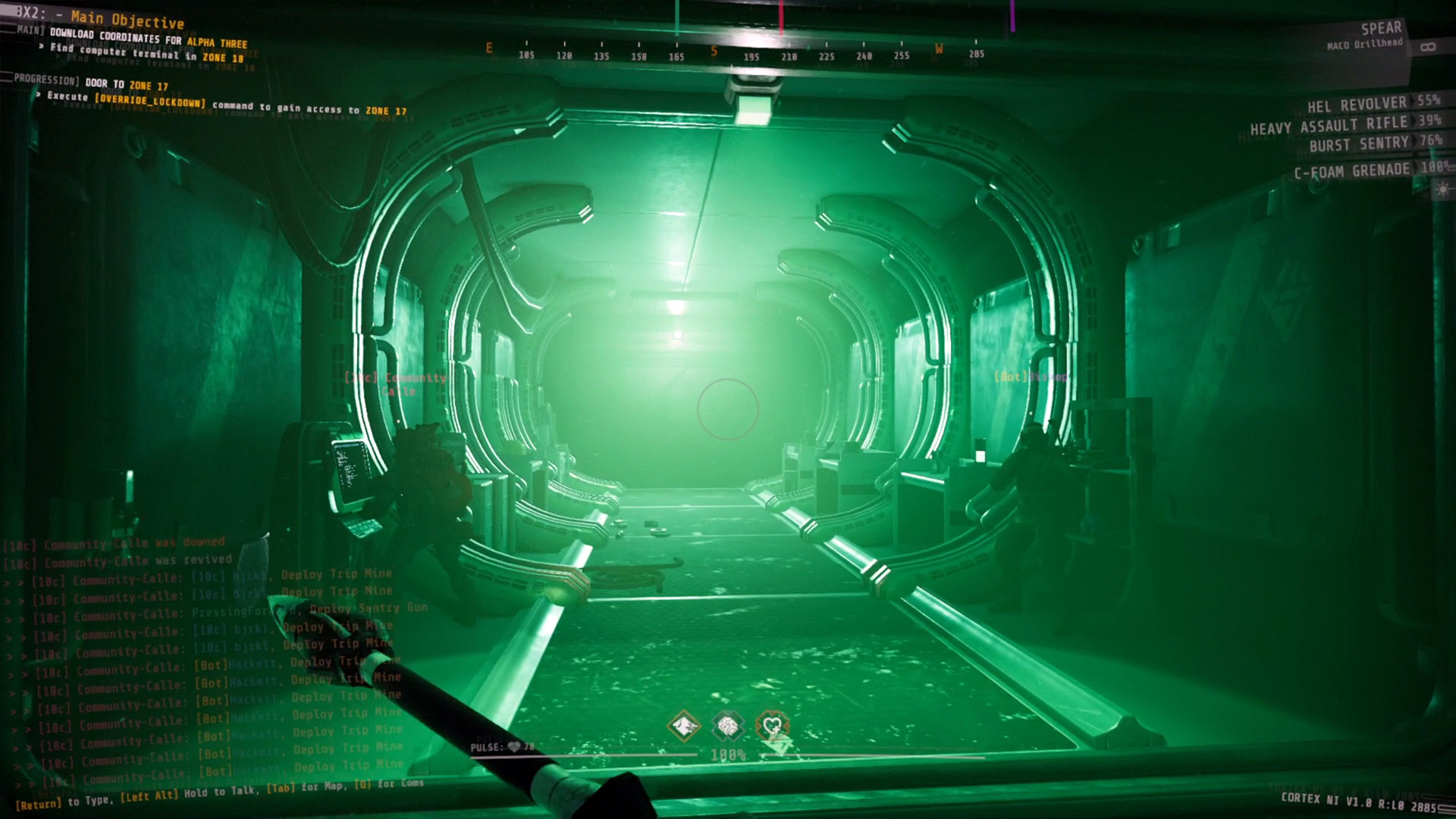
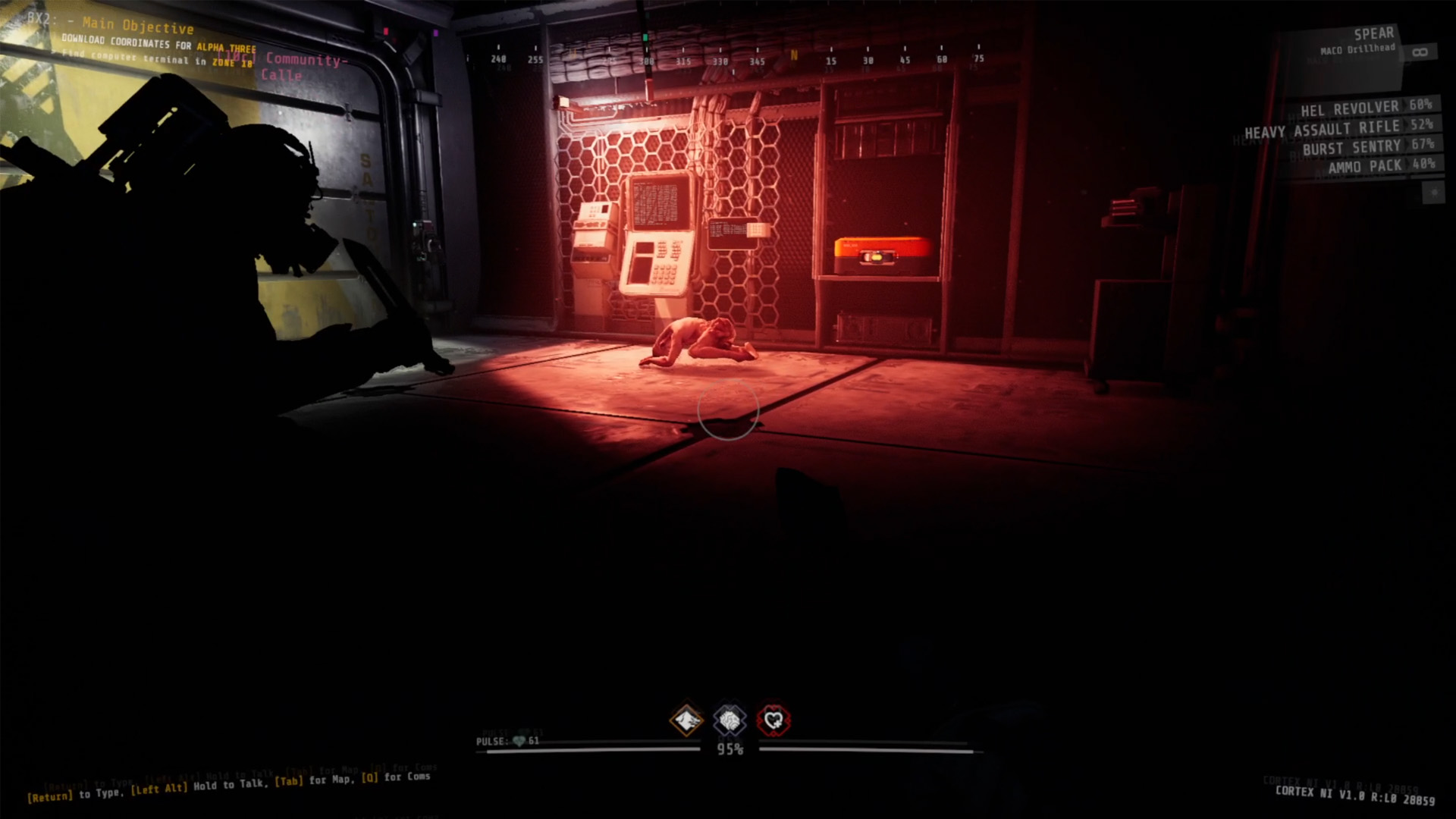
The upcoming Rundown 6.5 aims to bridge two major instances of the game, the currently available Rundown 6 and the Rundown 7 coming this year. In the next update, new dangers and even areas will be introduced that have not existed in GTFO before and could play a significant role in the future.
What exactly these new dangers and areas are, they refused to tell me during the play session. The level I played was in the lab complex, where most levels of GTFO take place. However, there were new password-protected terminals that encourage further exploration.
Players should be surprised by the other changes while playing and try to decipher the story being told in the background.
But how are new players supposed to follow this narrative when all old levels are no longer playable?
“Our community,” was Community Manager Calle Johansson-Sundelius’s proudly stated answer. The cumbersome nature of the narrative is meant to encourage players to talk to each other, exchange theories, and pay close attention to the details in the levels that also tell this story.

When I casually said that this reminded me of Elden Ring, my teammate from the developer team replied that this comparison “is not entirely absurd.” The brutally difficult and opaque FromSoftware games are not a direct inspiration, but 10 Chambers has intentionally made aspects of GTFO deliberately cumbersome and pursues a similar philosophy to Elden Ring. This goes beyond the lore and specifically concerns difficulty:
GTFO is so hardcore because we trust in our players’ abilities. We want them to figure things out themselves, or together with their co-op partners and the entire community.
This includes the necessity for players to thoroughly explore the levels together to find out how to proceed.
What sets GTFO apart from Left 4 Dead or Back 4 Blood? – “We provide real co-op”
That this is not so simple was demonstrated during this play session. We quickly realized that it is almost impossible to conduct an interview while playing GTFO. But the developers anticipated that – it is even a core aspect of the design philosophy of the shooter:
In GTFO, there should be no real opportunity to engage in small talk. We want people to immerse themselves completely in our game and communicate precisely and succinctly about what is most important. Because we want every distraction to potentially mean your death.
The developers at 10 Chambers pursue this philosophy not because they hate or want to punish players. Quite the opposite: GTFO is so difficult because the developers want to create co-op action that couldn’t be more immersive. The interplay should be the focus, and the more the players are challenged while playing, the better the cooperation has to be.
So Calle also provided me with a very enlightening example of how deep this vision goes and how it concretely manifests in GTFO:
When you start our game, you don’t see any logos from our studio, not even the game title. The game is supposed to completely and uncompromisingly suck you in from the very first second – such ‘self-promotion’ at the beginning would make that impossible.
Nonetheless, the game has become more beginner-friendly. As each Rundown completely changes the first level, the developers have repeatedly refined the “invisible tutorial” that awaits the players.
To make things more visible to newcomers, there are now also bots in the game, as well as online matchmaking and checkpoints within the levels.
These adjustments have improved the game, Calle said. They help the players without diluting the immersive hardcore experience.
Even during our play session, we benefited from these aids. We still couldn’t make it through the complex – we were too focused on the interview.
To conclude this, I asked Robin and Calle why GTFO should be the next game for our readers. The answer was as uncompromising as the game itself:
“If you want to play a real co-op shooter, you should play GTFO”
That’s why an “Easy Mode” in GTFO is only plausible as an April Fool’s joke:
With the difficulty level, 10 Chambers wants to show that they “trust in our players and their abilities.” In this way, GTFO also wants to distinguish itself from the competition that is even made easier.
We really like games like Left 4 Dead, we enjoy playing them a lot. But these co-op shooters compromise on co-op. In most groups, there’s a player who is significantly better than the others; one who rushes ahead, kills everything alone while the rest lags behind, doing their own thing and chatting with each other.
It’s fun, but we don’t want that for our game. We want real co-op, and we want to achieve that with our hardcore philosophy.
“Real co-op” means here that each player should be roughly equally skilled in shooter games. It means that players should smartly share the very limited resources among themselves. It also means that a mistake by one can lead to the downfall of the entire group. The hardcore difficulty level is intended to promote highly precise communication and thus create “real and completely uncompromising co-op gameplay.”
This is also the reason why the ping system in GTFO is so heavily limited. I was told that internally a comprehensive automated communication system like in Apex Legends was tried, but it would have ruined this vision of “real co-op.”
We don’t want the game to take cooperation and communication away from the players. We trust our players to handle that themselves.
How do you make a game called GTFO appealing to new players? – With a “very careful balancing act”
Not entirely unspoken, this question was of course also on the table during the discussion:
How do you convince newcomers to a game with such a hardcore philosophy and the off-putting name GTFO? Calle had a surprisingly open answer to this question. It’s a “very careful balancing act” of business and creative interests.
The fact that this is such a complicated question for the developers is also due to GTFO’s business model. The game costs a one-time fee of €39.99. This is to remain as long as 10 Chambers can afford it financially.
GTFO completely forgoes DLCs. There are no microtransactions, and all Rundowns are delivered as free updates. Rundowns 7 and 8 were announced for 2022 in a roadmap.
There is also no enforced grinding – the artifacts with status improvements that players can find in the underground laboratories become rarer the more frequently they play.
We are happy if players play an update for as long as they have fun. Whether that’s 2 hours or 200 is irrelevant to us – we don’t want to artificially impose replay value on our game.
The fact that GTFO needs new players is unavoidable for sheer business reasons. But the developers do not want to do this at any cost. The vision of GTFO as an immersive hardcore shooter is something 10 Chambers definitely does not want to give up.
We want to sell our game, of course, that’s the only way we can survive as developers. But we do not want to achieve that if we have to sell our principles as developers to do so.
Throughout the entire interview, I noticed that this uncompromising vision of an uncompromising game is at the top of the developers’ priority list. Players can feel this in the game, and I could clearly hear it from the developers’ answers to my questions.
So Calle also provided me with a very enlightening example of how deep this vision goes and how it concretely manifests in GTFO:
When you start our game, you don’t see any logos from our studio, not even the game title. The game is supposed to completely and uncompromisingly suck you in from the very first second – such ‘self-promotion’ at the beginning would make that impossible.
Nonetheless, the game has become more beginner-friendly. As each Rundown completely changes the first level, the developers have repeatedly refined the “invisible tutorial” that awaits the players.
To make things more visible to newcomers, there are now also bots in the game, as well as online matchmaking and checkpoints within the levels.
These adjustments have improved the game, Calle said. They help the players without diluting the immersive hardcore experience.
Even during our play session, we benefited from these aids. We still couldn’t make it through the complex – we were too focused on the interview.
To conclude this, I asked Robin and Calle why GTFO should be the next game for our readers. The answer was as uncompromising as the game itself:
“If you want to play a real co-op shooter, you should play GTFO”

Your opinion is important to us!
Do you like the article? Then let us know!