Nintendo might not be what it is today without a specific event in the past. What was significant for the Japanese developer over 40 years ago and why it has changed the world of video games forever can be found here.
Almost everyone knows Nintendo’s handheld consoles like the Game Boy, the DS, or the Switch with all its different versions. However, very few people know what the Japanese video game and console manufacturer did before that. And even fewer know the story that marks the beginning of Nintendo’s innovation in this area. To save a piece of this history, some people are willing to spend a lot of money.
What happened back then and why this still affects modern handheld devices and the games on them today can be read in this article.
A train ride had a big impact on Nintendo’s first handheld gaming console
Why was a train ride so significant for the history of video games? In 1979, Nintendo engineer Gunpei Yokoi was on a train within Japan. During the ride, he observed other passengers and noticed a man who seemed very bored. To pass the time during the journey, this passenger was playing with his calculator.
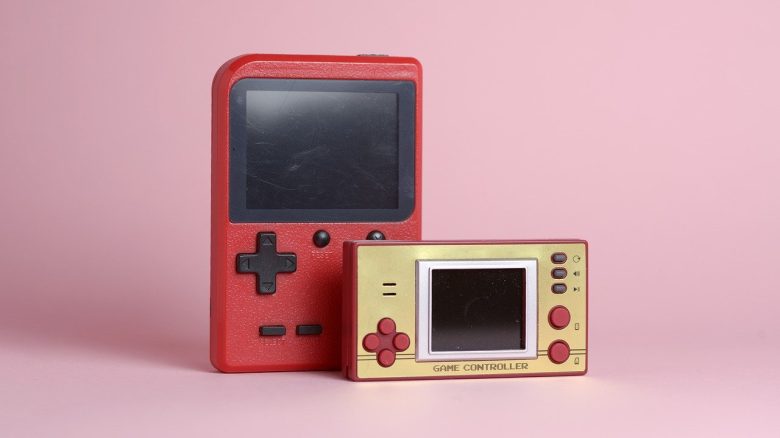
From this situation, Gunpei Yokoi got the idea for a portable mini-console in watch format. He wanted to develop something that would keep people playfully occupied while also serving as a pastime. The concept for the first mobile handheld Game & Watch from Nintendo originated from the combination of the terms “game” and “watch.”
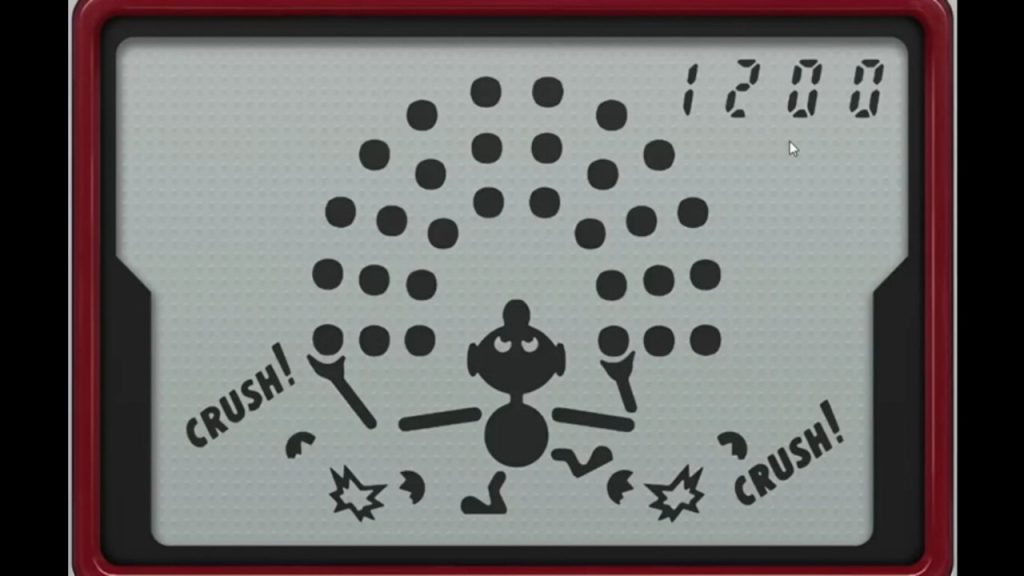
How long did it take for the idea to be realized? After the Nintendo engineer presented his concept, it took only a week for Nintendo to give the green light for further development. Already a year later, in April 1980, the Japanese manufacturer of video games and consoles finally released the very first Game & Watch console featuring the game “Ball.” A small character juggled three balls between his hands at six preset positions.
The origin of Nintendo’s philosophy – innovation stands above technological progress
What kind of technology was in the Game & Watch handhelds? The LCD screens used by Nintendo for production were hardly different from the models found in watches and calculators of the time. The technology behind them was also kept simple, positioned just above the technological level of a calculator from that era.
As the development budget was also tight, the developers had to distinguish the handheld from other competitors through its design and the games themselves to be successful. The first models featured simple buttons to press. A few years later, Yokoi developed the still-used patent of the D-Pad and incorporated it into subsequent models of the Game & Watch. The good ergonomics for that time was an advantage over devices from other manufacturers.
The “button cell” batteries used could be easily and cheaply replaced. All of this allowed for affordable sale prices, making it possible for people with lower budgets to afford the console.
What models were there? From the birth of the first “Game & Watch” until 1991, a total of 56 models were produced. These sold over 43 million times by the end of production (via Wikipedia). Since each system had only one game available, changing games required buying a new device. However, not only did the games change with each new release.
The design was also adjusted over the years. Sometimes the screen format changed, and with the multi-screen series, there were also versions with two displays side by side. This careful development, in connection with games that were simple yet could still be challenging, was crucial for the success of the Game & Watch.
Why was Nintendo more successful than other companies? With simple game mechanics and highly addictive gameplay, Nintendo outperformed the competition. Other companies like Mattel also produced comparable game consoles at that time. Despite a technological advantage, they failed due to poor design, awkwardness, and bad game design.



Then and now – simple gaming fun remains Nintendo’s most important ingredient
Has Nintendo been able to preserve the original concept over the years? Yes, even though the Game & Watch consoles came to an end in 1991, the initial idea of simple entertainment as a pastime from Gunpei Yokoi continues to live on in Nintendo’s subsequent devices.
Already before their discontinuation, the Game Boy was released in 1989. A Game & Watch of superlatives, if you will. The developments of the Game Boy, the Nintendo DS with its various versions, and currently the Switch console all show the inspiration that began with the first Game & Watch handheld in 1980.
And all this is thanks to a bored passenger on a train, with his calculator as a pastime.