

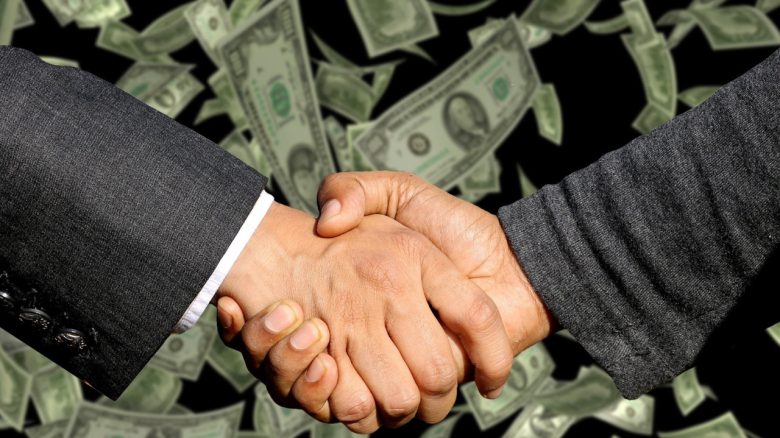
In the coming years, video games will become significantly more expensive. But this is good for all gamers, as it will become fairer.
The last few years have been tough for the video game industry. Now, major publishers in Europe and America have come together to end the crisis. A whole new pricing policy is meant to help assign games “appropriate” prices. The core idea: A game should cost about 1 Euro per hour of gameplay.
What is the problem? The price of video games has remained largely constant over the last few decades. On the Nintendo 64 console, major games cost between 100 and 120 DM – which is around 60 Euros. A price that is still considered a full-price title nearly a quarter-century later.
However, the production costs of games have risen. Better graphics, more details such as voice acting, extensive localization, and simply more necessary staff have caused costs to explode.
Inflation of an average of 2-3% (via Federal Statistical Office) per year can be seen in many other products, but not in video games. Here, the price has remained stable.
Therefore, many publishers have been waiting longer to finally raise prices. The release of GTA 6 was supposed to be the starting signal, but now many publishers have joined forces to develop a new pricing model themselves.
Many publishers fear GTA 6 – and at the same time hope for a price increase:
“1 for 1” is supposed to revolutionize prices for video games
What was decided? Most major American and also some European publishers (including EA, Ubisoft, Blizzard, and Microsoft) have come together and developed the new “1 for 1” system. The idea behind it: For every hour of foreseeable gameplay, the price of a game should be 1 Euro (or 1 US Dollar).
The coalition Worldwide Universal Media Pricing (“Worldwide uniform pricing of media”, short WUMP) already explained some of the key points in a press conference.
The spokesperson for WUMP, Ausgee Dakt, answered a few questions for MeinMMO, such as how this pricing was determined:
That’s a good question. We thought long and hard about what a fair price for entertainment is and compared our ideas with other common forms of entertainment and found that we offer a very fair model. For 40 Euros, you get a game that will entertain you for at least 10 evenings of 4 hours each. You would also pay 40 Euros for a cinema visit with a drink and popcorn, where you only have a maximum of 2-3 hours of enjoyment. Therefore, we consider our “1 for 1” model to be very fair and believe that it will be quickly embraced by players.
We at MeinMMO then wanted to know how it affects games that are delivered with different difficulty levels. To this, it was said:
Of course, we have included that in our pricing. In most cases, single-player games are released with different difficulty levels, and their development requires many resources. Our tests over the last few years have shown that most players first play a new game on an easy difficulty, master it, and then try a higher difficulty. So they start on “easy”, then play “normal” and finally “hard”. This has always been the case and hasn’t changed in recent years.
As a result, a game with three difficulty levels would cost the corresponding price. If a run takes 20 hours but the game is playable in 3 difficulty levels, then you would multiply the 20 hours by 3, resulting in a price of 60 Euros. In a game that only offers “Easy” and “Normal”, it would then be 40 Euros.
Of course, we are aware that this type of pricing can sometimes lead to problems. Because on a higher difficulty level like “hard”, a run of a game can take longer than on “easy”. In that case, however, we have committed ourselves to determining the price only based on the number of gameplay hours that correspond to a normal run and using that as a basis for higher difficulties.
That means: If a game takes only 30 hours on “Easy” and “Normal”, but on “Hard” it takes, for example, 80 hours, then the price would be 90 Euros (30+30+30) – and not 140 Euros (30+30+80).
A good regulation that primarily benefits players who enjoy challenges and saves money.

More difficulty levels should make games more accessible
It was also announced that games will be made much more accessible in order to appeal to even more player groups. Klara Vake (spokesperson from WUMP Europe) stated:
Video games should be a medium for everyone. Therefore, we see it as our duty to also offer content that is playable for all people. For this reason, all developers in our coalition have committed to offering at least nine difficulty levels in new releases on the video game market starting in 2026, following the categories “Story”, “Very Easy”, “Medium-Easy”, “Easy”, “Normal”, “Hard”, “Medium-Hard”, “Very Hard”, and “Pro”.
This not only provides new challenges for our core target audience but also lowers the entry barriers for everyone who has not yet found access to gaming.
This way, all interested players will find their preferred difficulty level and enjoy games that may have been too easy or too difficult for them otherwise. A good thing that brings gaming more to the center of society.

Much support from politics, potential for increased revenues
This rapid and comprehensive agreement has also been largely welcomed by politics. Particularly positive: Video games could eventually be exempt from value-added tax, which would further benefit the price. From the spokesperson of the Ministry of Economics, it was stated in a press release:
This swift and bold agreement within the entertainment industry is a unique occurrence that prevents potential rescues through subsidies and other government expenditures, thereby sparing future generations.
Many other industries should take a page from the game industry on how to operate profitably while not losing sight of the legitimate interests of consumers.
We also see the “1 for 1” regulation as a potential to reconsider the taxation of entertainment media, which are primarily a pure luxury and amusement good. Therefore, in the first weeks of the next legislative period, there will be a suggestion to exempt video games and other entertainment electronics with a long experience duration of 10 or more hours from the 19% value-added tax.
Instead, this long-play entertainment electronics would fall under the additional-value-added tax (MMwSt.) of 23.5%.
The future of video games looks bright. Not only will there be fairer prices for all games at last, but also more people will be able to dive into our beloved hobby in the future. A good thing, which we hope that indie developers will also take as an example in the future, who, with their often too low prices, are ruining the market for the large, really good games. One can hope for solidarity here.

Your opinion is important to us!
Do you like the article? Then let us know!