


Justin Kan is a co-founder of the popular streaming service Twitch. In 2007, he broadcast his life live on “Justin.tv”. Now, he has launched a website focused on the new technology NFT, known for attracting scammers. Indeed, they hacked the Discord of his site and scammed unsuspecting customers.
Who is Justin Kan?
- The 38-year-old is an American internet pioneer and entrepreneur who made a major breakthrough 14 years ago.
- In 2007, at the age of 23, Justin Kan launched a live video feed featuring a camera mounted on his head, streaming his life. This real-life “Truman Show” lasted about 8 months.
- From this idea, the video platform Justin.tv was created in 2007, named after him. From Justin.tv, the streaming platform Twitch emerged in 2011, which was purchased by Amazon in 2014 for $970 million. It is estimated that each of the 4 founders of Twitch earned around $120 million at that time. Kan’s fortune is currently estimated at $100 million (via celebritynetworth).

“Next Step in Gaming”
That was the idea of his new site: In December, Justin Kan launched the website “Fractal”, a marketplace for NFTs. In a blog post, he referred to it as the “Next Step in Gaming”, stating that NFTs could now generate “unimaginable value” for players and the ecosystem. (via medium)
Players would now truly own the value of their in-game items through NFTs.
Fractal was supposed to play an important role in this new world as a marketplace that would be an “open platform” for freely trading digital goods.
What Went Wrong? Scammers hacked Fractal’s Discord and left a message stating that they had 3,333 NFTs for sale.
As reported by a Twitch reporter, the scammers managed to sell almost all of these NFTs, 3,294.
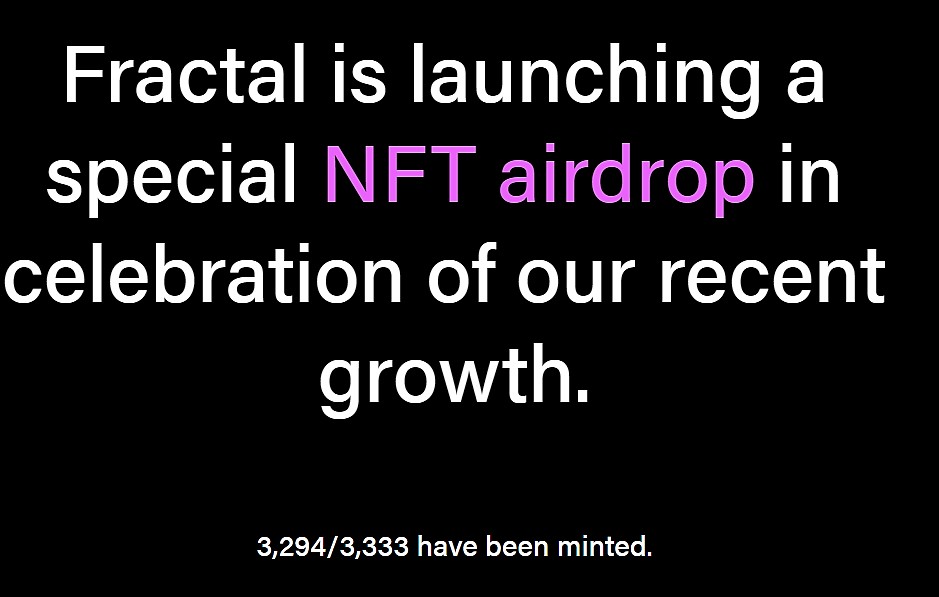
However, these NFTs did not exist; it was all a scam. The link the scammers posted did not lead to Fractal but to “Fractai”.
People incurred losses of $150,000, about €132,000. There are many angry messages from scammed buyers demanding their money back.
- One user stated: He lost all his money, which was exactly 1 Sol. That is now gone. He wants his Sol back – he is poor.
A Sol (SOL) is a cryptocurrency currently valued at €163.44.
Company Thanks Hackers for the PR – Compensates Customers
This is how the company reacts: In a message to buyers, it states that 373 community members were scammed, and the hackers stole 800 Sol worth about $150,000.
It is indeed impressive that out of 100,000 community members, only about 0.3% fell for the scam.
Fractal reported early that it wanted to rectify the situation and later stated that it had replaced every Sol lost. The company even goes further and thanks the hacker, saying that he made the community “stronger.”
Moreover, they appeared on the website “Techcrunch” twice – so everything is great. It’s like “When life gives you lemons, make lemonade.”
Twitch Founder Complains About Stupid Gaming Press
This is how Kan reacts to the criticism: The gaming press in the U.S. – like many players – critically observes the current trend toward NFTs. Especially the site Kotaku continually mocks NFTs. For them, it’s almost logical that NFT buyers get scammed. The authors of gaming sites are particularly critical of the environmental impact of NFTs and enjoy when an NFT model turns out to be a scam.
A post about the scam on his site, Kan bitterly comments: The reporters created nothing of value and now laugh at the victims of the hack. The press is a “bankrupt institution that interests no one anymore.” The gaming press is anyway irrelevant; people learn about new games through YouTube or Twitch.
Currently, some players are resisting “the future of gaming”, which Kan sees in NFTs:
Reactions to the new NFT microtransaction are so bad that Ubisoft hides the video.

Your opinion is important to us!
Do you like the article? Then let us know!