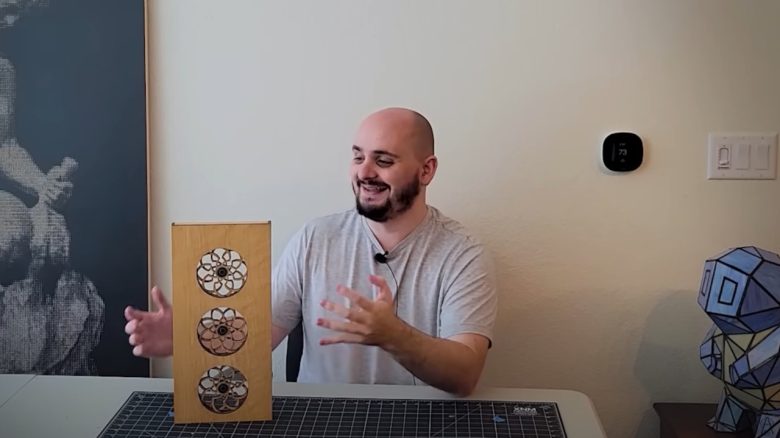
A tinkerer demonstrates in a YouTube video how he has crafted custom fronts for his gaming PC over months of meticulous work. The unique aspect is the moving elements that create stunning effects.
Finding a stylish PC case is not difficult. Manufacturers offer a huge selection of different variants to cater to every taste.
A tinkerer, however, is not satisfied with the case selection from manufacturers. Thanks to his passion for woodworking and 3D printing, he creates a custom case for his gaming PC. The designs are very artistic and visually appealing. The project becomes truly unique with the moving elements in the case front.
On his YouTube channel Ideal Idea, tinkerer Robert presents this current project, leaving many in the community with dropped jaws. He took inspiration from a case that was presented at CES 2022.
“I spent the last few months” – Complicated design with fantastic results
What does the video show? Tinkerer Robert has only uploaded a few videos on his YouTube channel Ideal Idea. But in each video, he demonstrates his craftsmanship with impressive achievements within the individual projects.
In the current video, he is working on building a custom PC case with a kinetic front. Initially, Robert has chosen 3 different designs. Each design is unique and varies in the difficulty of realization. Highlights are definitely the moving elements in the front, powered by mechanical parts and gears.
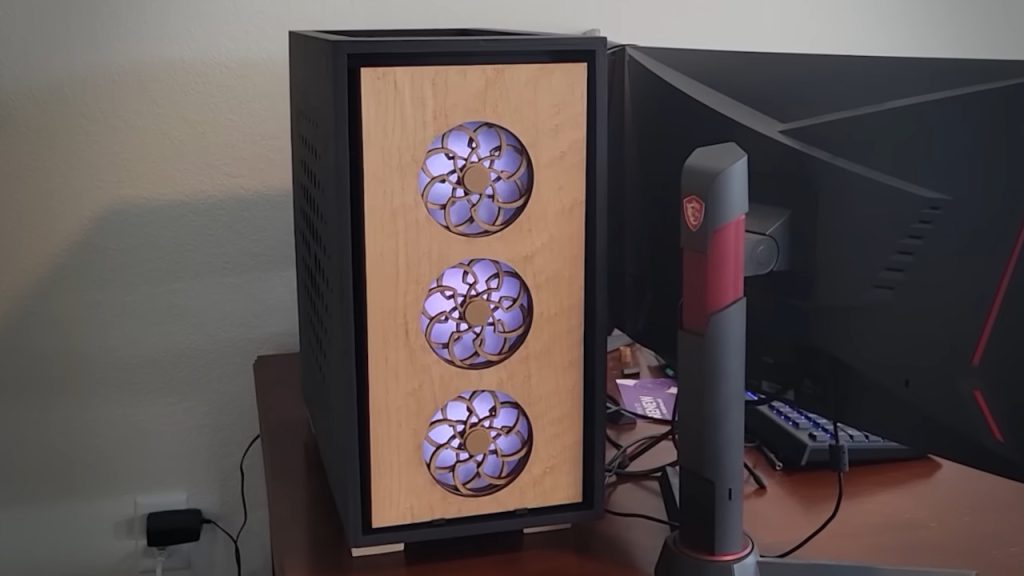
For the first concept, the tinkerer needs a manageable number of 14 moving elements for his idea. The result is 3 round cutouts, each with the same delicate pattern. The shape is most reminiscent of a moving kaleidoscope.
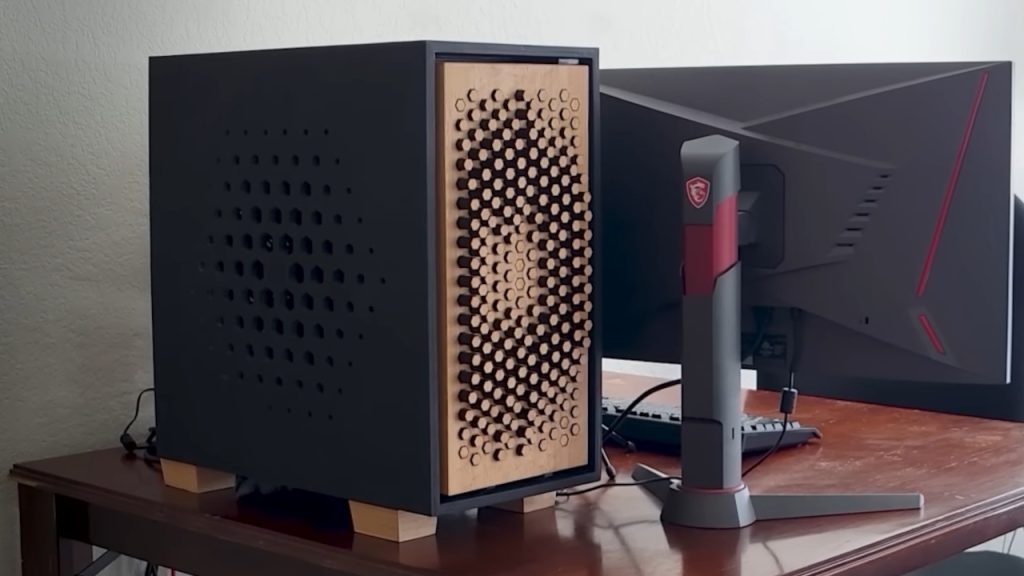
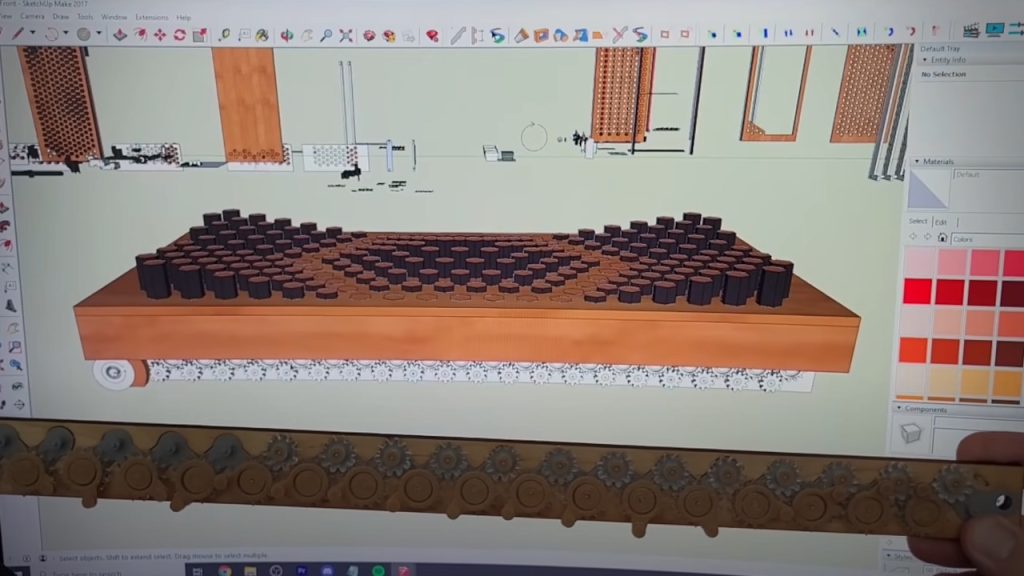
Excited by his own work, he skips the second concept and goes directly to work on concept number 3. Its design is much more complicated to produce. Many small hexagonal blocks move back and forth in a specific pattern. This creates a stunning wave or breath effect. To realize this idea, an incredible 885 elements and components were necessary, all of which are movable.
How did Robert approach this project? From the idea to the complete implementation, it took many months. Each individual component had to be custom-made, designed, and produced. He repeatedly faced difficulties that cost him a lot of time.
In the description of his video, he says: “I spent the last few months working out the mechanical parts for this custom PC build since I have no idea what I’m doing, but wanted to create a really complicated design.”
To give his creations a stable base, he initially builds a wooden PC case. The wooden case is simply placed over the existing case of his PC. This allows him to quickly swap his unique fronts with a few simple moves. Recently, another YouTuber also crafted a wooden PC case.
He has assembled the custom fronts with great care. Both variants used wood and plastic parts as materials. To also “breathe life” into the moving elements, he uses a palm-sized microcontroller called Arduino. After successful programming, he was able to control a small motor. The motor ultimately provided the movement within the elements.



What tools were used? Starting with initial concept drawings, the tinkerer relied on various tools to realize his idea. In the video, a 3D laser printer for cutting shapes out of wood and plastic, as well as a 3D printer for producing the necessary components, can be seen alongside his own craftsmanship.
In his explanations, he also occasionally shows the 3D designs created on the PC for the project. All visible elements are made of wood. Mechanical components like gears are predominantly made of plastic.
In the 28 minutes, Robert focuses primarily on clarifying the creation process. It is meant to serve more as personal inspiration and less as a guide. It almost feels like a documentary.
Both end results are truly impressive and clearly demonstrate the attention to detail and care with which the tinkerer has approached this.