

In Germany, it is difficult to officially consider eSports as a real sports discipline. What needs to change here for electronic sports to become “real sports” is explained by expert Timo Schöber – head of the think tank Esportionary.
The competitive playing of video games, known as eSports, is on the rise worldwide. In over thirty countries, eSports is already an official sport, with all that entails: visa facilitation, sports promotion, research, grassroots sports landscapes, and societal recognition.
South Korea, China, and the USA as strongholds of global eSports have been pushing progress for decades. In these countries, there are stadiums, hotels, amusement parks, TV channels, performance centers, and sometimes entire districts – solely for eSports. However, one does not have to look far from Germany to find positive developments. France, Russia, Sweden, Denmark, Finland, Italy, and many other nations openly define competitive sports through video games as sports.
In Germany, there are difficulties in many areas. While the political and societal acceptance of eSports is clearly growing here, little has changed in the actual status of eSports regarding recognition as a sport.
The Development of eSports in Germany
While mainstream media currently refer to the “new phenomenon of eSports”, this phenomenon is not as new in Germany as many think. eSports teams, known as clans, were founded in Germany as early as the mid-1990s. Notably, OCRANA (1996), SK Gaming (then Schröt Kommando, 1997), and pro-Gaming (1998) have elevated the German eSports landscape to a very structured and professional level – and SK Gaming remains one of the international top clans to this day.
With the establishment of the Electronic Sports League (ESL, 2000), the organization was founded in Germany that is now the world’s largest and most important competitive organizer. The ESL created structures that were previously known in Europe only from the Dutch ClanBase (1998). The competition between tournament and league operators of that time is legendary.
Due to various innovations, comprehensive monetization, and continuous improvement of its own offerings, ESL ultimately prevailed. It first became the most important provider of tournaments and leagues in Europe, and later worldwide – and remains so to this day.
These few examples make two things clear:
- On one hand, German eSports is much older than is often assumed.
- On the other hand, eSports from Germany is of immense importance for the global market, especially because market participants are established here, which are among the most important and best in the entire eSports.
The status quo regarding recognition and promotion as a sport is less encouraging.
The Problem with Sporting Recognition in Germany
In other countries, recognition as a sport can occur relatively easily from a political side. Here, there exist sports ministries that control the official recognition as a sport from a political side.
For the founding of the Korean eSports Association (KeSPA, 2000), the initiators directly involved the country’s sports ministry and thus eliminated hurdles early on. In South Korea, eSports has been recognized as sport for decades, is socially accepted, and is largely positively evaluated by the public. There, eSports players have the same status as football professionals have here.
What could be so simple is much more complicated in Germany. The authority over what is sport and what is not, solely lies with the German Olympic Sports Confederation (DOSB). This is unique in this form worldwide.
Democratic processes, politics, and societal engagement cannot thus decide what is considered as sport. Only one sports association has the decision-making power over what “real sports” is and what is not.
Why the German Olympic Sports Confederation Rejects eSports
The stance of the DOSB towards eSports is critical to negative. The association regularly communicates its negative stance on the issue. Furthermore, it attempts to act against eSports with commissioned reports. Due to physical aspects, eSports is not considered sport. Additionally, it rejects video games with violent content. These theses and the arguments against eSports put forward by the DOSB have been scientifically and otherwise disproven multiple times.
Various studies on eSports make it clear that it should indeed be regarded as sport concerning physical aspects. These are not commissioned reports whose results always favor the commissioning party (see DOSB), but rather robust research from independent entities. The renowned German Sport University in Cologne, particularly Prof.
Dr. Ingo Froböse and his team make it clear from a scientific perspective that competitive sports through video games is nothing other than a relatively new sport. eSports players execute up to 400 actions per minute on keyboard, mouse, or controller. Heart rate and cortisol levels (stress hormone) are comparable to those of a Formula 1 driver. Team play, communication, and interpersonal dynamics do not lag behind classic team sports – on the contrary, eSports is often much more intense in this regard.
What “glorification of violence” is supposed to mean from the DOSB’s perspective remains nebulous. Games like Counter-Strike (CS) can certainly not be meant. Anyone who has dealt more deeply with CS knows that the game primarily revolves around strategic and tactical aspects, team play, and communication. Even shooting opponents has nothing to do with glorifying violence. The representation of violence is something entirely different from glorifying it. Moreover, violence in CS is not an essential game content in terms of eSports.
The latest attempt of the DOSB to act against eSports as a whole is the newly created term “eGaming”. A term that no one outside Germany knows. The association refers to all sports simulations as “eSports”, while everything else, such as shooters like Counter-Strike and strategy games like League of Legends (LoL), are considered “eGaming”. Through the term “eGaming”, the DOSB tries to exclude all video games that do not depict sport in the real-world sense from eSports. On one hand, this attempts to divide the eSports community, while on the other hand, it aims to give more expression to its arguments against certain genres (shooters, strategy games, etc.).
Nothing could better illustrate that the DOSB has not understood why eSports is a sport. It is not about what is depicted on the screen, but about what happens in front of the screen: mental and fine motor peak performance, multitasking, quick decisions, and much more.
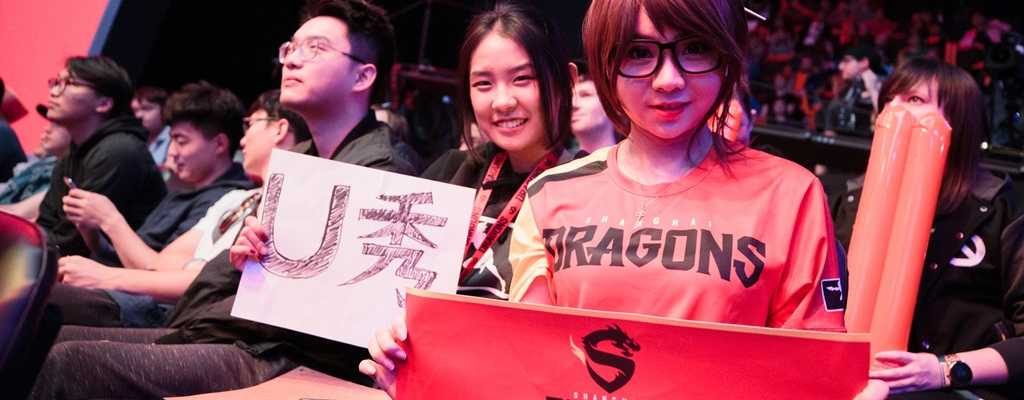
Meanwhile, the DOSB is increasingly trying to push eSports into the sidelines with commissioned reports. Commissioned reports that are often scientifically untenable and poorly implemented. A recently published legal opinion showcases this very impressively. Here, the attempt is made to classify eSports as not a sport due to certain characteristics.
For a press release from the Berlin Institute for Ludology (game research), I once formulated it this way:
“The DOSB rejects eSports but now tries to establish this with crude restrictions on certain definitions of the sports concept legally. In my view, this primarily shows that the DOSB sees its credibility fading away.”
To understand why eSports is clearly considered sport even in scientific terms, one should look at what actually defines a sport.

The Concept of Sport Under Scrutiny
What is and what is not sport cannot be sharply delineated. Nevertheless, there are many indicators by which one can determine whether something should be defined as sport.
In discussions about whether eSports should be considered sport or not, the counterargument is likely to arise that sports are only those activities where one moves physically a lot.
Even in this sense, eSports would meet the requirements for a sport (let’s remember: fine motor skills, 400 actions per minute). Furthermore, in this argumentation, a look at the member structure of the DOSB is extremely enlightening. It includes sports like darts, billiards, and shooting. The overused chess will not be further discussed here.
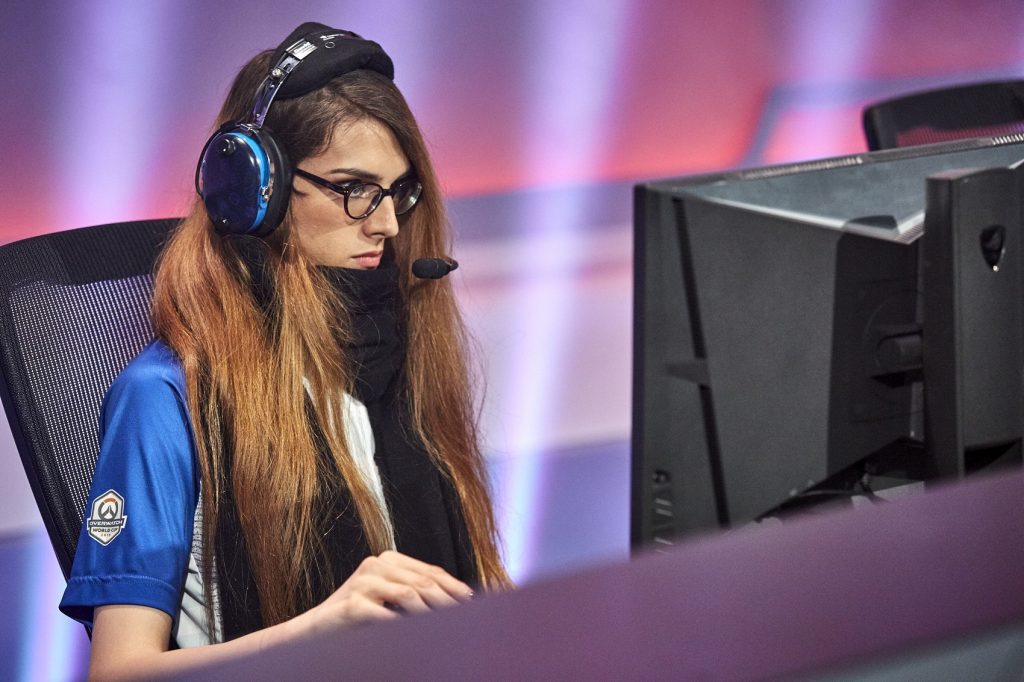
More important in looking at the definition of sport, however, is that an examination of the definition with blinders on is not very meaningful. Sport is defined by more than just movement. There are also: clear rules and game objectives, communication and teamwork, fair play, comprehensive structures and organization, competition orientation, training plans, opponent analyses, playing and the meta, preparation for opponents and competitions, planning of a regulated daily routine (nutrition, alternative sports), ambivalence and suspense, symbolic actions, relevance to the present, freedom and voluntary participation, non-essentiality, repeatability and infinity as well as purposelessness and meaning creation.
It is about self-efficacy, self-confidence, and identity formation as well as aesthetics. eSports fulfills all these definitional criteria – although only a part of these should be fulfilled for something to be considered a sport. The one-dimensional view of sport reduced only to physical movement is neither modern nor sustainable.
It’s important regarding eSports: it is not about gaming. Gaming describes playing for leisure out of joy. However, eSports is about competition, performance, and participation in tournaments and leagues.
While the DOSB remains entrenched in reactionary thinking and represents a minority opinion with the differentiation between “eSports” and “eGaming”, political steps are already being taken to promote eSports – or not?
e-Sports and German Politics
The jubilation in the e-Sports scene was great when the coalition of CDU, CSU, and SPD at the federal level presented the current coalition agreement in 2018. They wanted to recognize eSports as a sport – with an Olympic perspective. This was not the first step in this direction, nor was it the first time that this ambitious goal has been diluted by politics. In the meantime, the government has moved very far away from the once made, grand promises.
Unfortunately, this is also the case in Schleswig-Holstein. While Daniel Günther (CDU) had shown up at the world-famous Wacken Open Air recently in an e-Sports T-shirt, he reversed course at this year’s meeting of the Schleswig-Holstein State Sports Federation. It is stated on the website of the federation:
“His view on the topic has changed after numerous informative and enlightening discussions. The shared perspective of the state government is that they share the view of the Schleswig-Holstein State Sports Federation and the German Olympic Sports Confederation that eSports can only be what derives from real existing sports and is transferred into the virtual world. This could, if handled wisely, also scientifically build, in his opinion, a value for sports. The prime minister also reaffirmed that definitely what he would call eGaming does not belong to that.”
This is the worst form of a broken promise that eSports players in the land between the seas could have imagined. Originally, a comprehensive promotion of eSports was announced in Schleswig-Holstein. Important projects had been planned, especially an e-Sports academy at the University of Applied Sciences West Coast. Here, study programs, research, and events could have taken place, especially since research on this topic has been successful at the FH anyway.
While the CDU at the state level seems to have turned 180 degrees under pressure from traditional sports associations, it is not the case that the entire state government has collapsed, as Mr. Günther implied. Especially the FDP continues to push the topic, so that meaningful and already comprehensively planned projects like the e-Sports Academy can continue to hope for funding. A higher education institution like this would be an absolute flagship project.
Furthermore, traditional sports clubs, e-Sports clubs, and a planned state center have access to funding of 500,000 euros. So at least some progress is being made in the north.
The funding comes, however, from economic rather than from sports funding. This may be a sensible one-time measure – it is attributed to the commitment of many volunteers, clubs, and politicians – but it should not be a permanent solution. e-Sports should be funded as what it is: sport.
If many levers are already set to “green”, the definition of sports and science sees eSports as sports, why can’t a big breakthrough be achieved?

eSport Association Germany (ESBD)
The ESBD was founded in 2017 in Frankfurt (Main). It sees itself as the umbrella organization of German eSports. Around 30 members are organized in it in the form of clubs and other organizations.
That the claim “umbrella organization” is not sustainable is already evident from the membership structure: German top clans like SK Gaming, mousesports, or PENTA are not members of the ESBD. The association explains this with the international orientation of those clans. On one hand, this is like the German Football Association (DFB) standing without FC Bayern Munich, for whom winning the Champions League is their most important goal every year.
On the other hand, one wonders why Berlin International Gaming (BIG), which also has an international orientation (as the name suggests), is organized in the ESBD. The main team in Counter-Strike: GO, which is BIG’s main horse, hardly participates in national competitions. At the same time, mousesports, which is not a member of the ESBD, produces German champions in StarCraft II.
However, the actual problem regarding the ESBD is its external impact. They want to negotiate on “equal footing” with the DOSB. The DOSB represents 2500 times more organizations than the ESBD, while the DOSB is 60 times older. Given the size of the DOSB and the insignificance of the ESBD, speaking on “equal footing” seems presumptuous even to many eSports players. Especially and primarily because the ESBD itself is highly controversial even within the eSports scene. Many even reject the association outright.

Despite everything, an association must be measured by its success. Core goals of the ESBD are the achievement of recognition of eSports as sports and the promotion of eSports in the sense of a sport. None of these goals have been achieved by the association after two years of work.
While the ESBD president recently tweeted that they have “achieved an incredible amount for eSports as an association”, large parts of the German eSports scene have raised their eyebrows: What specifically is that supposed to be?
The latest initiative of the association aims at promoting eSports in other ways. Various possibilities are being discussed within the framework of the tax regulations, such as treating games as cultural assets or promoting them through youth work.
Stand Firm: Do Not Sell the Soul of Sports
This approach by the ESBD and others creates considerable confusion in the external perception. Critics argue that it is not the recognition of eSports as a sport per se that matters to eSports, but just to somehow obtain funding.
Perhaps the detour over other possibilities has a practical benefit in the short term because projects can be initiated. But at what cost? For societal perception and the years-long struggle for eSports to be recognized as a sport, the approach of the ESBD and a few other individuals and organizations is devastating.
eSports is sports. This is clear from a sports and gaming scientific perspective. The recognition of eSports as a sport would result in funding, but this funding should never become an end in itself.
What needs to be done?
The Crucial Factors to Help eSports Achieve Recognition
While the ESBD as an association has left much burned earth both within and outside the eSports scene, there exists in Germany an association that could serve as a strong negotiating partner with the DOSB and parts of the politics: the game – Association of the German Games Industry (game). The game primarily advocates for the interests of game developers and manufacturers as well as the video game industry in general, but also has a section dedicated to eSports.
The game association has an excellent reputation and possesses extensive expertise, so in my opinion, a complete separation of game from the ESBD regarding eSports would be desirable. This would make the entire debate with the DOSB more objective – and a game could negotiate on “equal footing” with a DOSB much more easily than an ESBD.
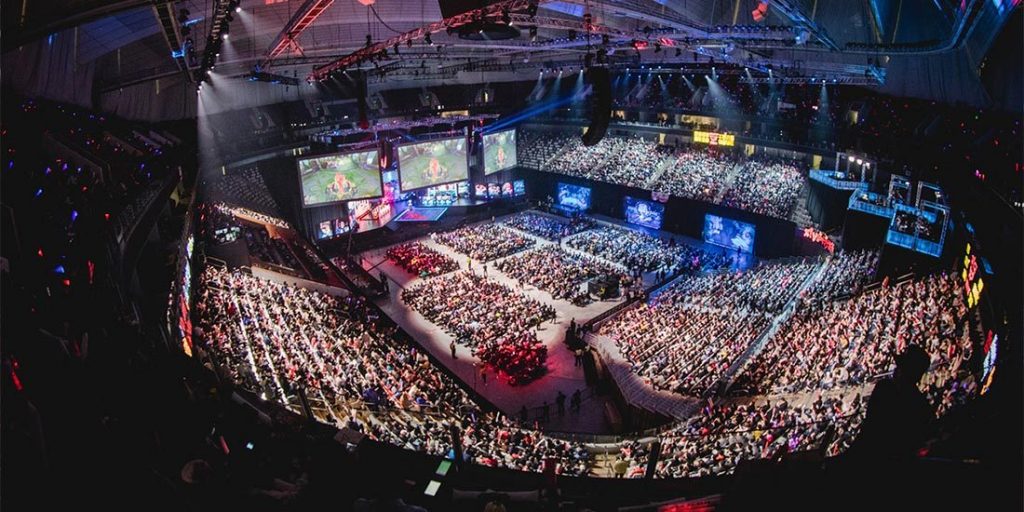
At the grassroots level, municipal, regional, or state-wide grassroots sports clubs are already doing excellent work today. These need to be monetized in terms of non-profit and volunteer work, allowing them to fight for eSports independently. The work of such grassroots sports clubs encompasses many tasks: education and advice, political communication, addiction prevention, organizing events, conveying media competencies, collaborating with educational institutions and parents, and much more. Especially regarding societal perception, grassroots sports clubs build many bridges and thus achieve acceptance and create synergy effects with other organizations, such as traditional sports clubs – youth recruitment.
But also, outside of the amateur sector and volunteer work, efforts must be consolidated. ESL is a globally recognized and strong brand whose weight must be considered. Similarly, German top clans play an important role in recognizing eSports as sports, as they push many aspects of the sports definition “to the extreme”. In doing so, they show outsiders what eSports is “at its best”.
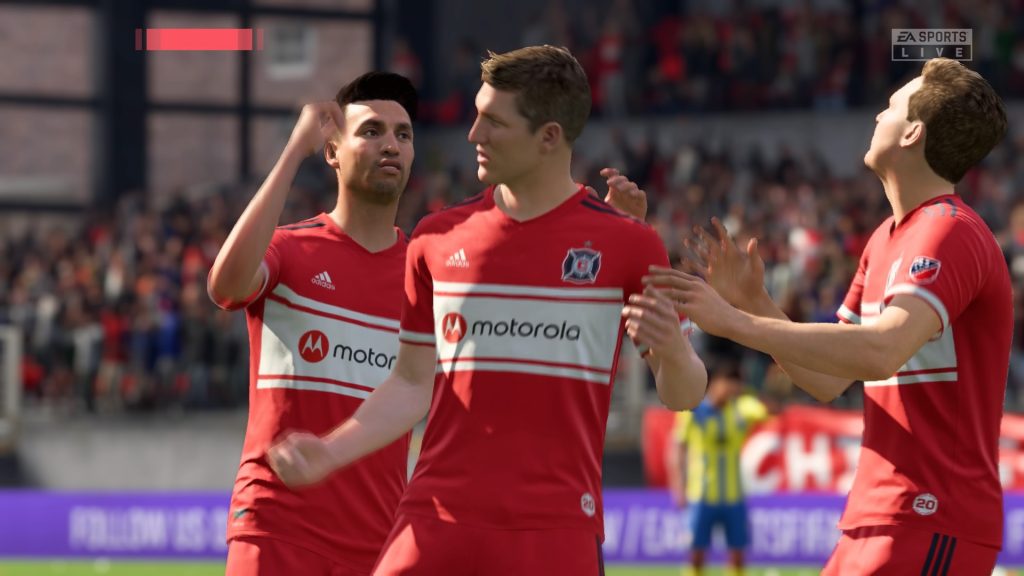
Why eSports Will Be Officially Recognized as “Real Sports” in the Future
That eSports will also become an official sport in Germany is no longer a question of “if”, but rather of “when”. The stronger the forces of credible and established eSports organizations and supporters can be united, the faster the recognition of eSports will follow. It is clear that due to its many properties that match the definition of sports, eSports can only be a “real sport”.
The demographic change and the massive junior problems of many sports will also increase pressure on traditional sports to incorporate new concepts and sports into their own structures. We are already witnessing this, as not only large professional clubs from the Bundesliga but also many local sports clubs are creating their own eSports facilities and structures.

In addition, research on eSports will intensify. The research field is relatively young and offers a lot of potential. Through the objective evaluation of many discussion topics that comes with science, more arguments for eSports will likely be revealed.
If eSports moves forward credibly together, recognition will soon follow. For this, one should first completely separate from the ESBD and implement associative competencies fully in the game association. Furthermore, grassroots and professional sports, research and science, and those parts of politics that see eSports as sports should work closely with the game association to place the issue with various forces at the DOSB.
I am looking forward to the future. Especially the engagement of many dedicated volunteers will ultimately ensure that eSports will finally be recognized for what it is: real sports.
What do you think about the issue of eSports and its official recognition?

Your opinion is important to us!
Do you like the article? Then let us know!