


One of the complex systems in Monster Hunter Wilds is the combat system. In addition to elements and the status system, you need to know how to attack monsters to obtain certain resources. In our guide, we will inform you and show you everything important about fighting in the wilderness.
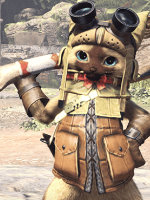
What should I know about fighting? In Monster Hunter Wilds, you must prove your skills as a hunter in combat against various monsters.
It is especially important to know how such a fight unfolds and what to pay attention to. To ensure you are up to date as a newbie or returning after a long break, we provide you with a brief crash course on the 101 of battles in Monster Hunter. We will cover the following topics:
- Types of damage explained: Everything about the elements
- Status system: Effects against hunters and monsters
- Fights against monsters: What is important?
- Severing and breaking: What is it and why do I need to be able to do it?
We impart the basic knowledge for the general hunt. Please note that every monster is a case unto itself. We do not offer a solution for all monsters, but you will gain a better understanding of what to pay attention to during combat in general.
Types of damage explained: Everything about the elements
What are elements? In Monster Hunter, there are 5 basic types of damage that hunters and monsters can deal – the 5 elements:
- Fire
- Water
- Thunder
- Ice
- Dragon
While hunters can switch elements at will depending on the equipped weapon model (not weapon class), monsters are bound to theirs from birth.
As a hunter, you should therefore pay attention to elements in combat, as every monster has at least one weakness against one of the mentioned elements. If you exploit this weakness, your attacks will be more effective.
Depending on the hunted monster, you should also wear armor that increases your resistances to the opposing element. This makes you more resilient and increases your chances of survival in battle.
Status system: Effects against hunters and monsters
What are status effects? In Monster Hunter, there are also status effects besides the elements that can afflict your hunter or the hunted monster. Depending on their application, they can be very practical in combat and provide you with advantages or even hinder you on the hunt. As mentioned, we need to distinguish here between hunter and monster effects:
Status effects against hunters at a glance
Can elements also harm me? Yes, they can in the form of negative element effects. Depending on the element suffered, you will receive a status effect that can harm or hinder you in a particular way. The following are known:
| Designation | Effect |
|---|---|
| Fireblight | Slowly drains your life and blocks regeneration. |
| Waterblight | Reduces your stamina regeneration. |
| Thunderblight | Can paralyze you and make you vulnerable. |
| Iceblight | Increases stamina consumption. |
| Dragonblight | Reduces the affinity of your weapon. |
| Explosionblight | Explosion causes you to detonate. |
| Berserk Infection | Takes more damage and loses natural health regeneration. |
| Bleeding | Takes damage with each movement. |
| Webbed | Makes you unable to move. |
| Heat | Hot places drain your health. |
| Cold | In cold places, your stamina decreases faster. |
| Poisons | Slowly drains your life. |
| Sleep | Causes you to fall asleep and makes you vulnerable for a few seconds. |
It is important to either dodge the monsters’ attacks well or to have items with you to heal the respective blight or disease. Only hunters can be affected by such effects.
Note the following: Often, even one attack from the monster is enough to trigger the respective status effect. So be very careful in combat and try to avoid or block attacks.
Status effects against monsters at a glance
What status effects are there against monsters? Monsters are also not spared from status effects. Depending on the equipped weapon model, you can inflict effects on your enemies that can make the fight easier for you. You should know these:
| Symbol | Designation | Effect |
|---|---|---|
 | Poisons | Poisons slowly drain a monster’s health for a short time. |
 | Sleep | The monster briefly falls asleep. The first attack wakes it up but deals more damage. |
 | Paralysis | The monster is paralyzed and cannot move for a short time. |
 | Explosionblight | Explosion accumulates with attacks. Once a threshold is reached, a detonation occurs. |
 | Fatigue | If blunt damage reaches a certain threshold, the monster loses a part of its stamina. |
 | Stun | Many attacks to the head with a blunt weapon can stun the monster and make it vulnerable. |
The effects are very practical and can also change the course of a fight; unfortunately, they are not activated instantly like with monsters after only one attack.
To debuff the monsters, you need to hit them multiple times until the unseen status bar is filled. It is not about the force of the blows but their frequency. Fast weapons like dual blades are excellent for status builds. Weapons like the hammer are less suitable for this.
Fights against monsters: What is important?
In combat, it is primarily about analyzing the attacks of your opponent and knowing what you are dealing with. The following factors play a role:
- What elements does the monster fight with?
- Is the monster slow or fast, and can it fly?
- Can the terrain hinder or even support me?
Depending on the monster, your priority should then be to slow it down or even wound it so much that it cannot flee. The second advantage is that it will be easier for you to land your hits when the monster is not wildly dancing through nature.

In combat, it is important to have the right equipment, such as weapons that deal the element to which your hunted monster is weak. Additionally, you should wear armor that provides good protection against the opposing element. You can find such information in the monster lexicon.
In critical situations, you can also be creative. You do not fight alone, as other monsters can intervene in the battle and injure your hunted monster. Bushes and treetops can also enhance your control over the battlefield and contribute to slowing down your opponent.
But that is not all. The goal of every hunter is to slay or capture the monster in such a way that you receive the materials needed for future items. It is important to know what “severing” and “breaking” means.
Severing and breaking: What is it and why do I need to know how to do it?
There are two ways you can significantly injure your opponent, and they boil down to the following:
- Breaking limbs and body parts
- Severing limbs
You can break body parts by hammering with blunt force on armor and other parts. Breaking causes the monsters to become severely and permanently injured – thus, they may perform some of their attacks weaker or not at all, benefiting you in combat.
Some monsters have tails or wings in addition to their armor that you can sever. Use blade weapons for this. Lacerations will sever the attacked body parts. Ideally, you will limit the movement of your monsters.

Finally, the greatest advantage of the severing or breaking mechanic is that you can increase the number of captured materials. It is advantageous to attack sensitive body regions of your monster in order to slay it quickly, efficiently, and with the highest profit.
To this end, you can also use the new focus attacks that have been introduced with Monster Hunter Wilds – they deal so much damage to wounds that they are destroyed. You can find more about Monster Hunter Wilds here: 7 things you should not forget in Monster Hunter Wilds

Your opinion is important to us!
Do you like the article? Then let us know!