

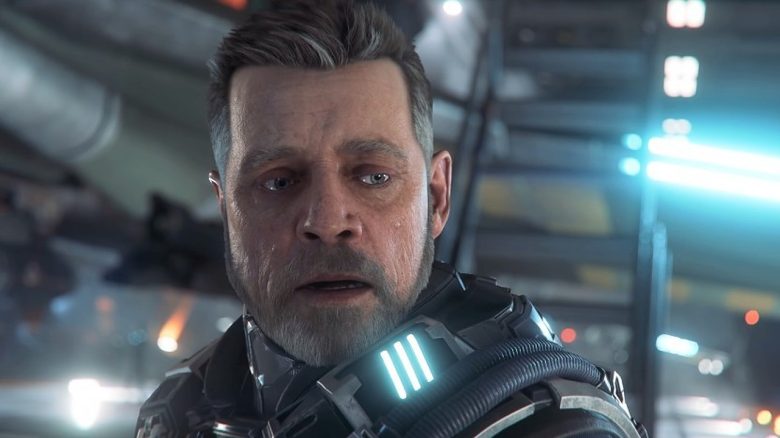
In recent days, it has become known that a noticeably high number of employees have left the mammoth project Star Citizen, which has now raised $667 million through crowdfunding and the sale of virtual ships. Especially the locations in the USA are losing employees. Fans are discussing the situation.

This has caught the fans’ attention:
- In recent weeks, farewell messages have been increasing on platforms like LinkedIn, indicating that important and senior employees have left the company CIG, which is working on Star Citizen.
- This does not seem to have always happened amicably. It has been said that some had to quit their jobs because they were not willing to relocate from North America to Manchester in England.
- The situation has the feeling of an intelligence investigation, as fans suspect that there are discussions not held openly. Due to the special situation of Star Citizen, the company seems to be keen on avoiding negative headlines, as are currently circulating in the gaming industry, where gaming studios are massively cutting jobs left and right – as happened with Riot Games, Epic Games or Activision Blizzard/Microsoft.
Talk is of a restructuring
What are those who left saying? The lead designer Dane Kubicka states that he was let go due to a “restructuring” (via linkedin).
A producer at Turbulent, Annie Boufard, says she submitted her resignation at a “highly toxic company” without having a new job lined up. CIG had acquired Turbulent in the summer of 2023 (via linkedin).
Lead producer Jack Ross speaks highly of his 10 years at CIG and how challenging his work was. He does not comment on his reasons for leaving (via linkedin).
Many other employees do not comment on their resignations, but it is known that they no longer work for CIG because their status has changed from “employee” to “backer.”
After years of growth – now a drought phase?
What is suspected to be the cause? The site MassivelyOP explains that the signs at CIG have indicated growth over the past years, having established a large headquarters in Manchester and acquired companies like Turbulent.
But now it looks as if CIG is also shrinking in light of the difficulties in the gaming market. This could also be due to developers refusing to relocate to Manchester, where CIG can spend less money on taxes and salary.
The people who have now left had largely worked at locations in North America.



This makes the situation spicy: Star Citizen is, through its crowdfunding, a game that is under discussion like no other.
Negative news, like layoffs, could directly affect players’ willingness to support the developers by purchasing new ships. Therefore, CIG is keen on maintaining a good public image.
In September 2023, there was already a discussion about layoffs at CIG. At that time, the developers claimed that there were no layoffs, only 9 positions were relocated.
In 2023, however, they grew from 900 to 1000 employees.
This is the discussion now: In a Reddit forum that is skeptical of Star Citizen, the current layoffs are linked to the difficult situation of the gaming industry as a whole. It is not surprising that CIG also needs to save money now.
A user, citing a good information network, states: He believes that about 100 positions are affected, mostly in LA and Texas, maybe some in Montreal as well. However, there is little discussion about it because many have signed a non-disclosure agreement.
They want to wait a few months until the next financial report clarifies the situation at CIG, but believe that there are significant changes happening behind the scenes of Star Citizen.
More about Star Citizen: Star Citizen finally shows something that looks like a real game: “The wait was worth it”
Statement from CIG: “A few positions cut”
Update 29.2, 8:24 AM. This is what CIG says: In a statement from CIG to the US site mmorpg.com it is now stated:
“As part of our normal processes, we regularly look for opportunities to streamline our workflows, which can also include restructurings to bring a position closer to the team it belongs to. Now that we are back in the office and can see the progress and quality of work when our teams work together in person, we have decided to conduct as much development as possible collaboratively, which has led to some smaller personnel changes as we have moved some development roles closer to their core teams. As a result of this consolidation, a few positions have been cut, and we continue to look for new employees for key positions within the company.”

Your opinion is important to us!
Do you like the article? Then let us know!