

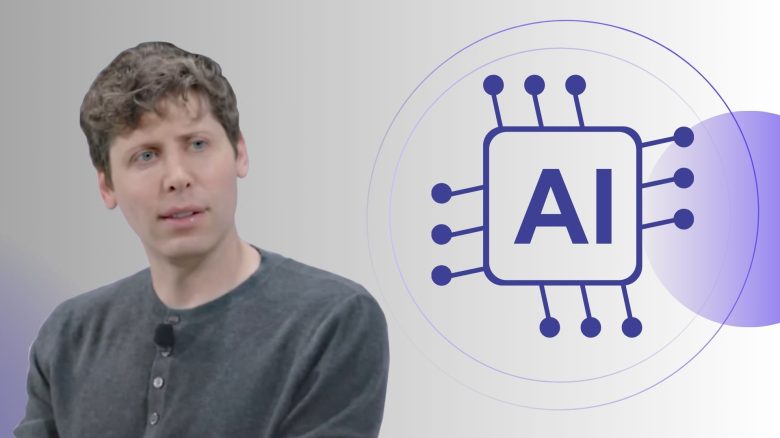
Sam Altman, the CEO of OpenAI (the company behind ChatGPT), recently issued an alarming warning: The rapid advances in artificial intelligence could fundamentally threaten our society without new rules.
That’s why Altman considers AI a threat: The US President Donald Trump announced an investment of 500 billion dollars in AI infrastructure. At the same time, the founding of Stargate, a new company from a collaboration between OpenAI, SoftBank, and Oracle, was presented as a significant driving force in the sector. Following these announcements, Sam Altman, CEO of OpenAI, stated that the progress of AI could pose a threat to society without future regulations.
In a video at the forum “AI For Good”, Altman spoke about the necessity to reshape the “social contract” to regulate the impact of AI on the job market, power dynamics, and social structures. A social contract describes rules and norms that organize coexistence in a society and aim to make it fair for all.
This is the problem behind the advances: Sam Altman’s statement has caused a stir because it questions the fundamental structures of our society and economy. His warning has been echoed not only by him but also by many other experts and users who see the control over this technology as problematic.
People like Anthony Zenkus, a professor of social work and TEDx speaker, expressed their concerns on X (formerly Twitter) that a small group of billionaires could take control of powerful technologies without involving the wider population in the decision-making processes.
The head of ChatGPT emphasized that the social contract should not be determined by an elite but should be based on a determination by the entire society.
The Impact of Artificial Intelligence
The development of artificial intelligence brings us many opportunities, but also significant challenges. Sam Altman believes, according to his blog, that AI will massively increase our productivity. This would enable people to focus on more creative and demanding tasks.
However, while many recognize the potential of AI, there are also concerns. Critics warn that this technology could exacerbate existing inequalities (via righttowarn.ai). It could also lead to increased control and surveillance, destabilizing the social fabric, especially through changes in the job market. The challenge is to shape this technology so that it is used in line with the needs of society.


An important question that arises is how AI and automation can be integrated into the labor market without further destabilizing social structures. In this context, initial trends are already emerging: Many employers prefer to hire an AI or a robot instead of Gen Z university graduates.

Your opinion is important to us!
Do you like the article? Then let us know!