
The genre of MMORPGs has fascinated and excited millions of players for decades. In a multi-part report, MeinMMO editor Karsten Scholz illuminates the roots, development, and future of online role-playing games. Part 5 focuses on the great drought period determined by Asian ports and crowdfunding projects.
With the releases of The Elder Scrolls Online, Wildstar, and ArcheAge in 2014, the heyday of online role-playing games came to an end – you can find more about that in the fourth part of our report on the MMORPG genre.
What followed was a drought period lasting more than six years, during which no ambitious project from a Western publisher or developer saw the light of day. The reasons for this will be discussed below. We will also take a look at the most important MMORPGs that were released between 2015 and 2020.
Part 1: The pioneers of online role-playing games
Part 2: The first 3D MMORPGs
Part 3: The exceptional success of WoW and its reasons
Part 4: Heyday of MMORPGs and the failure of WoW killers
Part 5: The great drought and the flight to other genres
Part 6: The status quo of the MMORPG genre and the future
The view of a battlefield of ruins
Even though the heyday of MMORPGs was rich in new releases, there was still a lack of new representatives of the genre who could live up to the high expectations and step out of the large shadow of World of Warcraft.
Instead, more and more games made themselves comfortable in the MMO graveyard. Warhammer Online in 2013, for example, Matrix Online and Garriott’s Tabula Rasa in 2009, Chronicles of Spellborn 2010, Star Wars Galaxies 2011, Vanguard – Saga of Heroes 2014, and so on and so forth.
If the creator of Ultima develops a new MMORPG, expectations are high. Tabula Rasa, however, failed while Richard Garriott visited space.
Other projects didn’t even get off the ground. The Blizzard MMORPG Titan for example (the cancellation of development was announced in September 2014), Stargate Worlds (2010), or World of Darkness (2014).
And those that made it often had to lower their goals, switch payment models, and rely on the fact that the investments made would at least pay off over the years. This fate could not be simply avoided even with big names like Star Wars and Lord of the Rings.
Fear of the next failure
Many developers and publishers had to learn the following lessons from the attempt to emulate WoW:
- The development of an MMORPG that wants to compete with market leaders takes many years even with a large team, and is therefore costly – we are talking about AAA blockbuster levels.
- During the long development time, the market can change drastically in terms of technologies, platforms, trends, and the competitive environment.
- The chances are high that the launch will be a shitshow, with server problems, long queues, bugs, and frustrated players.
- From day one, you compete with all established MMORPGs (and other service games) that offer significantly more content and polish.
- It is difficult to lure players away from their current MMORPG. They feel comfortable there, know their way around, and have social bonds. All of this is not left behind lightly.
- The more problems there are at launch, the harder it is to provide a steady stream of new content that satisfies the hardcore players at least somewhat.
- Those who really want to establish themselves among the big players will likely have to invest a lot of effort even after the launch to eliminate potential problem areas – see Final Fantasy XIV and The Elder Scrolls Online.
In short: The development of an ambitious MMORPG is enormously time-consuming, expensive, and risky. Under these circumstances, the initially perfect blueprint of World of Warcraft didn’t seem as sexy as it did in the first years of its rocket-like success.
An industry in transition
Alongside the heyday of MMORPGs, games emerged in other or newly created genres that deliberately took advantage of certain elements that had only been present in online role-playing games so far: progression systems for the character or account, social features like guilds and chats, cooperative group challenges, PvP.
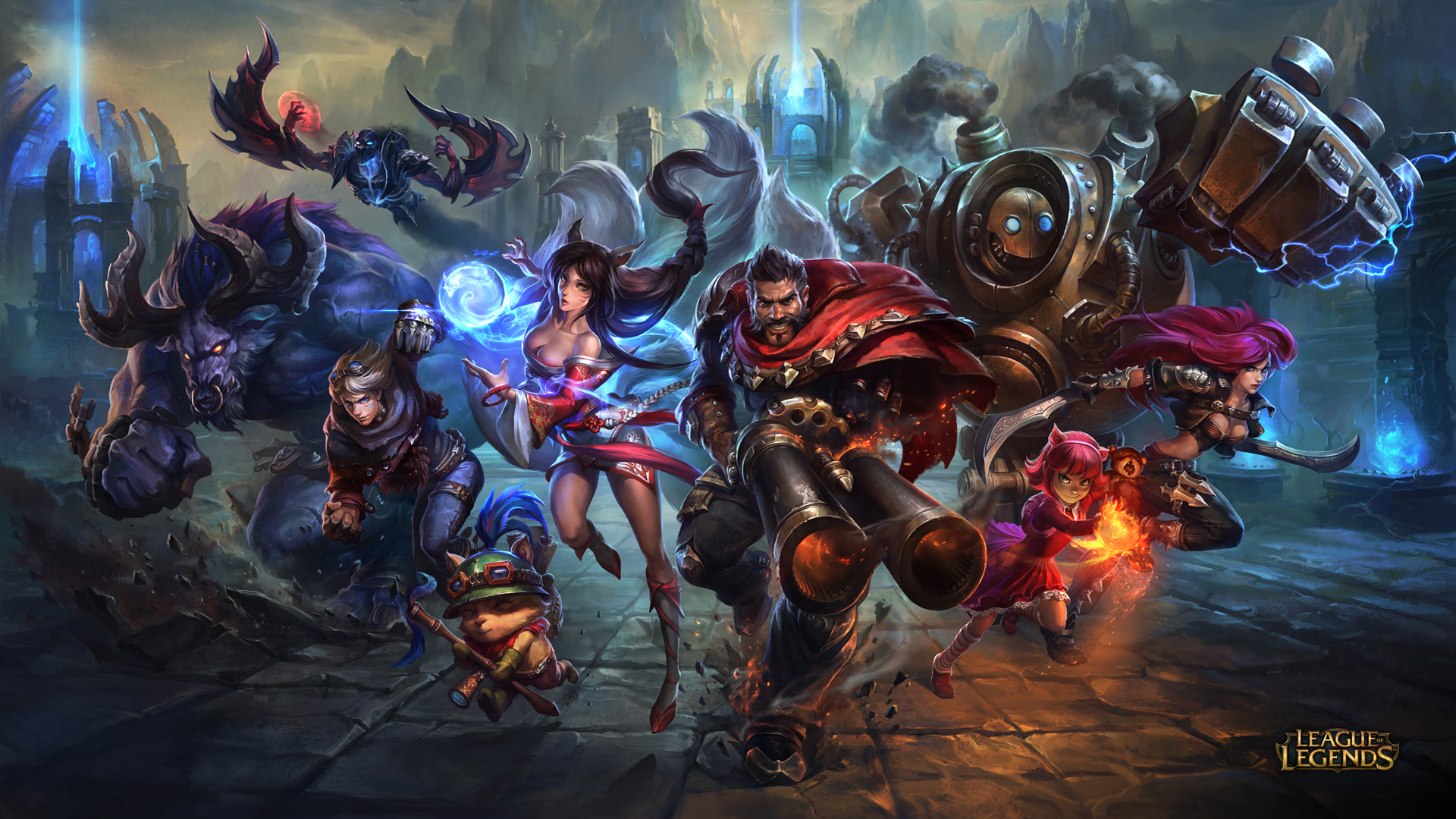
The aim of these games was to attract as many players to the servers over a long period, just like an MMORPG. Titles like League of Legends (2009), World of Tanks (2010), DOTA 2 (2013), or even Hearthstone (2014) showed that it is possible to build a successful service without a blockbuster budget that can be easily expanded with new content for years.
While MMORPGs faced a drought starting in 2015, other genres released hit services one after another – PUBG and Fortnite, for example, but also Overwatch, Path of Exile, Warframe, and many more. When a Western publisher finally invested a lot of money, MMO hybrids like The Division, Destiny, or the catastrophe Anthem emerged.
Anthem … oh, Anthem …
Small or from Asia
And what happened on the MMORPG front meanwhile? Between 2015 and 2020, there were mainly two categories of online role-playing games attempting their luck. On one hand, the Western porting of Asian MMORPGs, which had often been playable on the home market for years and thus often came to the West with a lot of content in the background and a reasonable degree of polish.
Two positive examples of this time are Black Desert and Blade & Soul (both released in the West in 2016). Disappointing, however, were the various versions of Bless Online (2018) or the action MMORPG Elyon (2021).

When MMORPGs were announced during this phase by Western publishers and developers, they were almost always small projects focused on sandbox and PvP, relying on crowdfunding campaigns.
A clear positive example comes from Germany, is almost seven years old, and is currently celebrating player records: Albion Online. Much less successful was Shroud of the Avatar from developer veterans Richard Garriott and Starr Long, but at least there was a release, and the servers are still online.
So much luck did Crowfall not have. After a long development time, it did release in July 2021, but the servers had to go offline again in November 2022. Other projects like Camelot Unchained or Chronicles of Elyria have been stuck in development hell for many years and occasionally face scam allegations. Outcome open.


Mobile as a new option for MMORPGs
By the way, there is something that the most successful of the MMORPGs just mentioned have in common. For Albion Online, Black Desert, and Blade & Soul, mobile versions have since been released. Alternatively, you can also experience Old School RuneScape, EVE Echoes, Tower of Fantasy, and many other online RPGs on Android and iOS devices.
This is a trend that has taken off precisely in this phase and will certainly accompany us even more in the coming years. Especially MMORPGs from the Asian region are increasingly being developed for PC and Mobile – see for example Tarisland.
However, we will only address the MMORPG projects of the future and the status quo of the genre in the sixth and final part of our report. Until then, you can pass the time with the following special: The 10 best mobile MMORPGs 2024 for iOS and Android

Your opinion is important to us!
Do you like the article? Then let us know!