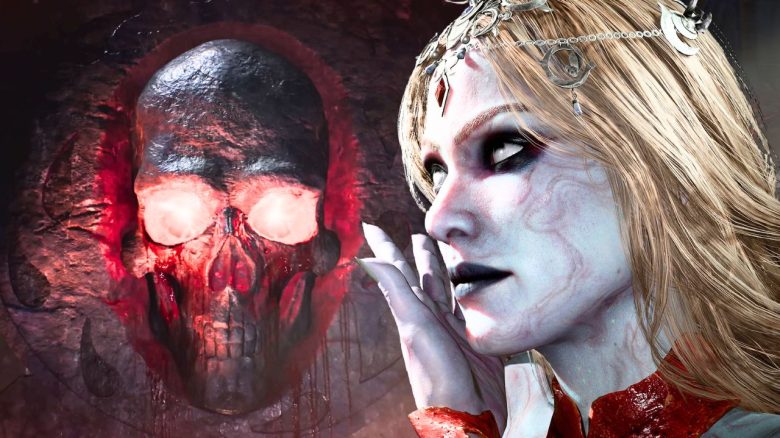
In Baldur’s Gate 3, one must face the champions of powerful gods to protect the city, the Sword Coast, and all of Faerûn from a great evil. One of these gods, however, plays a particularly significant role for one playable character – who is exceptionally merciless.
Who is Bhaal? Bhaal, also known as the god of murder, is one of the most prominent gods in Baldur’s Gate 3. With Orin as his champion, he plays an important role regarding the control of the “great evil” at the end of the game, which players will want to defeat (or even dominate themselves).
Bhaal, together with Bane, the god of tyranny, and Myrkul, the god of death, forms the trio known as the “Dead Three,” which are not only relevant in Baldur’s Gate 3 but also in the general Dungeons & Dragons universe.

For just like his two allies, Bhaal was not always a god but rather “only” a mortal with his own story before his divine ascension. We explain who Bhaal is, how he became a deity, and what to know regarding his role in Baldur’s Gate 3.
For the deity does not carry the name “God of Murder” without a reason – hardly anyone is as sadistic, cruel, and merciless as Bhaal (Source: “Faiths & Avatars”, Forgotten Realms by Wizards of the Coast).
Here you can see the trailer for Baldur’s Gate 3:
From Mortal to God of Murder
Before he ascended to godhood, Bhaal was a human. Even as a mortal, he was a particularly power-hungry and determined adventurer. He allied himself with Bane and Myrkul, who were also still mortal at the time, to fight against the god of death, Jergal, to gain his power.
However, Jergal did not have to be defeated by them; he voluntarily handed over his power to the three adventurers without a fight. After a contest to determine who would take over which portfolio of Jergal, Bhaal ultimately received the power over the domain of killing.
But his godhood did not make Bhaal untouchable. During the so-called “Time of Troubles,” the gods were banished from their otherworldly domains and forced to wander the material plane in mortal forms called avatars. There, they waged wars to regain their divinity, with some of the now-mortal gods being killed and others ascending mortals to divinity (Source: “Adventurer’s Guide to the Sword Coast” by Wizards of the Coast).
During this time, Bhaal was also slain by the sword “Godsbane” and lost his power to his adversary. Yet, his essence did not completely vanish.
Many followers of his church continued to exist, known as Bhaalists on the Sword Coast. They worship the lord of murder and continue to kill in his name and out of sheer joy and reverence.
However, his church is not his only legacy, as Bhaal was diligent during his time on the material plane. He had a bad premonition that he might find death during the Time of Troubles.
Before he was defeated, he left behind a number of descendants, also known as Bhaalspawn, in whom a tiny part of his legacy continues to live on. And this Bhaalspawn caused plenty of conflict.
What Role Do Bhaal’s Descendants Play?
The Bhaalspawn consists of mortal descendants of the murder god who play an important role throughout the Baldur’s Gate series. They are not only the result of Bhaal’s time as a mortal but also a cunning plan:
His descendants, driven by an (unconscious) urge to kill and slaughter, were meant to extinguish one another until the last of his spawn is wiped out. Then, the distributed essence of Bhaal, which resided within his descendants, would gather again and ritualistically bring back the fallen god.
The Bhaalspawn can arise in any form, regardless of race, gender, or age. A part of their soul is, however, divine, endowing them with supernatural powers and an underlying bloodlust.
Not all descendants of Bhaal are inherently evil and can indeed pursue other goals than their divine ancestor. Some even want nothing to do with their prophecy. Yet many of them, whether morally good or evil, still tend to have a penchant for bloodshed, which was instilled in them since birth.

Bhaal and the Dark Urge in Baldur’s Gate 3
Spoiler Warning! The following part of the article deals with the story of the Dark Urge from Baldur’s Gate 3.
The Dark Urge, a playable character from Baldur’s Gate 3, belongs to the Bhaalspawn, wherein the essence of Bhaal continues to live. While the Dark Urge suffers from amnesia at the beginning of the game and has forgotten much of its past, it is clear from the outset that the legacy is manifested through an almost unavoidable urge for murder and violence, sometimes even stronger than their own will.
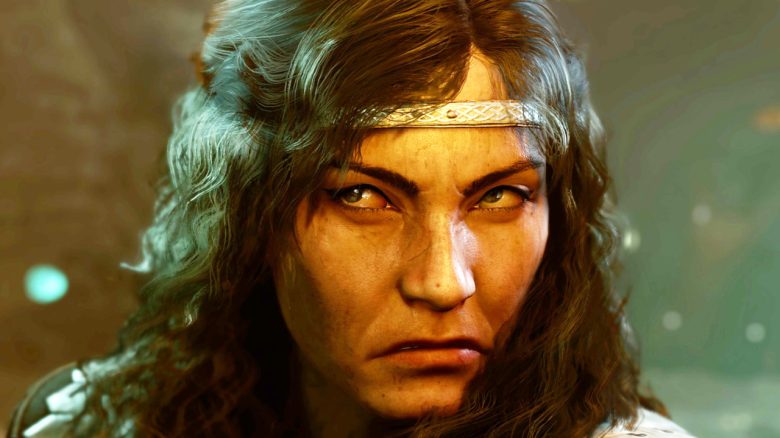
Also, Orin “the Red,” the Chosen One and champion of Bhaal, is one of his descendants. While the Dark Urge can choose whether to give in to its cravings or not, Orin is almost obsessively eager to please her “father.” She is a devout, even fanatical follower of Bhaal and has been committing creatively gruesome and bloody murders in his name for years.
The Dark Urge and Orin share a backstory that begins before the events of Baldur’s Gate 3 and culminates in a final duel in the third act of the game. If you want to learn more about the Dark Urge in Baldur’s Gate 3, we have compiled the most important information about the playable Bhaalspawn here at MeinMMO: Dark Urge: What is the Dark Urge in Baldur’s Gate 3 and why should you play it?



The lore of Baldur’s Gate 3 can be quite deep due to its origins in the rulebooks of Dungeons & Dragons. If you are interested in more lore and background information about the games, we have created an introduction to Tieflings, who are widely hated and despised by many despite the diversity of the D&D universe: Few races in Dungeons & Dragons are as reviled as Tieflings – But why are the “Devil’s Children” so hated?